
.
3,00 € – 60,00 €Price range: 3,00 € through 60,00 €
Select Quantity
*Shipping cost is calculated automatically in the cart after adding the products.
| Cold hardiness | -5 °C (23 °F); tolerates moderate freezing temperatures provided the bulb is situated in completely dry, sharply draining soil during winter dormancy. |
| Growth speed | Moderate; completes its vegetative and reproductive cycles seasonally, though plants propagated from seed require several years of bulb expansion to reach flowering maturity. |
| Rarity | Occasional in global cultivation. Native wild populations face localized decline due to coastal habitat destruction. |
| Maximum height | 0.5 m (1.6 ft); functions as a low-growing herbaceous perennial, with the flowering scape constituting the maximum vertical height. |
| Drought resistance | Very high; biologically adapted to xeric coastal sand dunes, utilizing its bulb for water storage and undergoing summer leaf dormancy to evade desiccation. |
Click here to learn about how we ship; packaging, shipping price, delivery time and more.
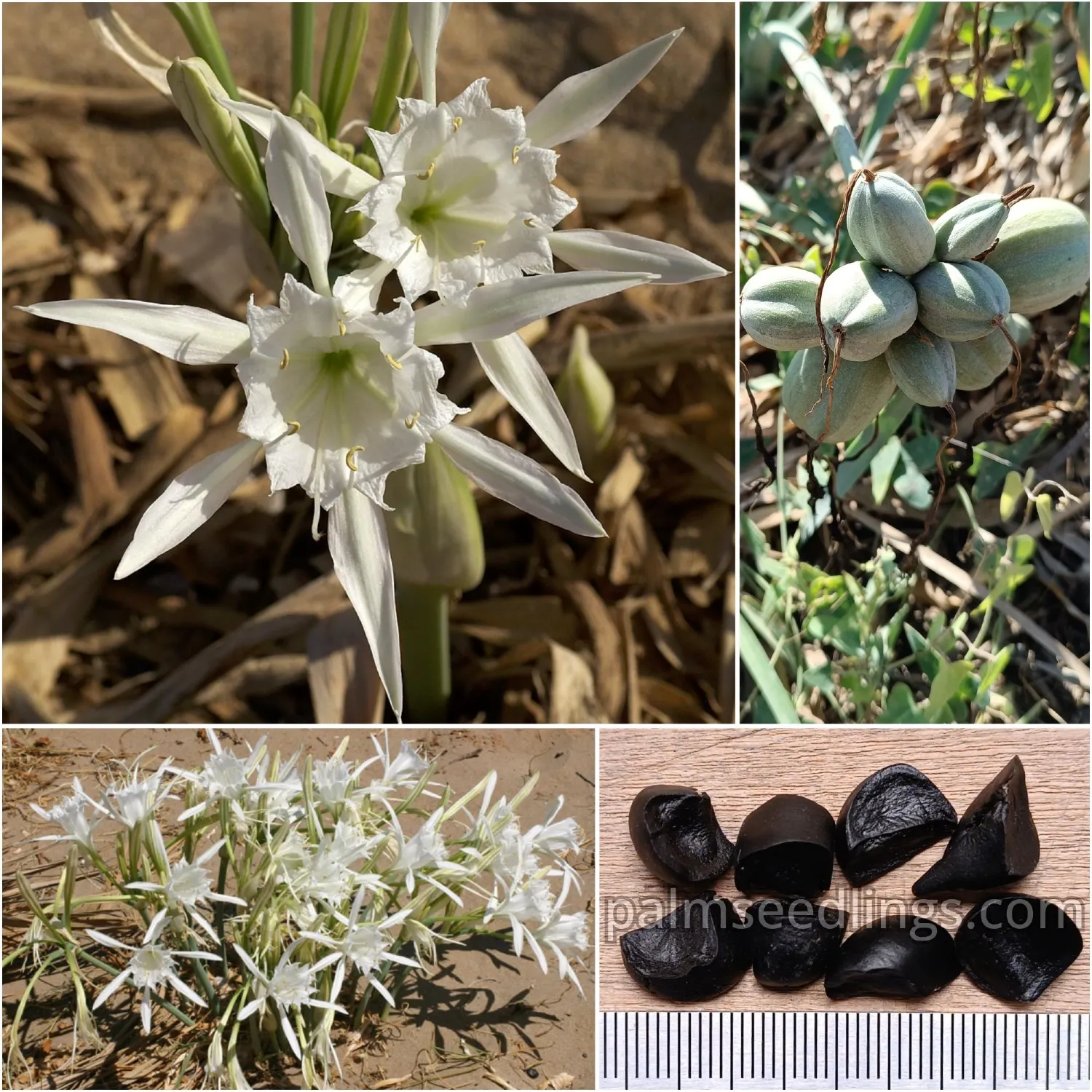
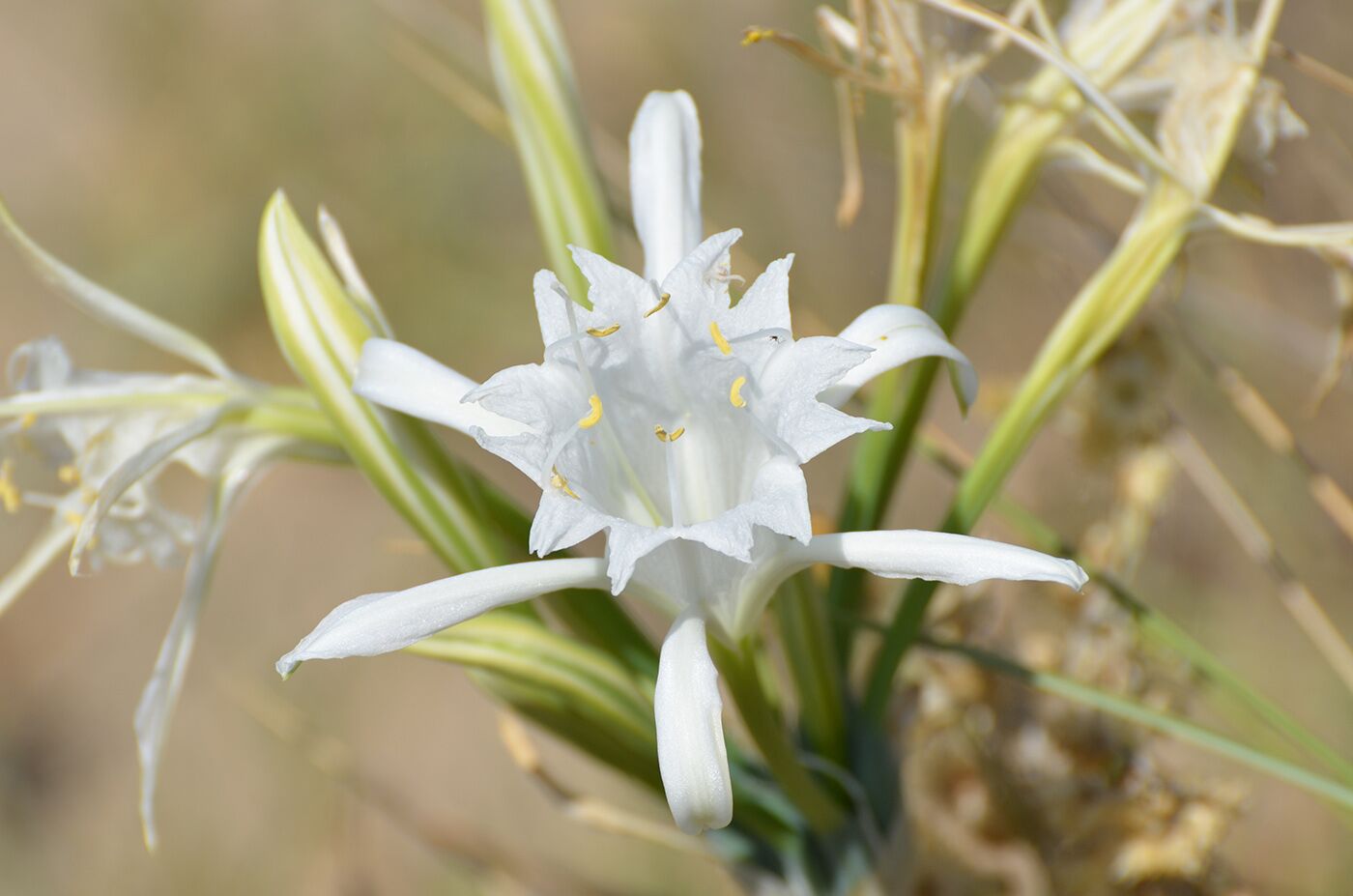
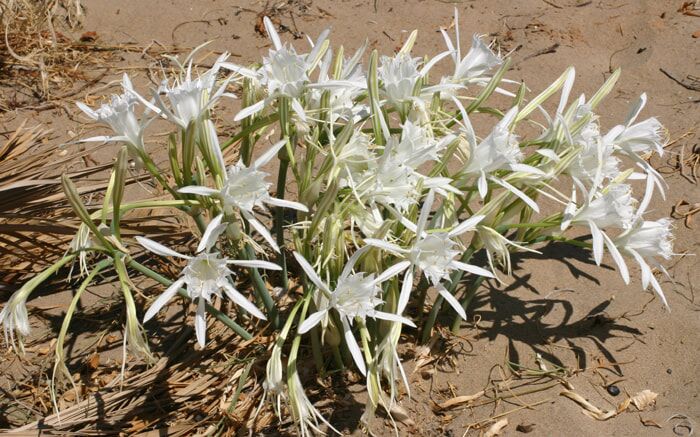
Pancratium maritimum is a bulbous herbaceous perennial. It develops from a large, deep-seated, tunicated bulb. The foliage consists of basal, linear leaves that exhibit a glaucous, grey-green coloration and frequently twist in a spiral along their longitudinal axis. The leaves typically emerge in autumn or winter and senesce (die back) prior to the summer flowering period. It produces a solid, leafless scape topped with an umbel of white, funnel-shaped flowers characterized by a prominent, toothed staminal cup (corona). The flowers yield capsular fruits containing irregular, black, corky seeds.
Native to the coastal sand dunes and sandy beaches of the Mediterranean Sea, the Black Sea, and parts of the Atlantic coast of Europe and North Africa, this species is biologically adapted to highly specialized coastal ecosystems. In cultivation, it requires full sun exposure and deep, rapidly draining sandy substrates. It possesses a high tolerance for salt spray and maritime winds but is highly susceptible to bulb rot if planted in heavy, poorly draining, or waterlogged soils. It functions in landscaping as a seasonal geophyte for coastal xeriscapes and specialized sand gardens.
| Weight | N/A |
|---|---|
| Quantity | 10 Seeds, 100 Seeds, 1.000 Seeds |