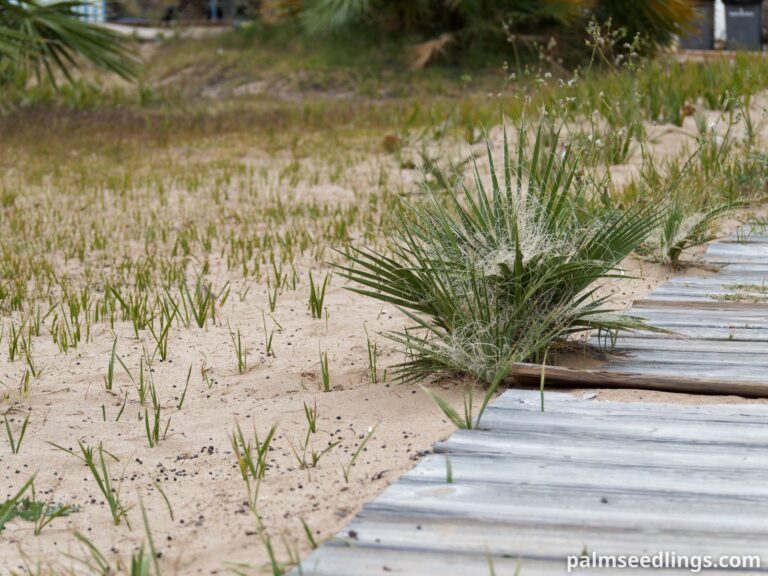
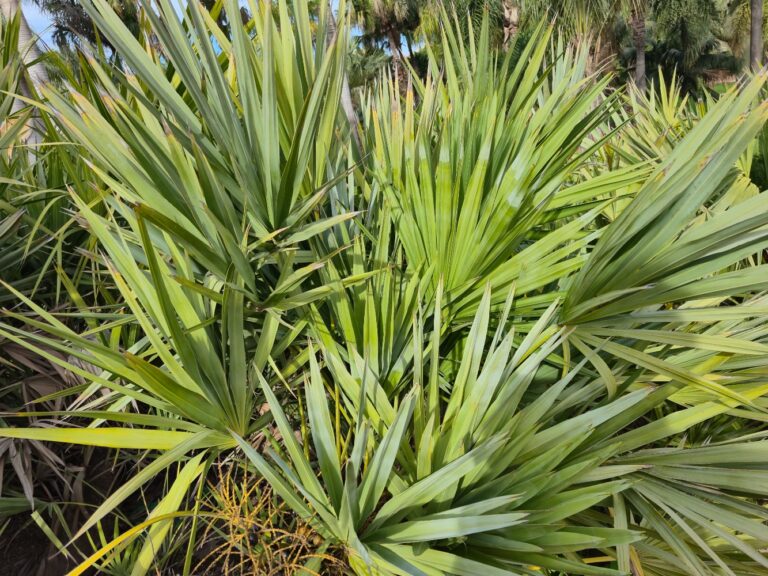
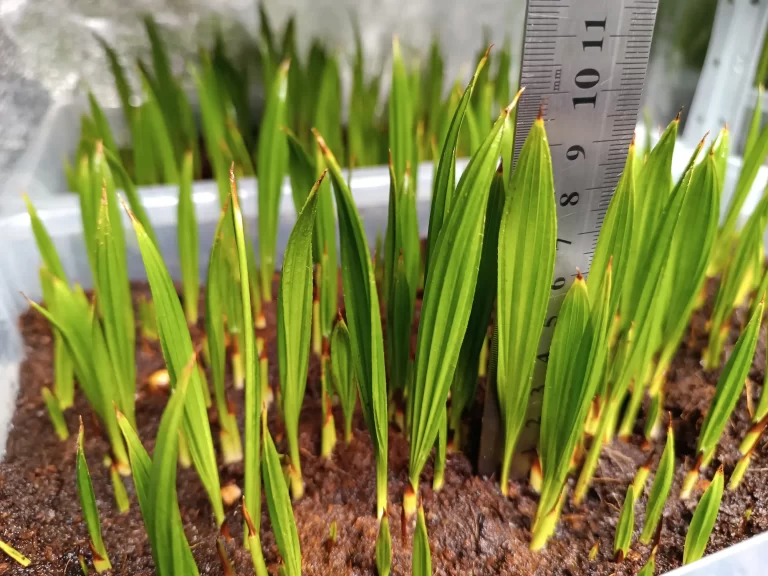
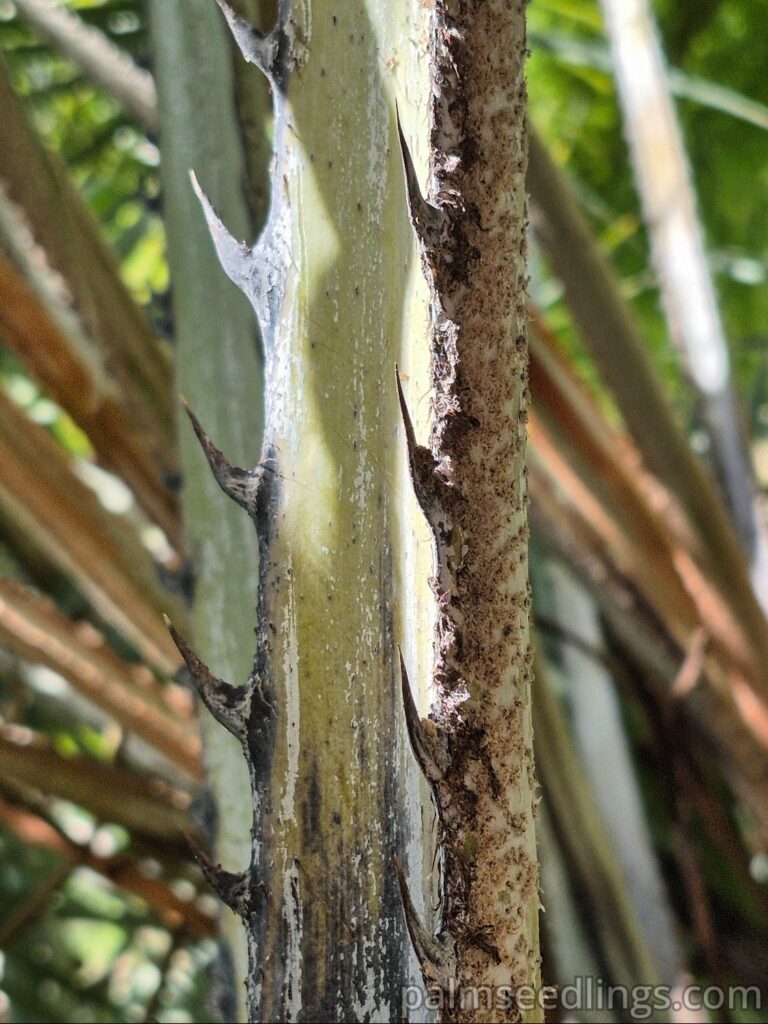
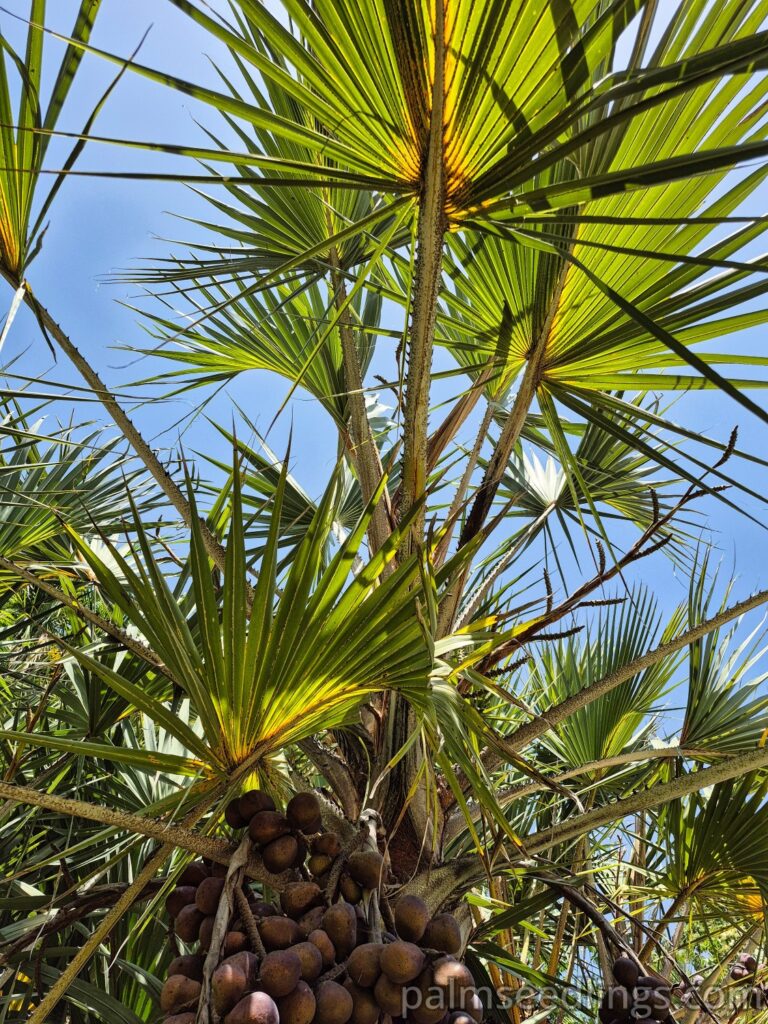
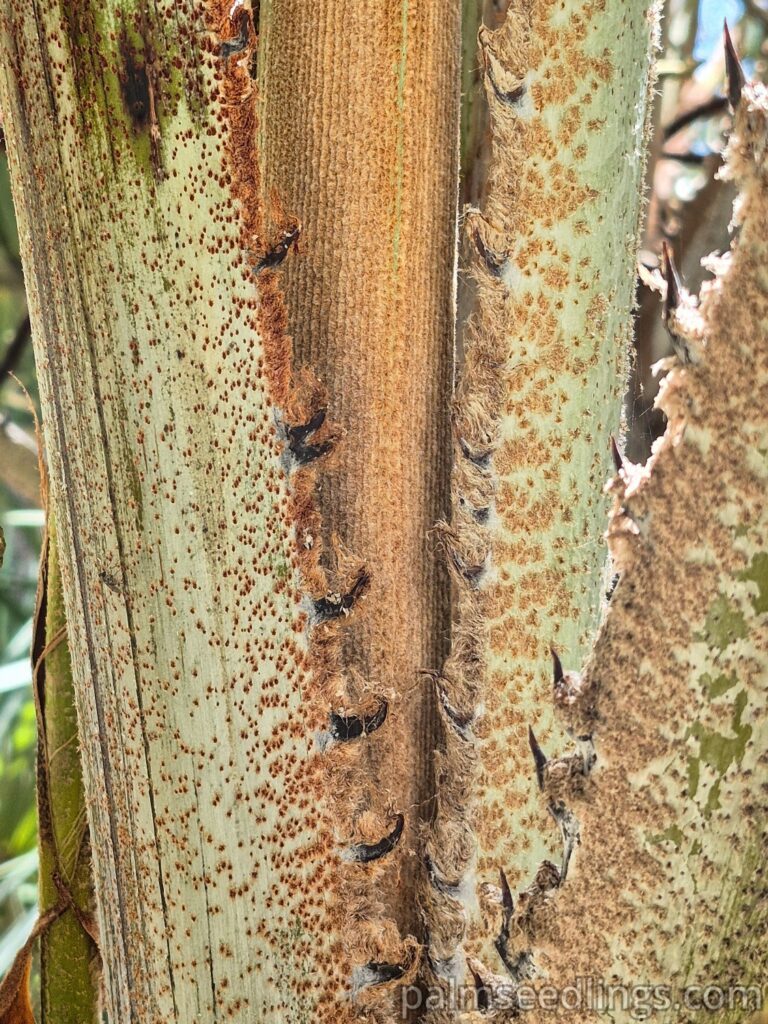
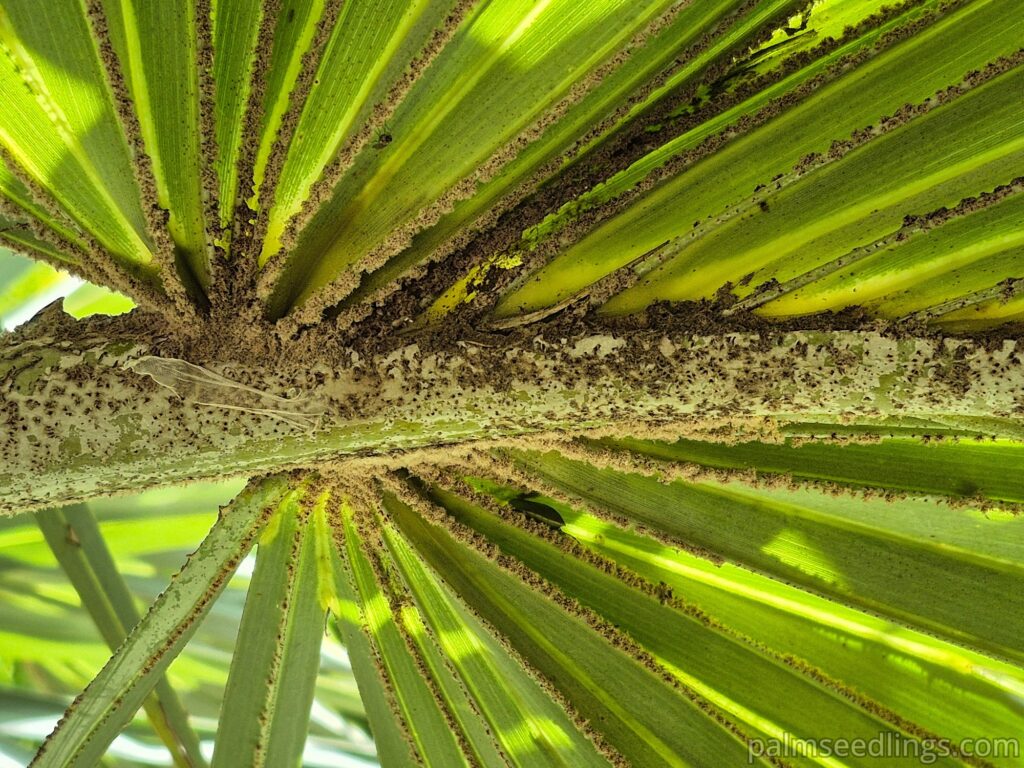
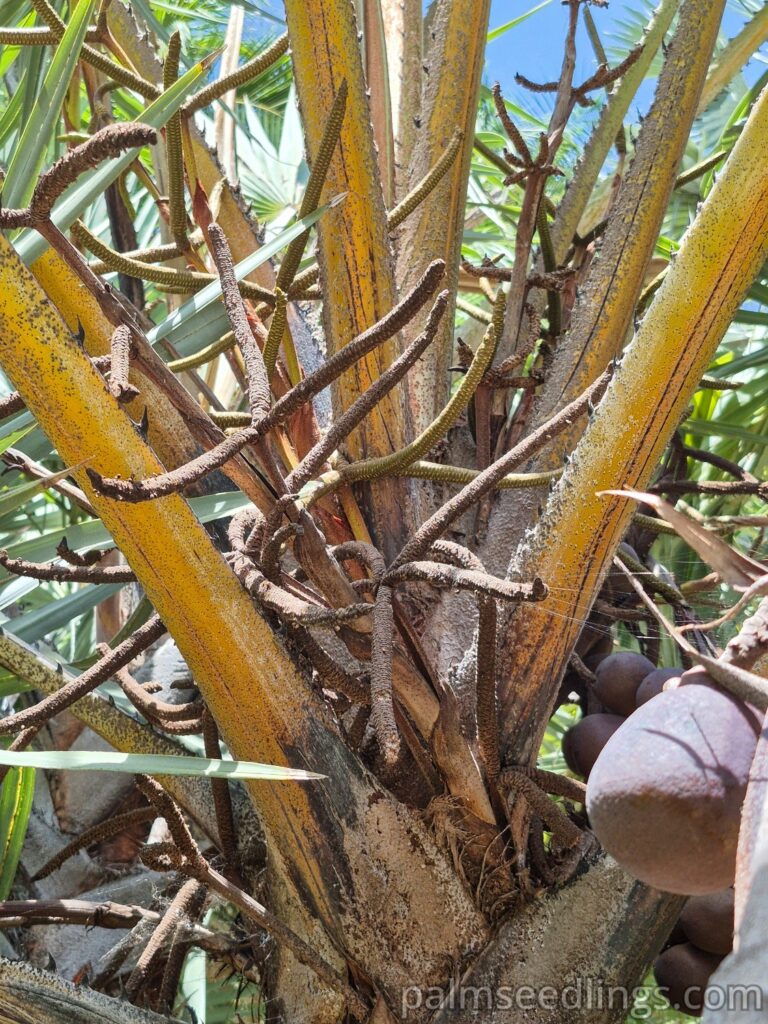
Hyphaene coriacea, commonly known as the East African doum palm, the lala palm or ilala palm tree, is a dioecious, multi-stemmed palm species native to coastal and lowland regions of eastern and southern Africa. It is distinguished within the genus Hyphaene by its aerial dichotomous branching; a rare trait among palms, resulting in a naturally forked crown architecture. The pinnatifid, costapalmate leaves are borne on robust petioles armed with recurved marginal spines, and the leaf blades exhibit a leathery (coriaceous) texture, from which the species derives its epithet.
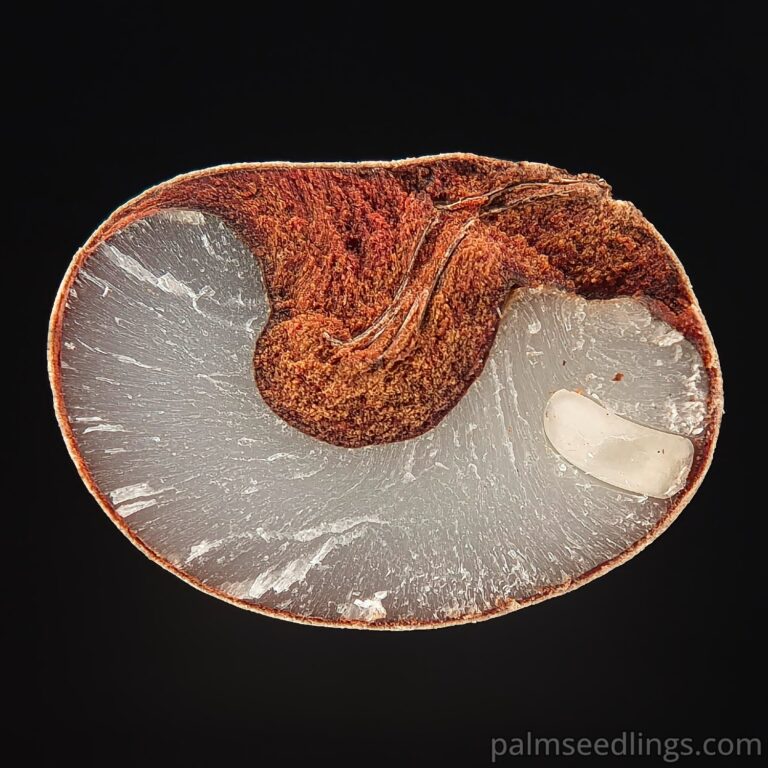
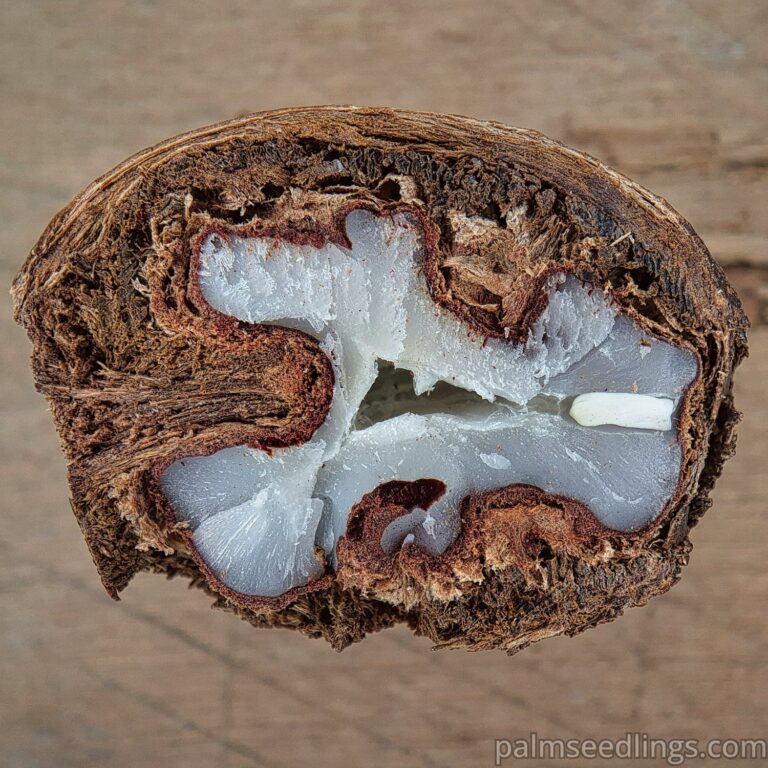
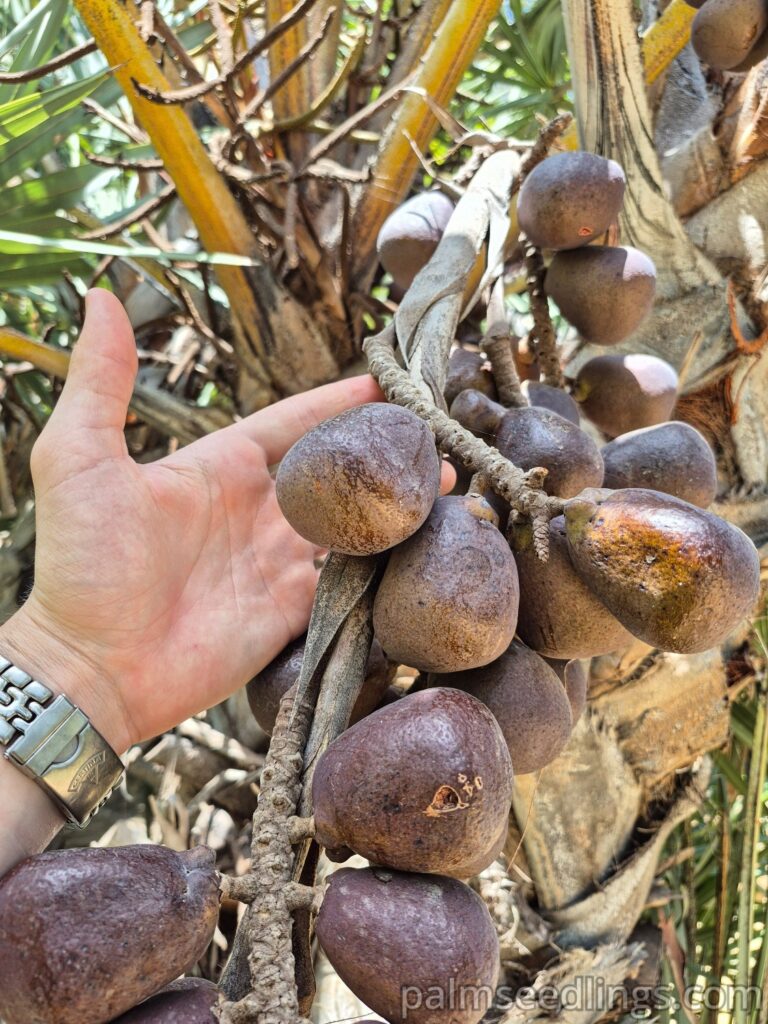
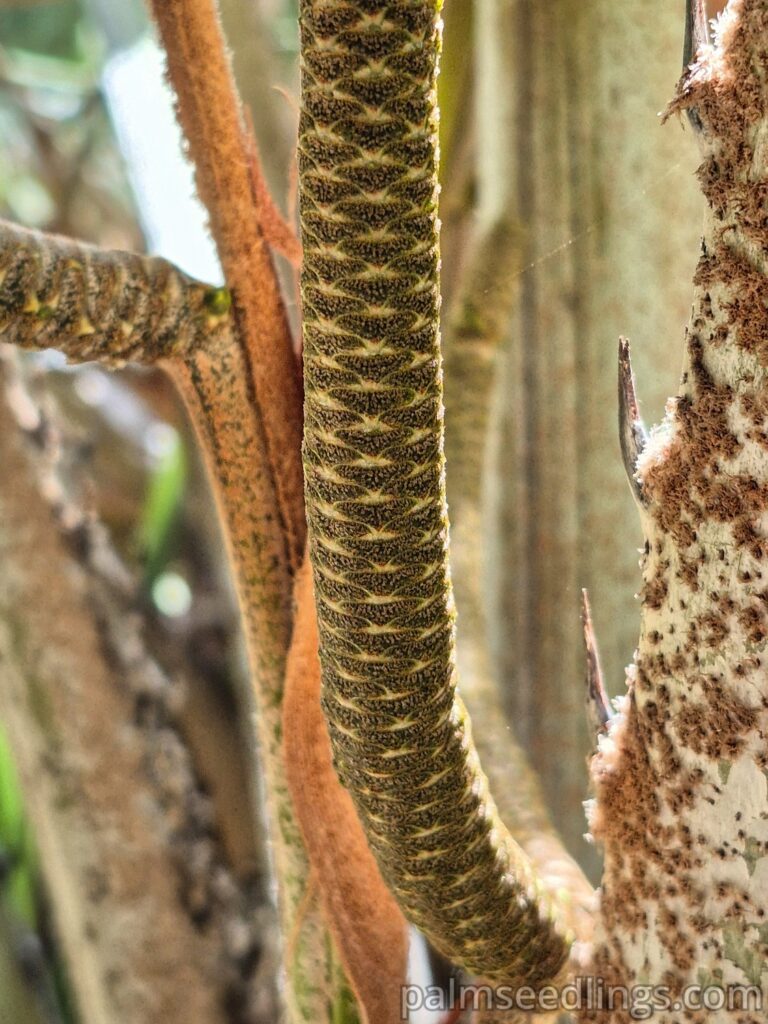
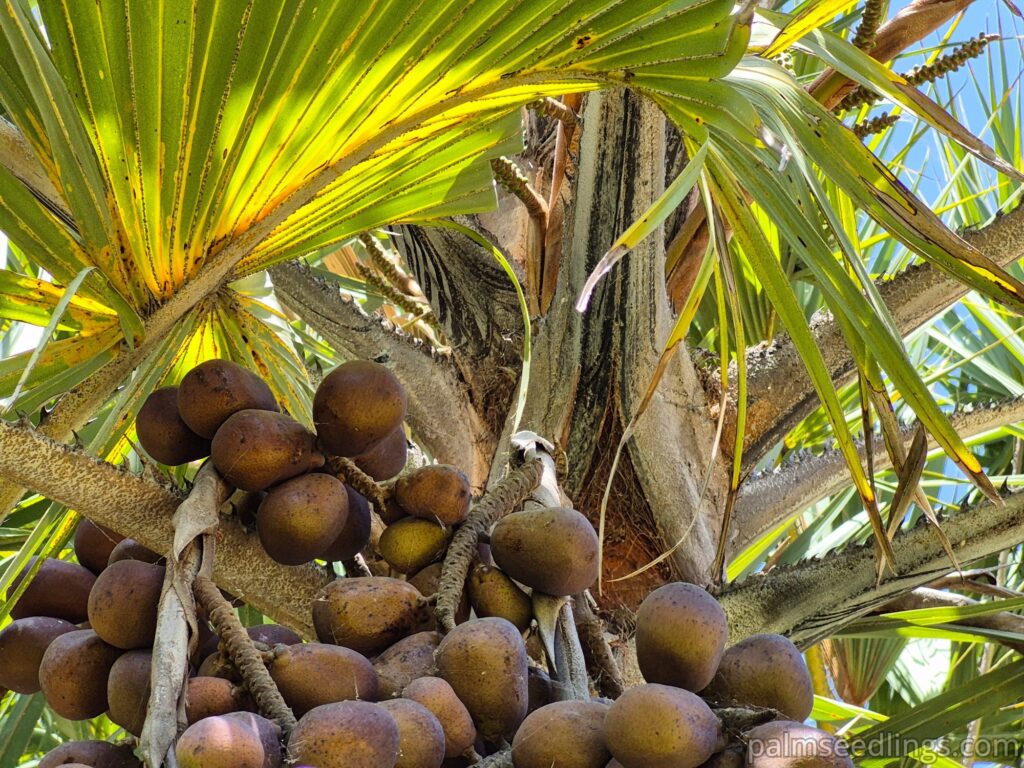
Adapted to semi-arid and savanna-like habitats, H. coriacea is notably tolerant of drought, saline soils, and intense solar radiation. Its inflorescences are interfoliar, with staminate and pistillate flowers occurring on separate individuals, followed by the development of large, fibrous drupes with a hard endocarp. These fruits are ecologically significant, serving as a food source for wildlife and historically used by humans for their edible mesocarp and utilitarian fibrous husk.
This species is both ecologically and culturally important in its native range and is increasingly recognized for its ornamental value in xerophytic and arid-climate landscape applications. Due to its slow growth and unique morphology, Hyphaene coriacea remains a rare but highly sought-after specimen in palm collections worldwide.
Growing info
Hyphaene coriacea is cold hardy down to approximately -3 °C (27 °F) under dry conditions and with good drainage. While mature specimens can briefly tolerate light frost, younger plants are more sensitive and benefit from protection during cold spells. Prolonged freezing or wet, cold soils should be avoided, especially in climates where winter temperatures fluctuate around freezing. In marginal zones, cultivating in containers or providing winter shelter would be the best option for survival and long-term growth.
Photo gallery


Links
Wikipedia: Hyphaene coriacea – Wikipedia