
Brahea armata
Common Names: Mexican Blue Palm, Blue Hesper Palm
Description
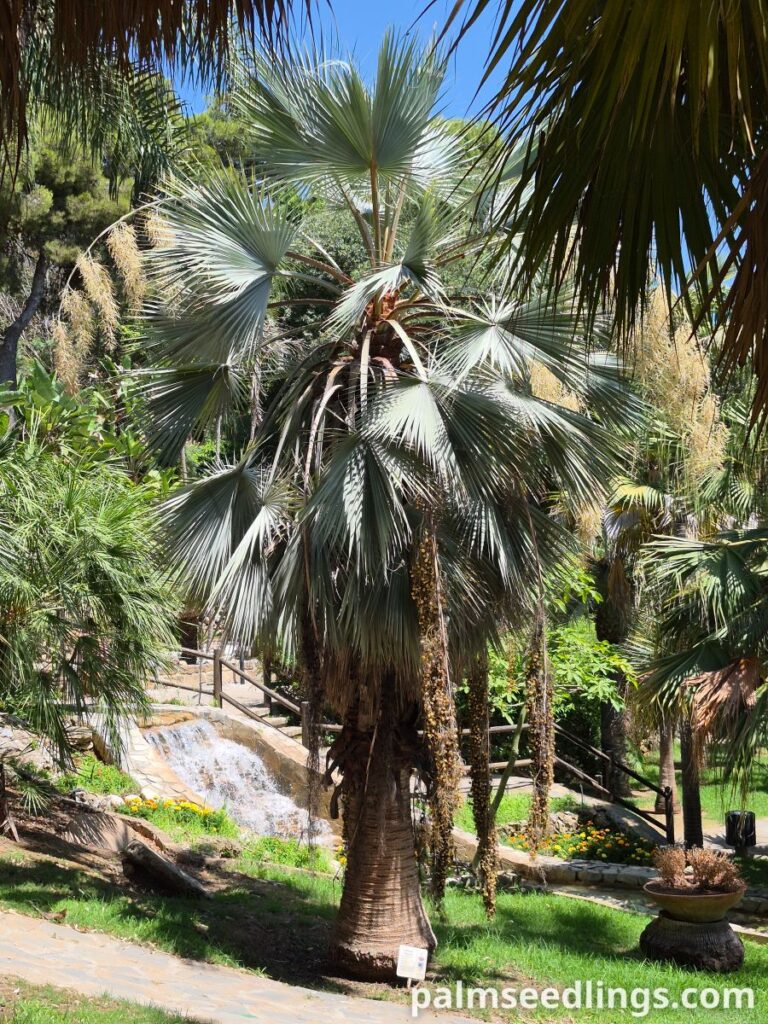
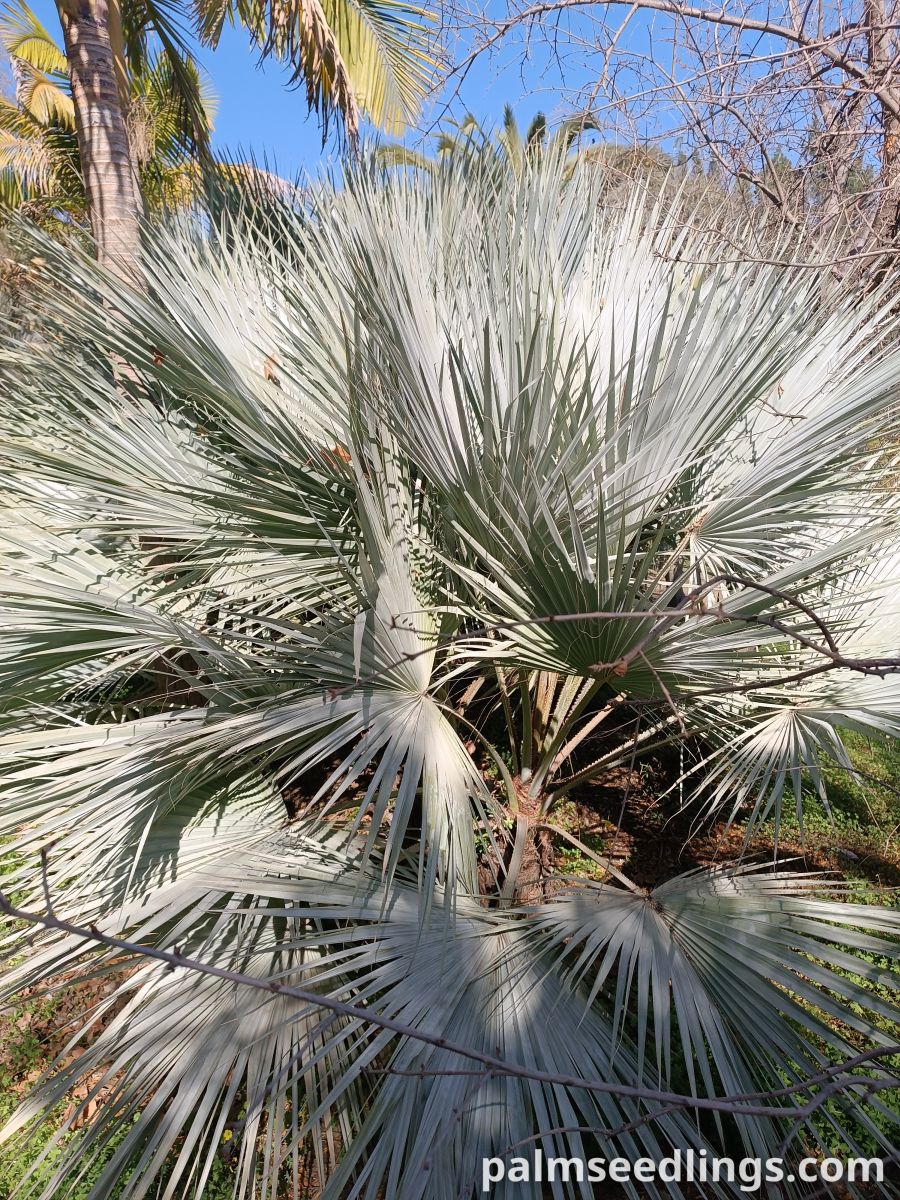
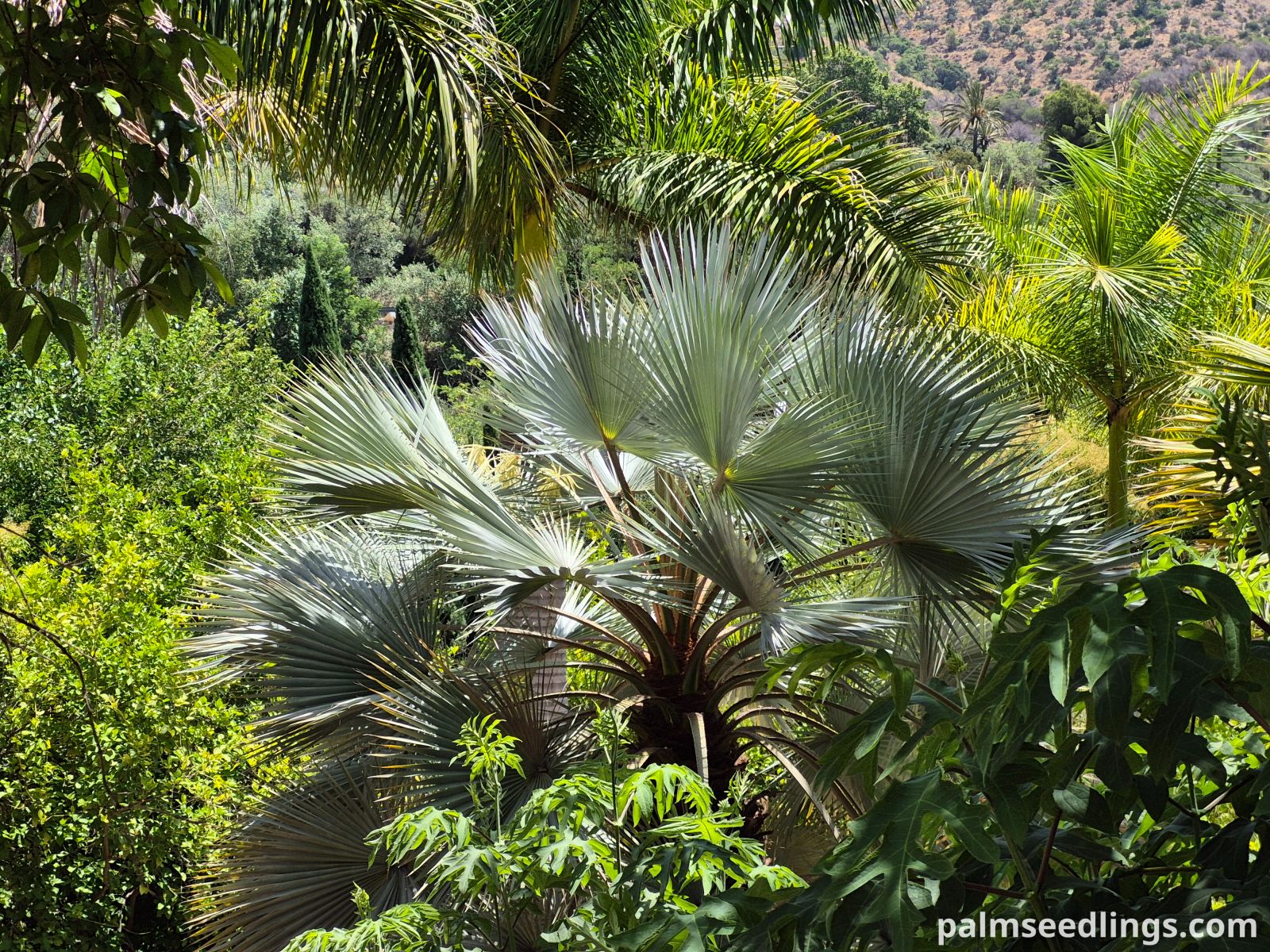
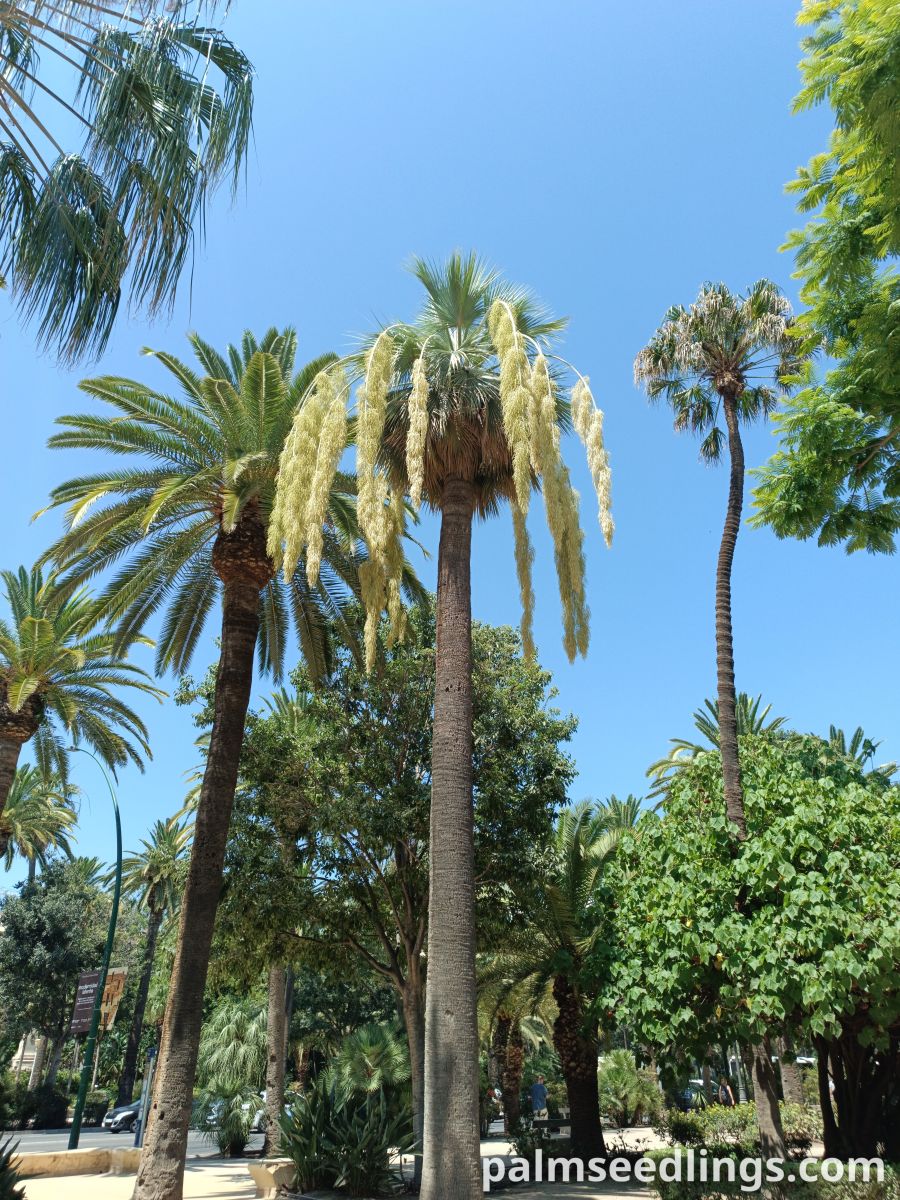
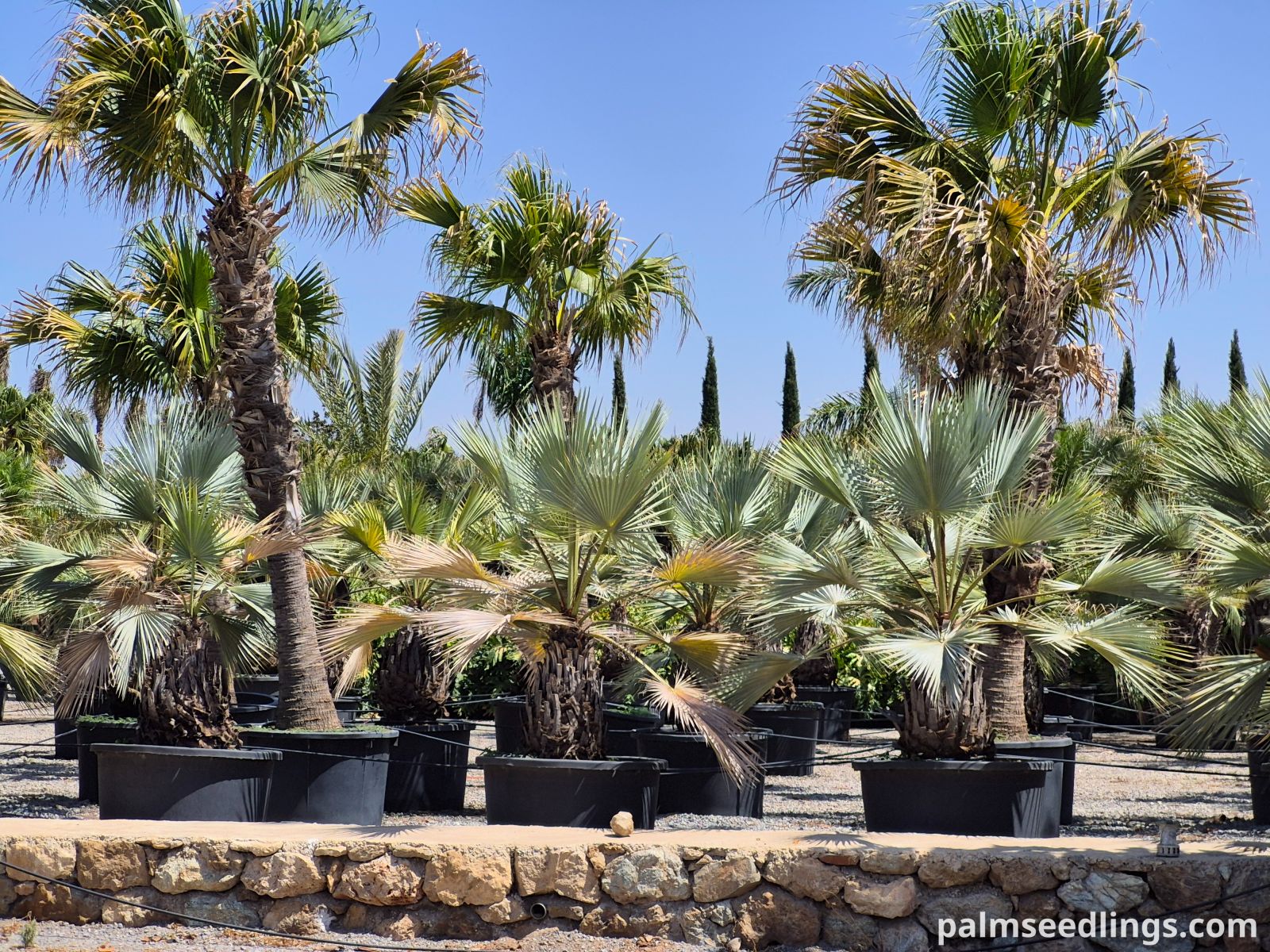
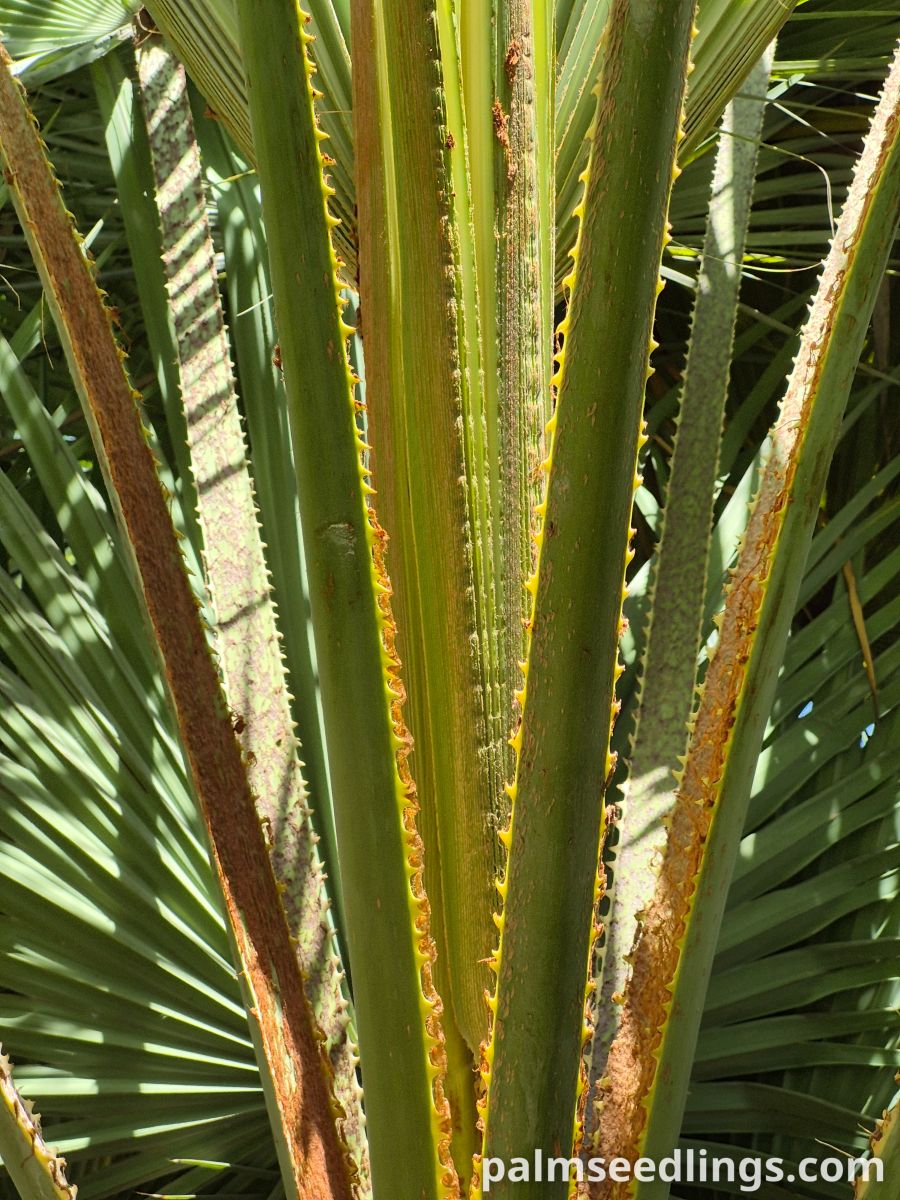
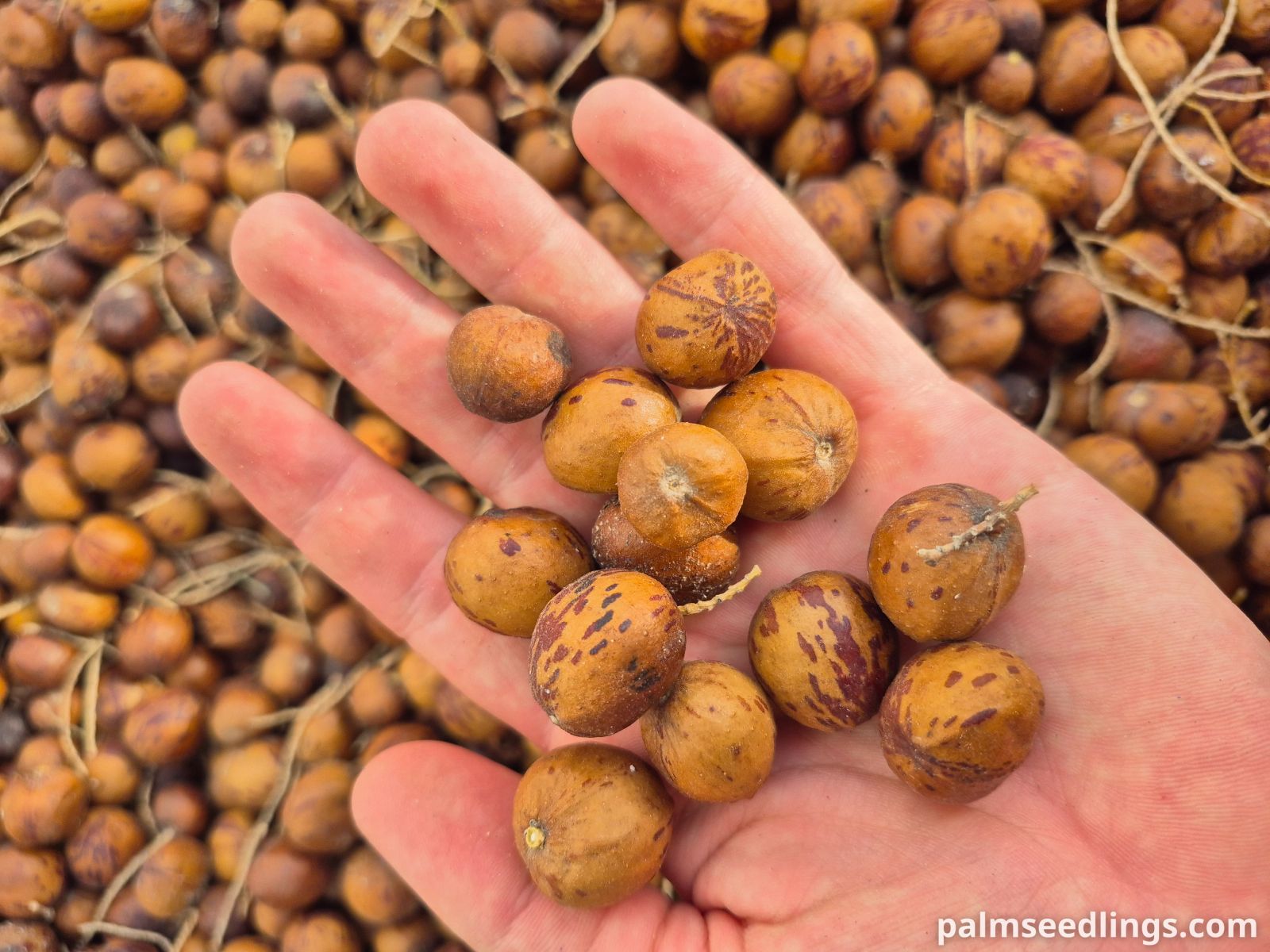
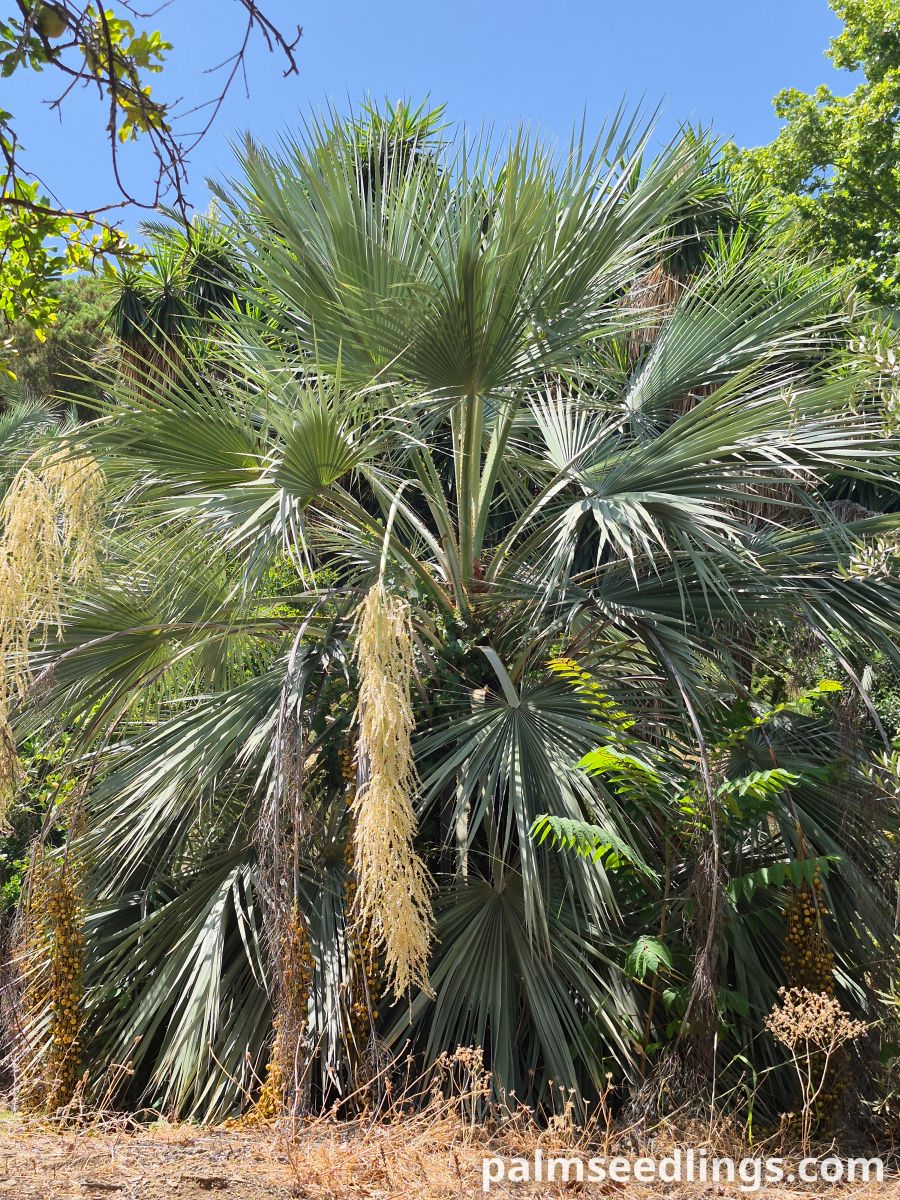
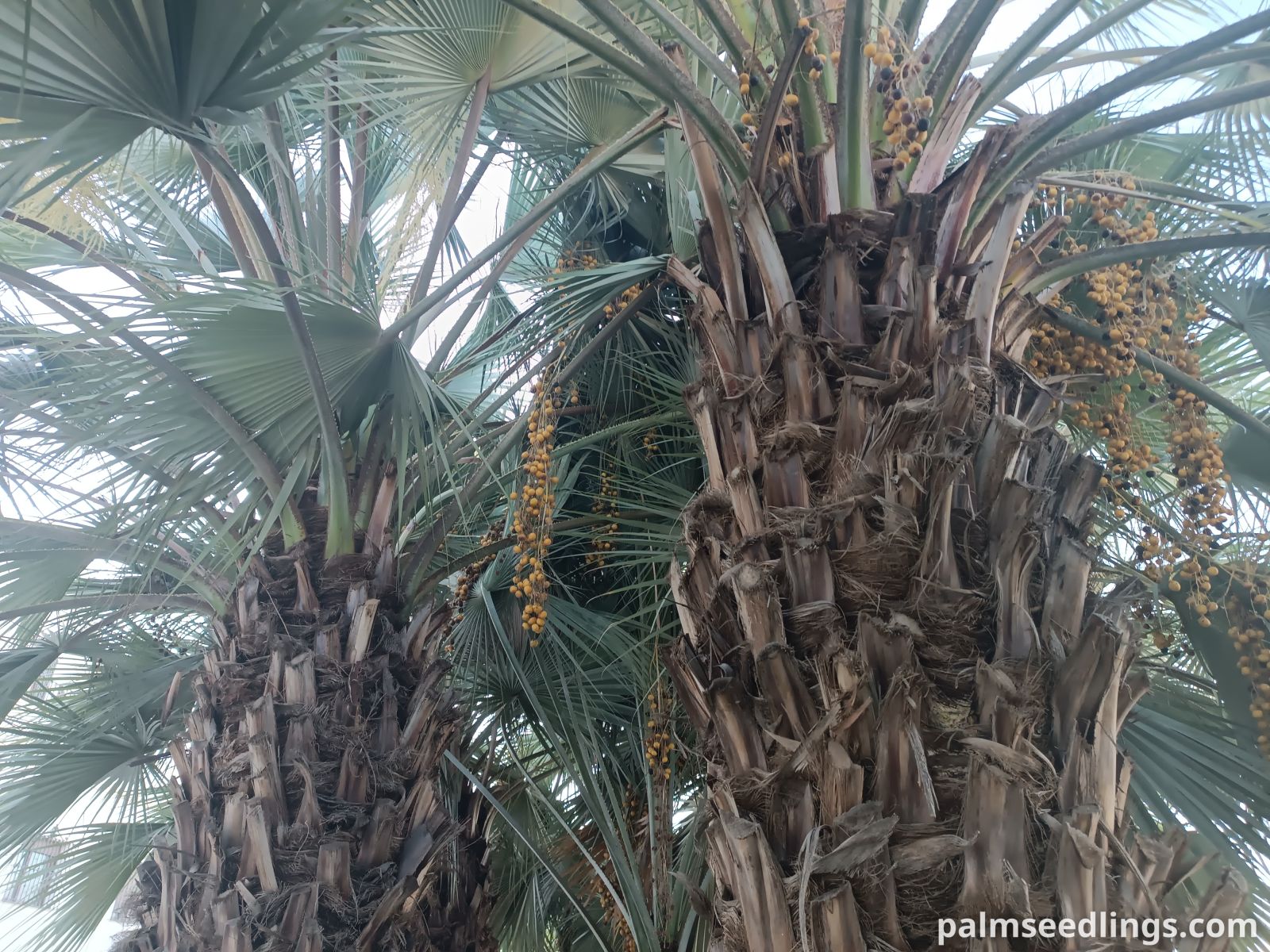
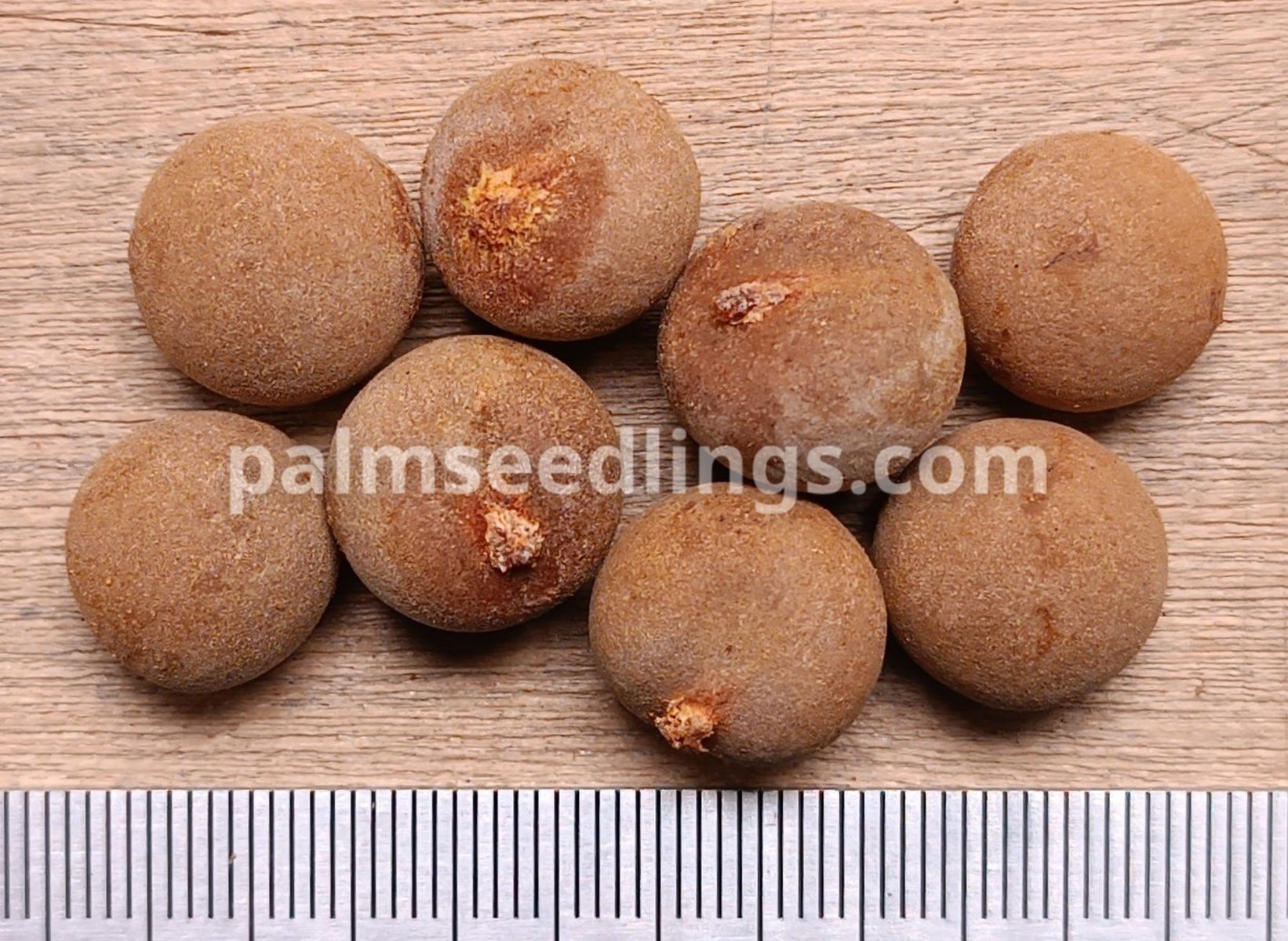
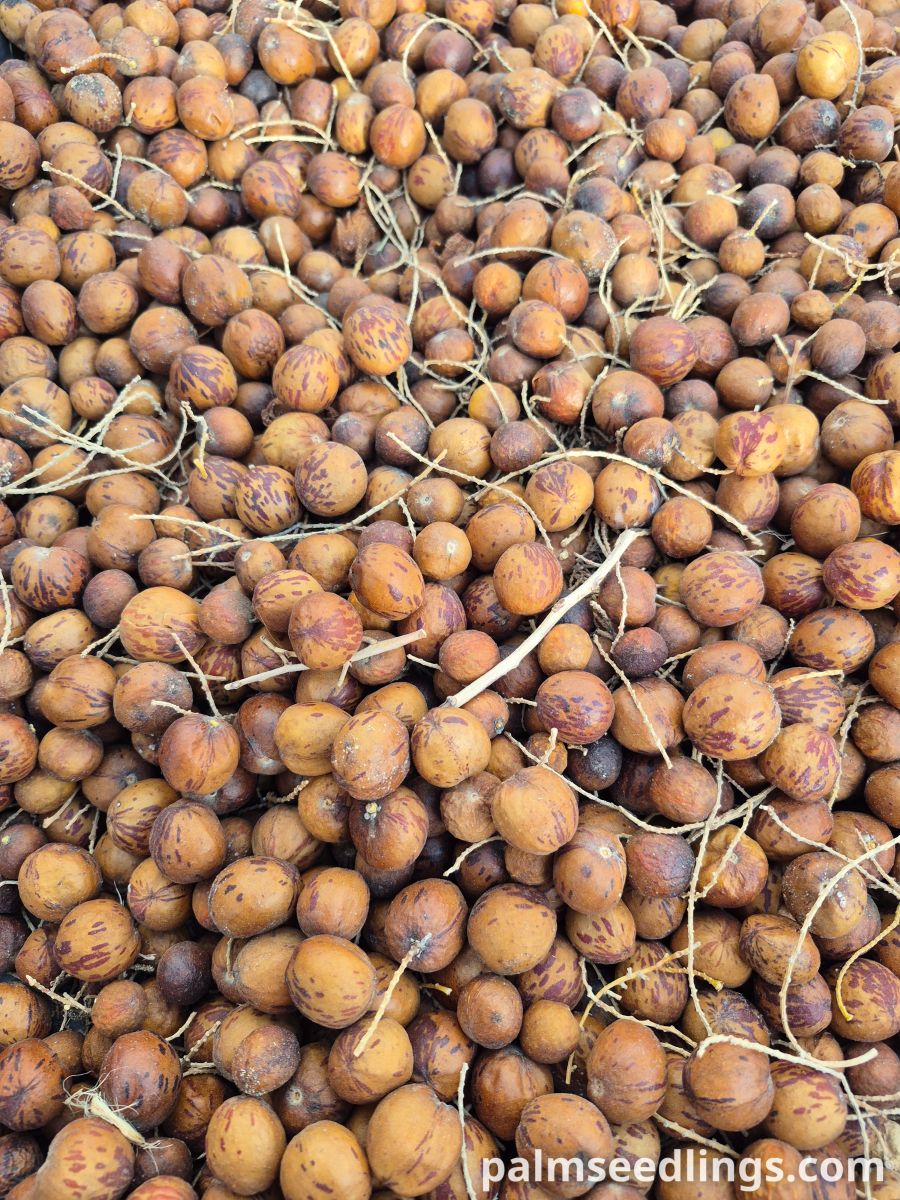
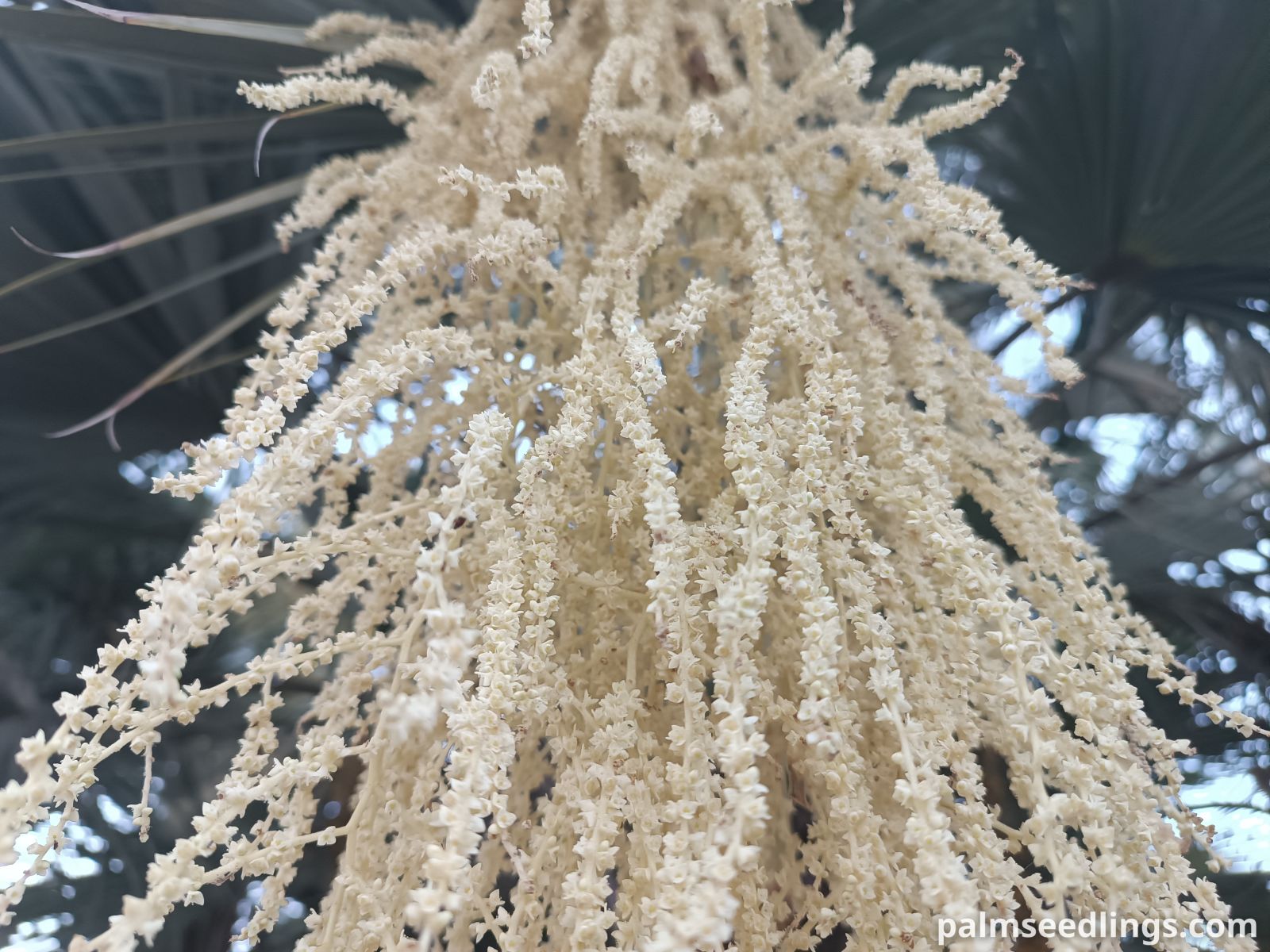
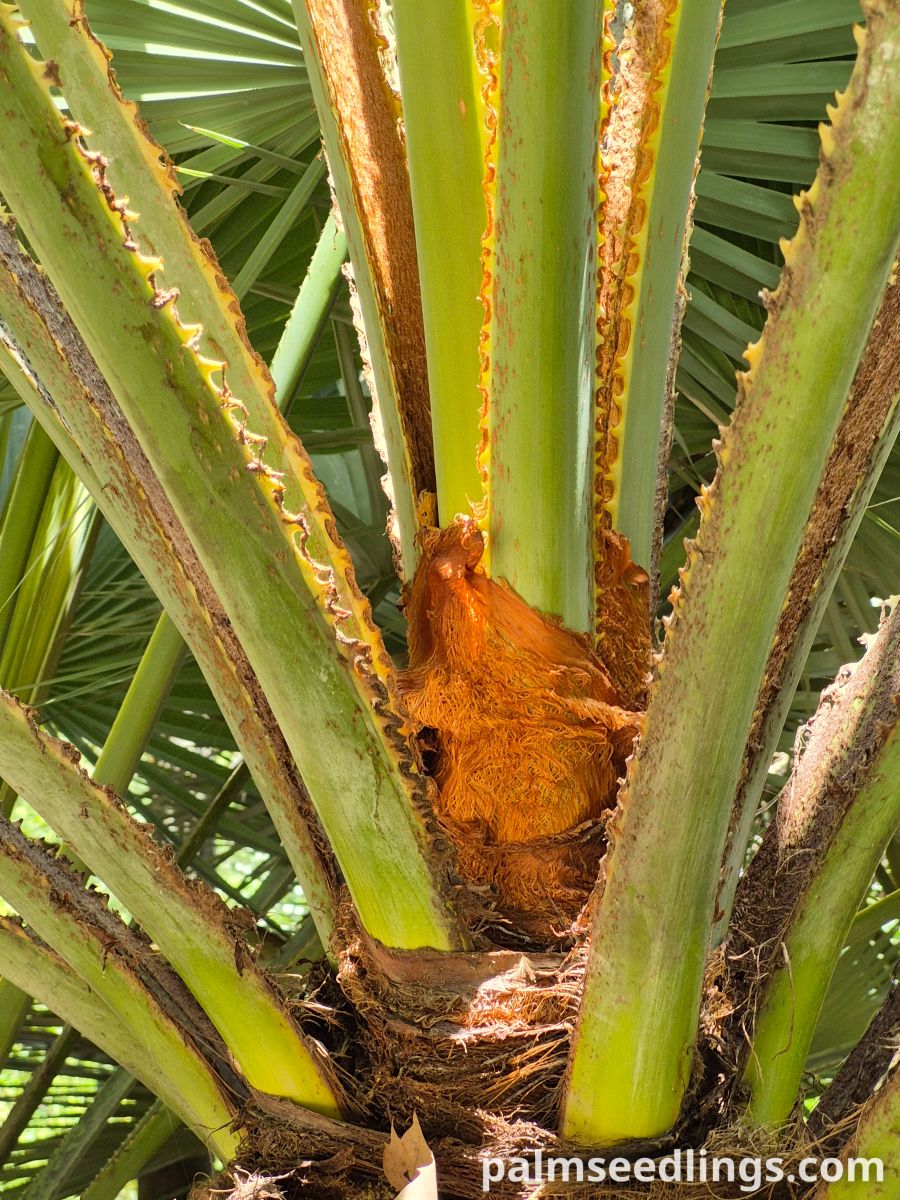
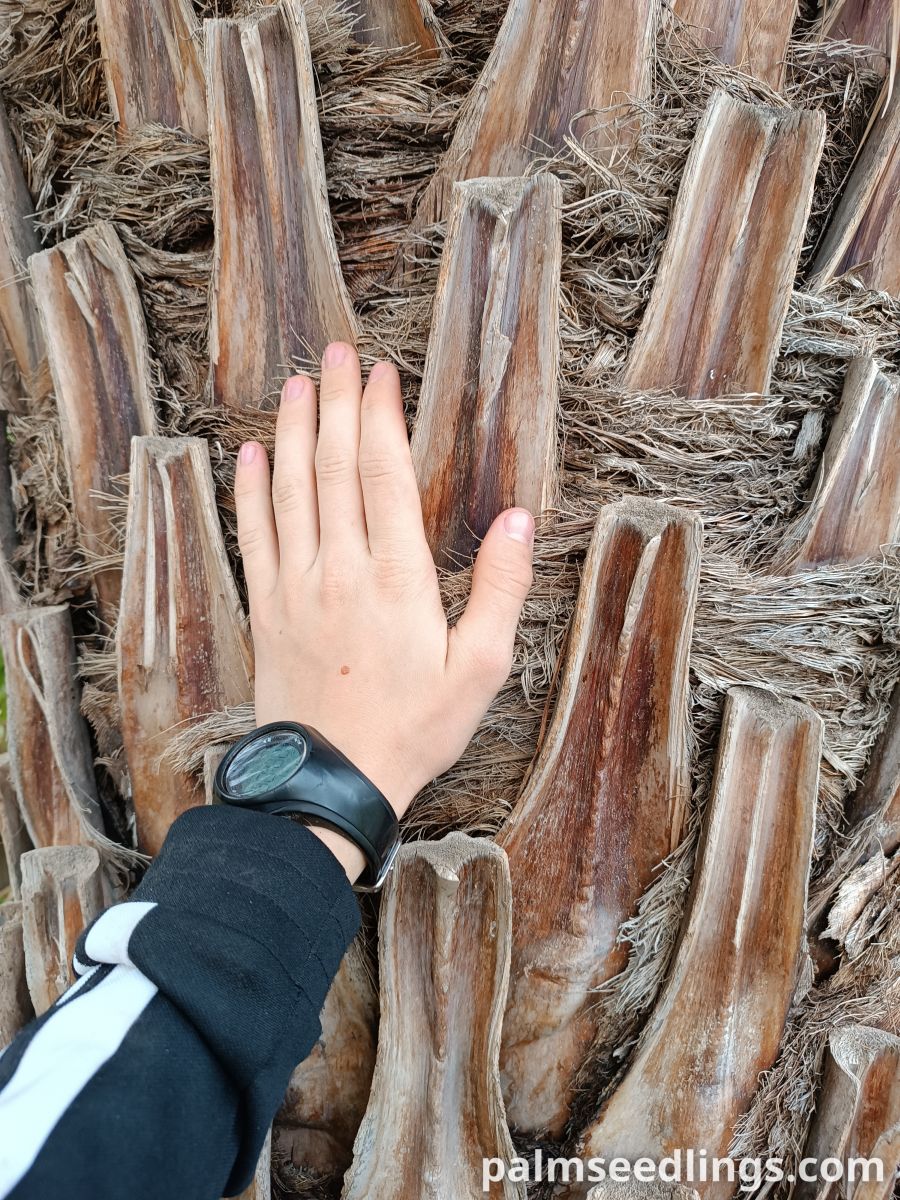
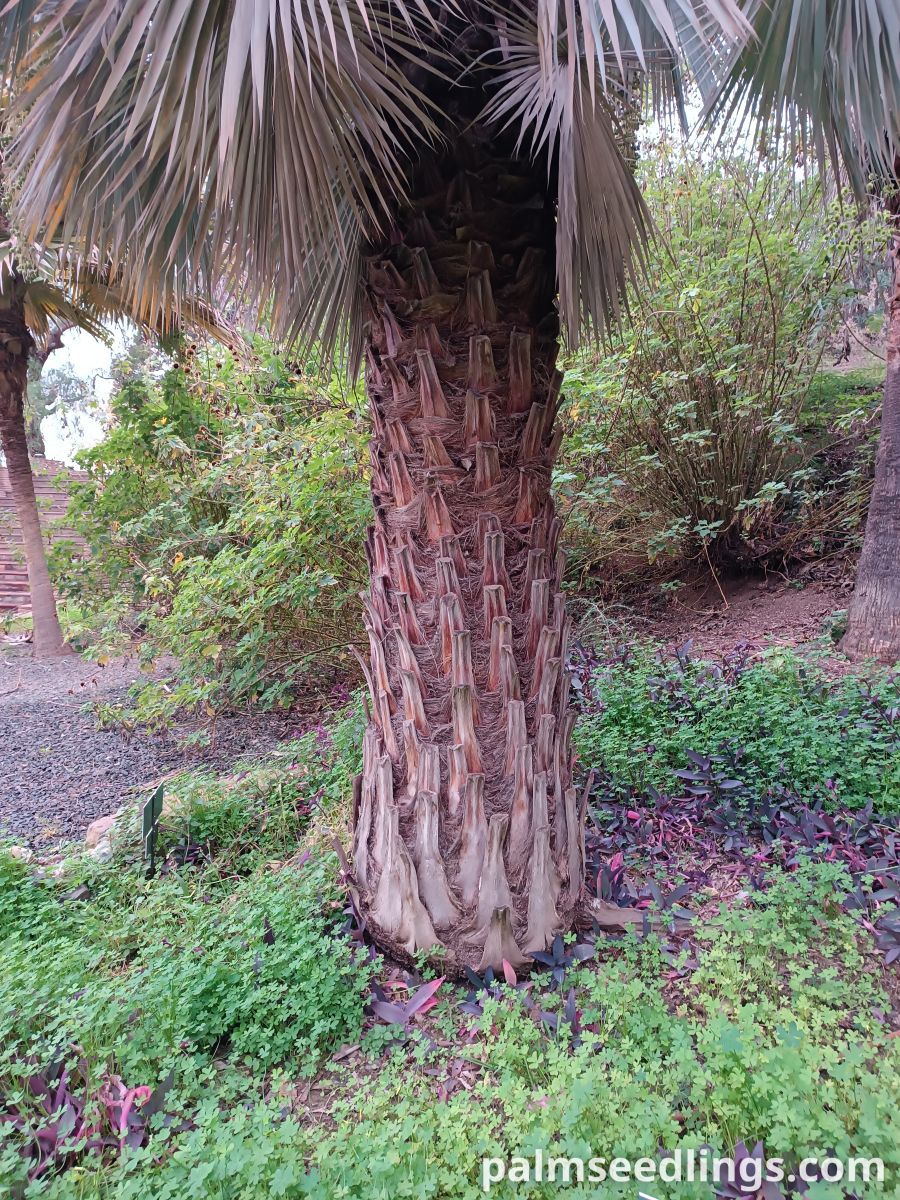
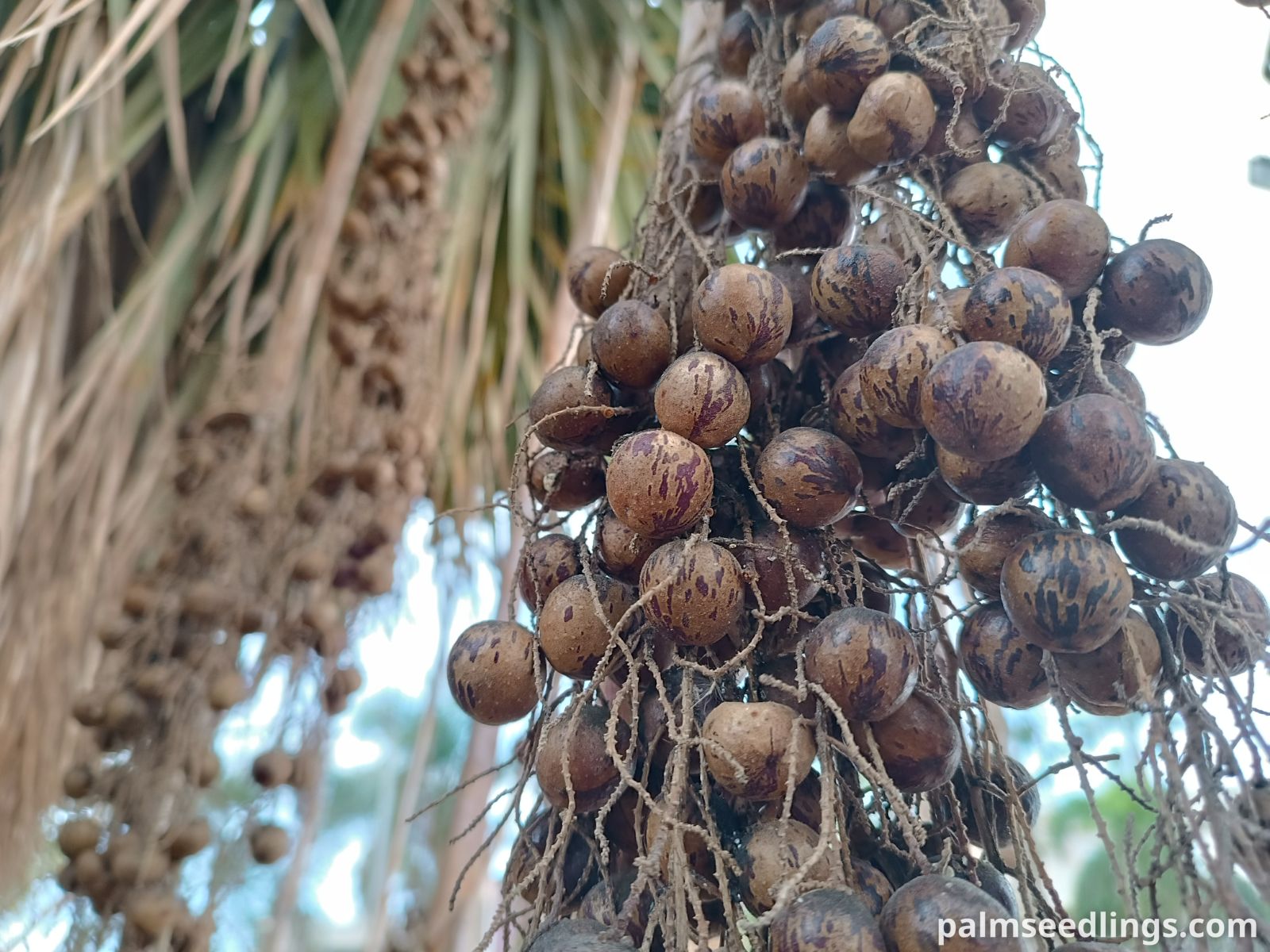
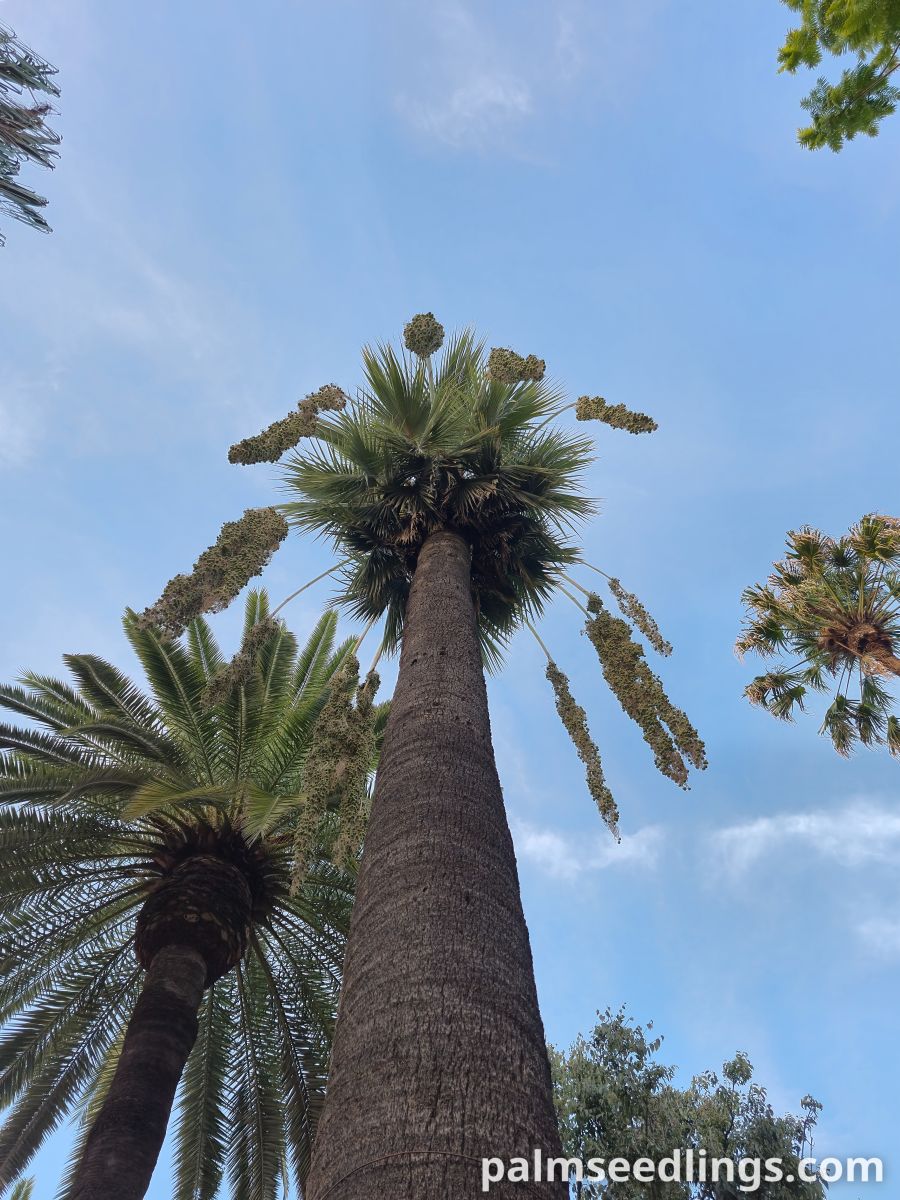
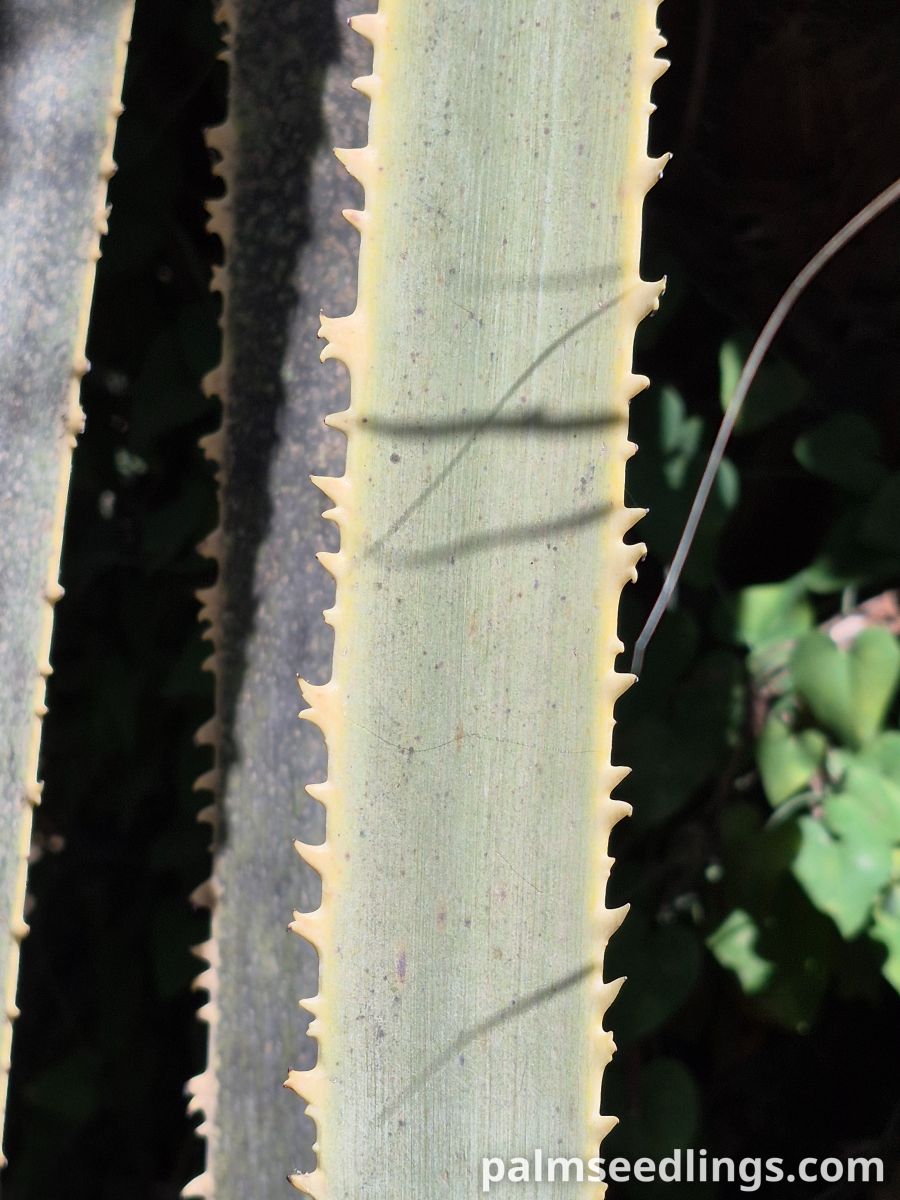
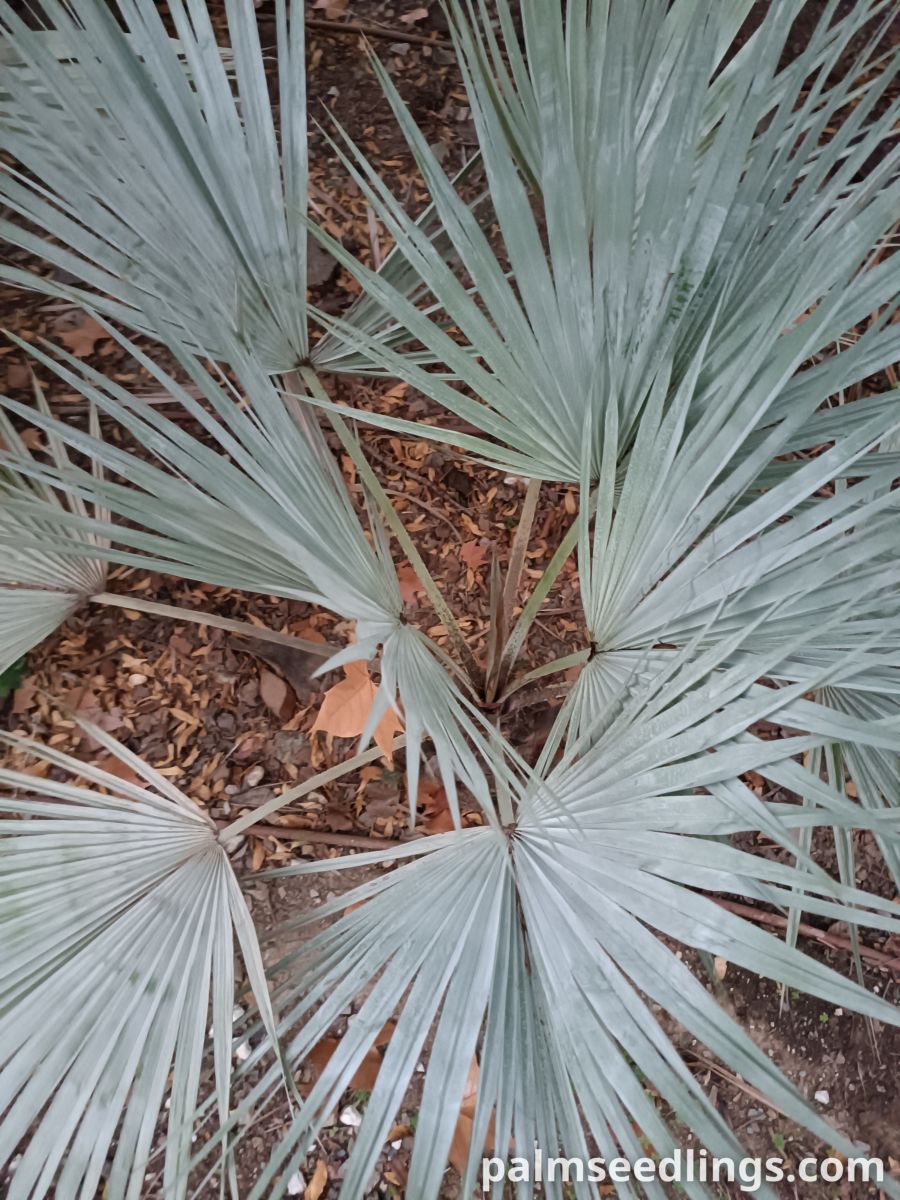
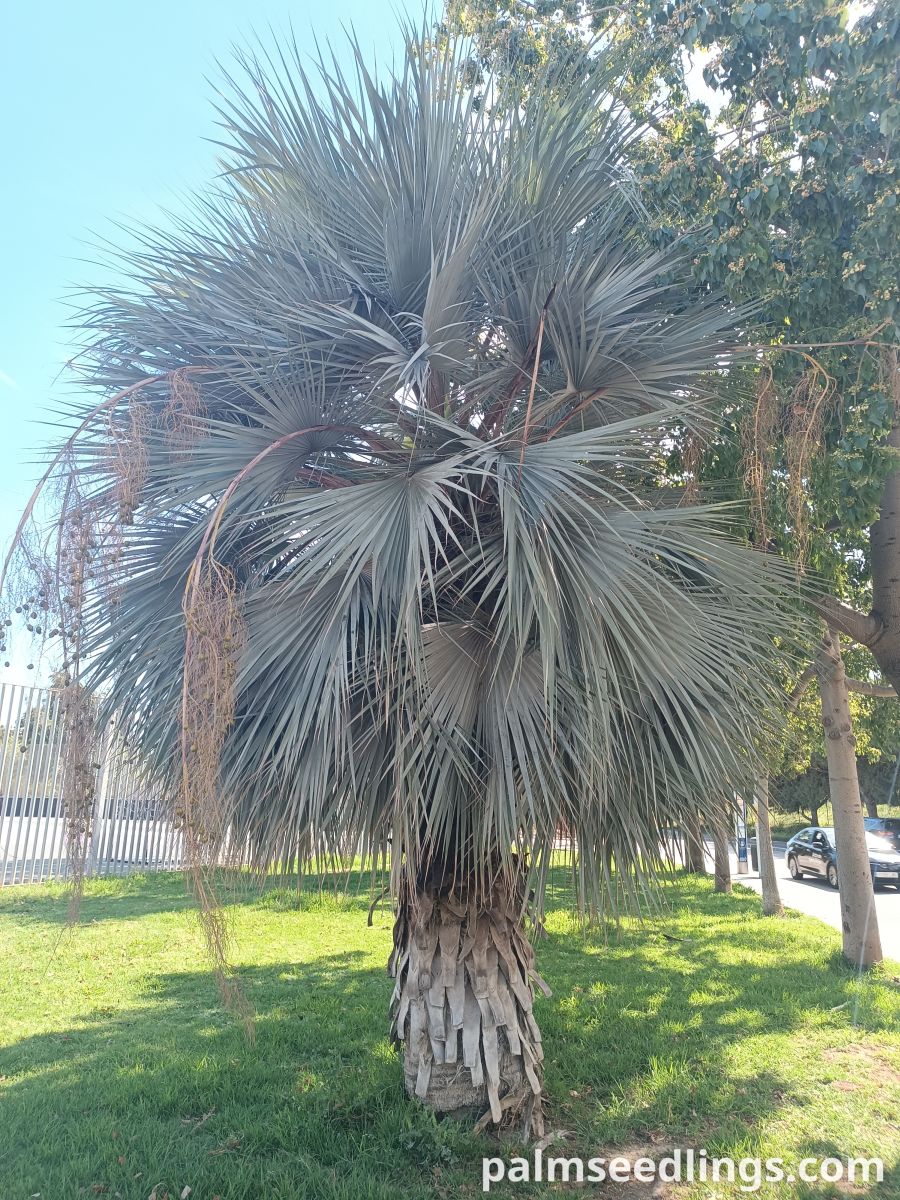
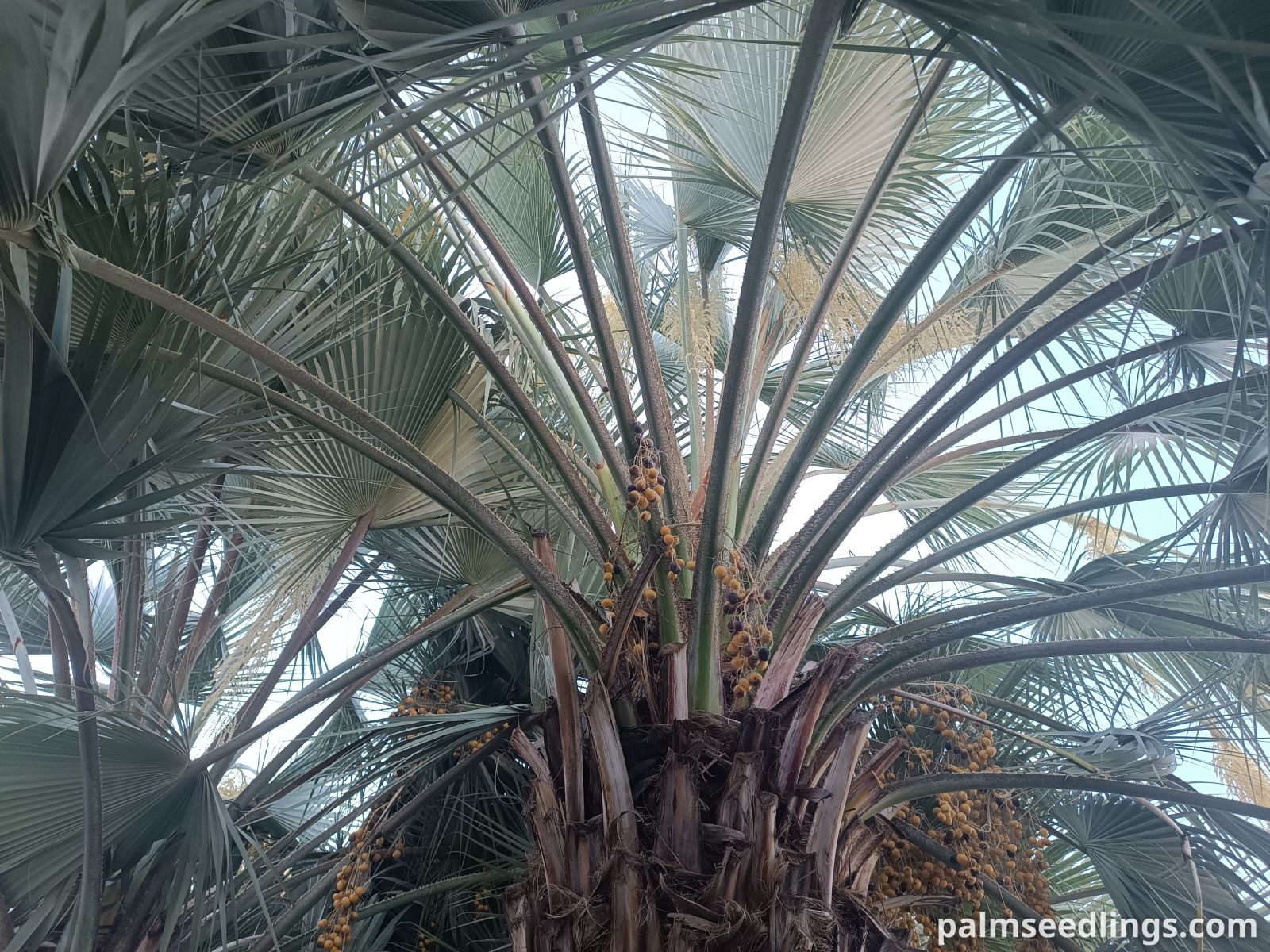
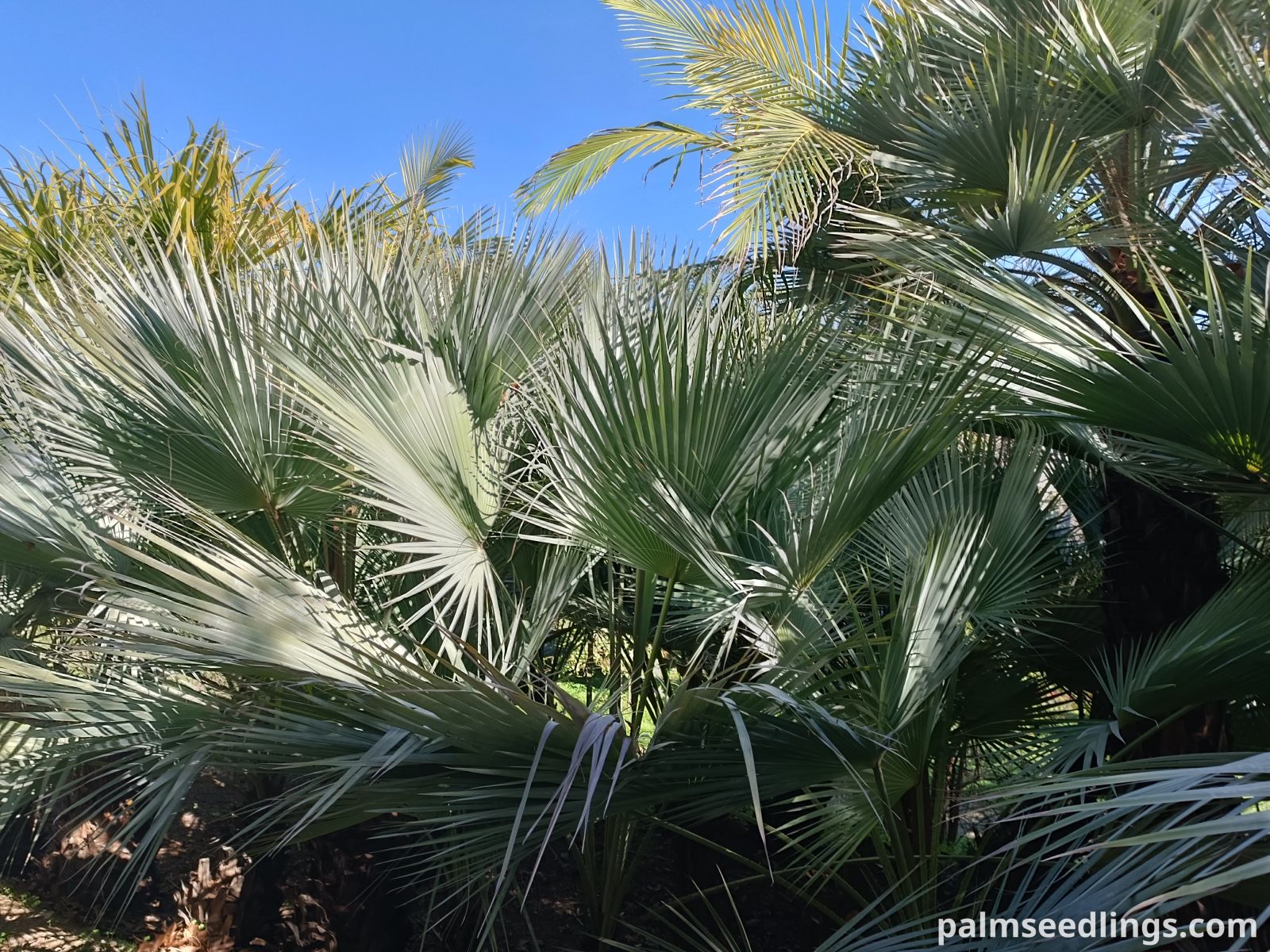
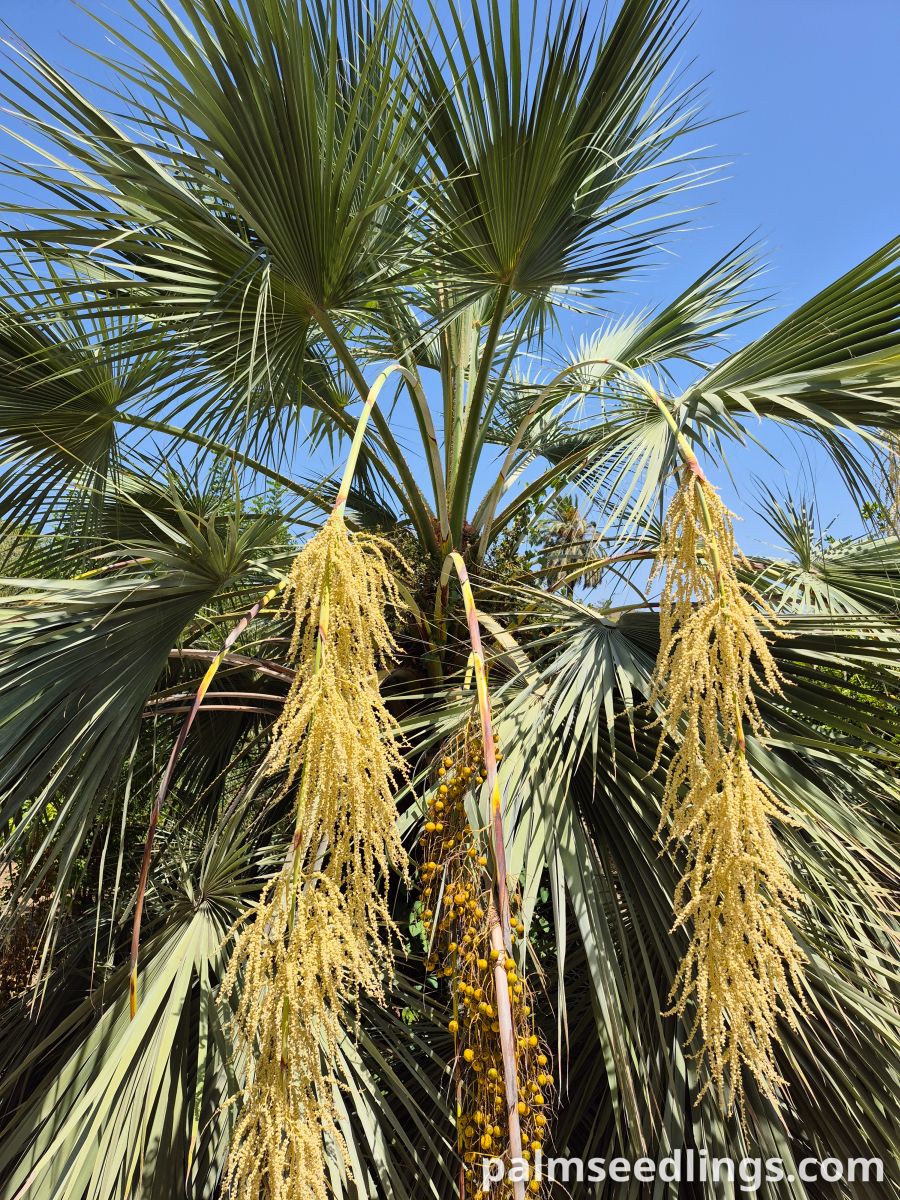
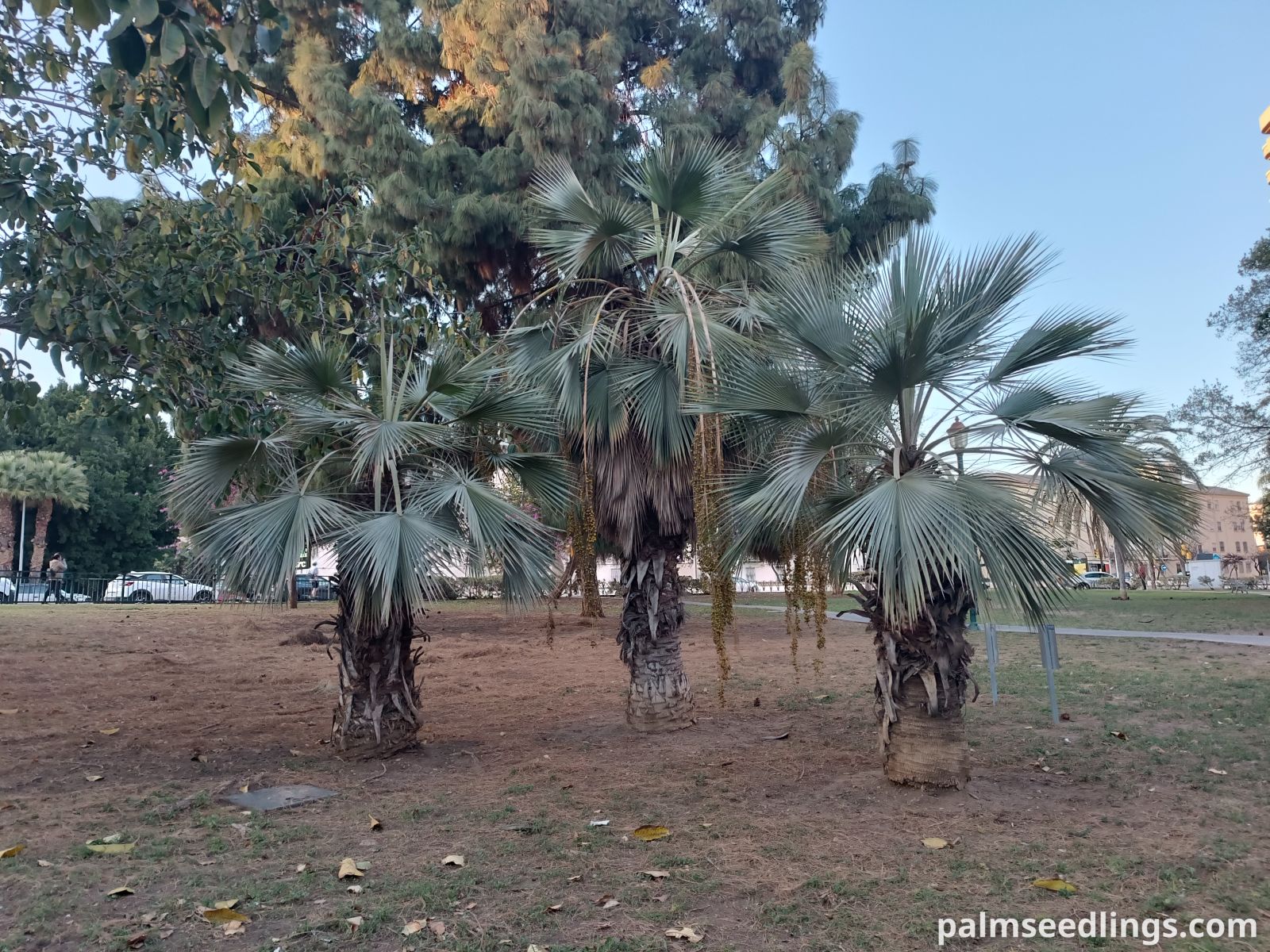
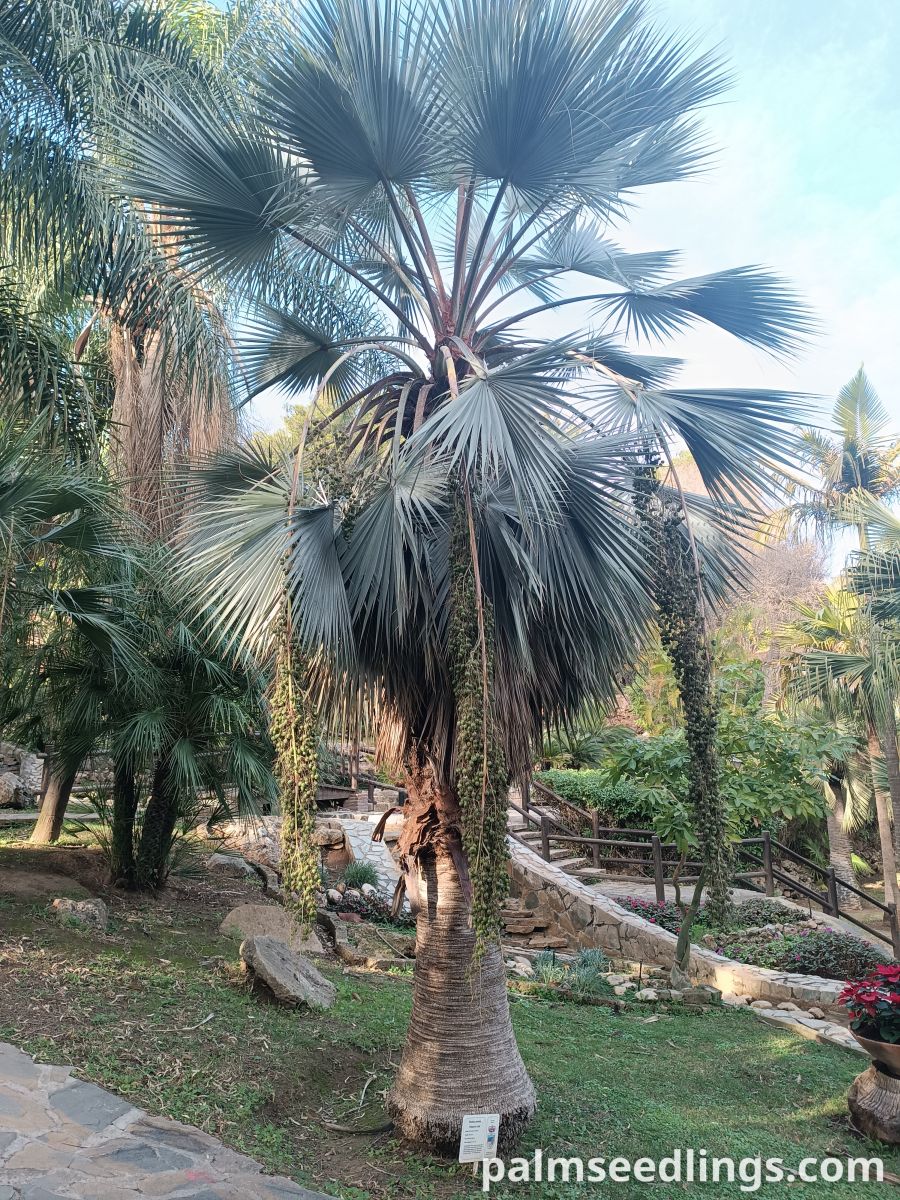
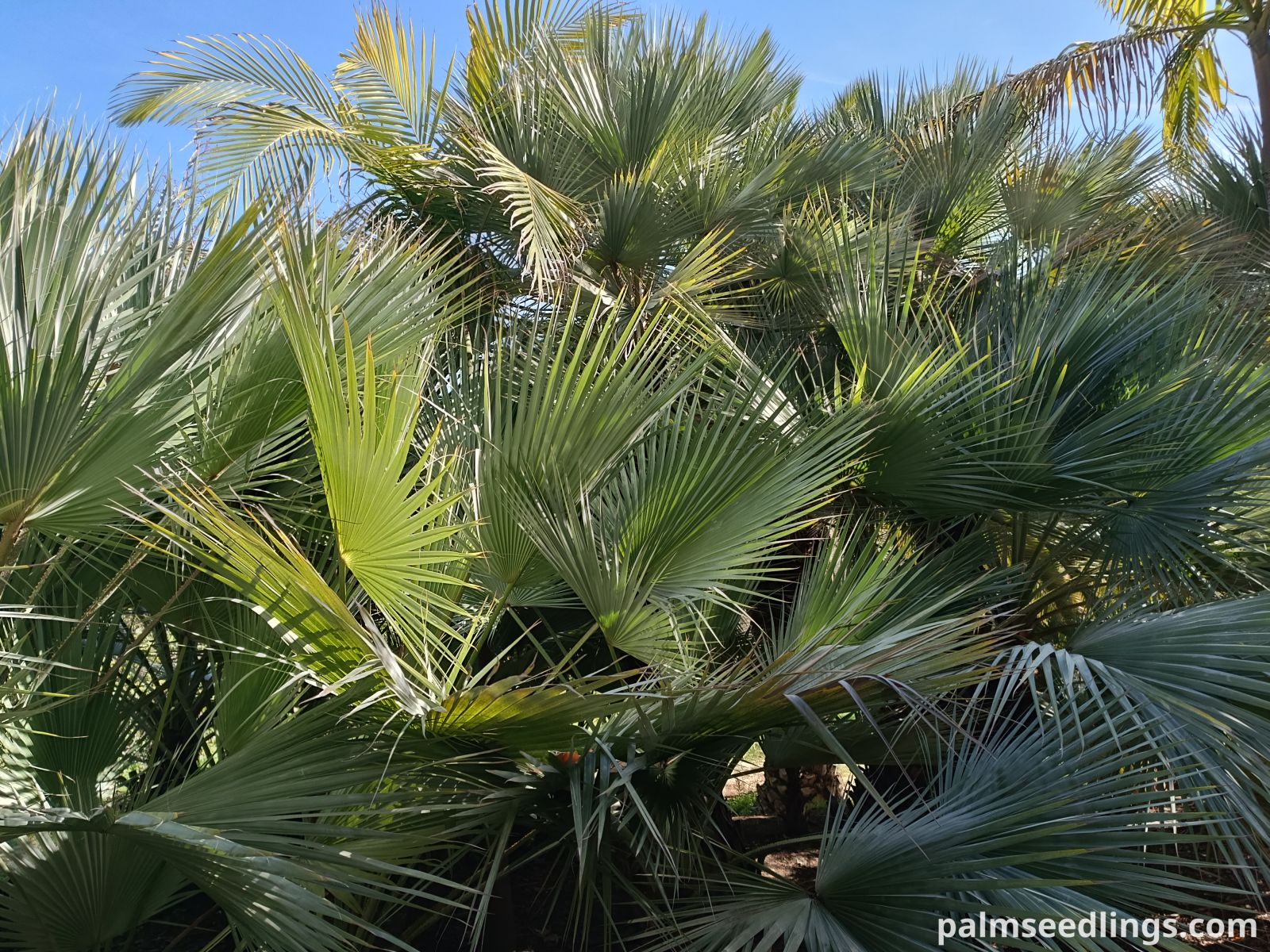
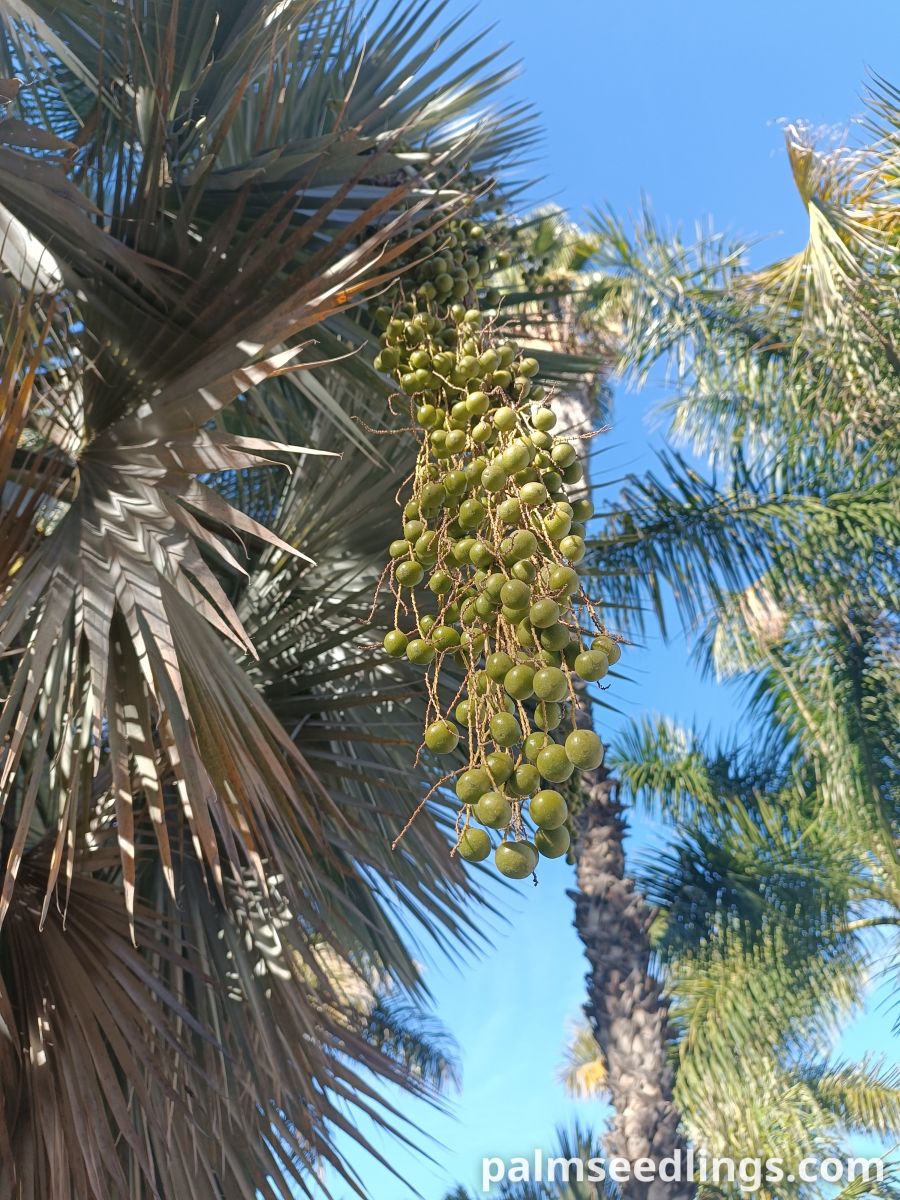
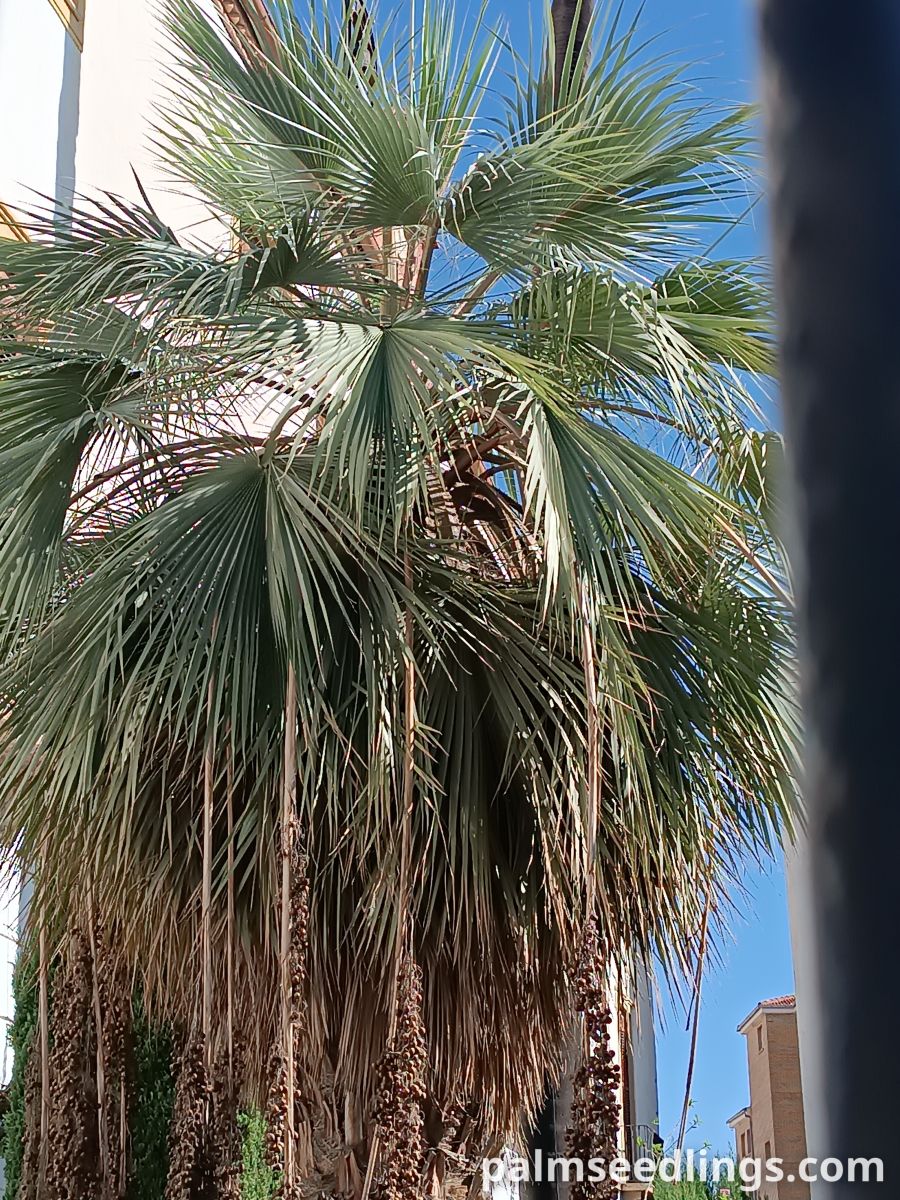
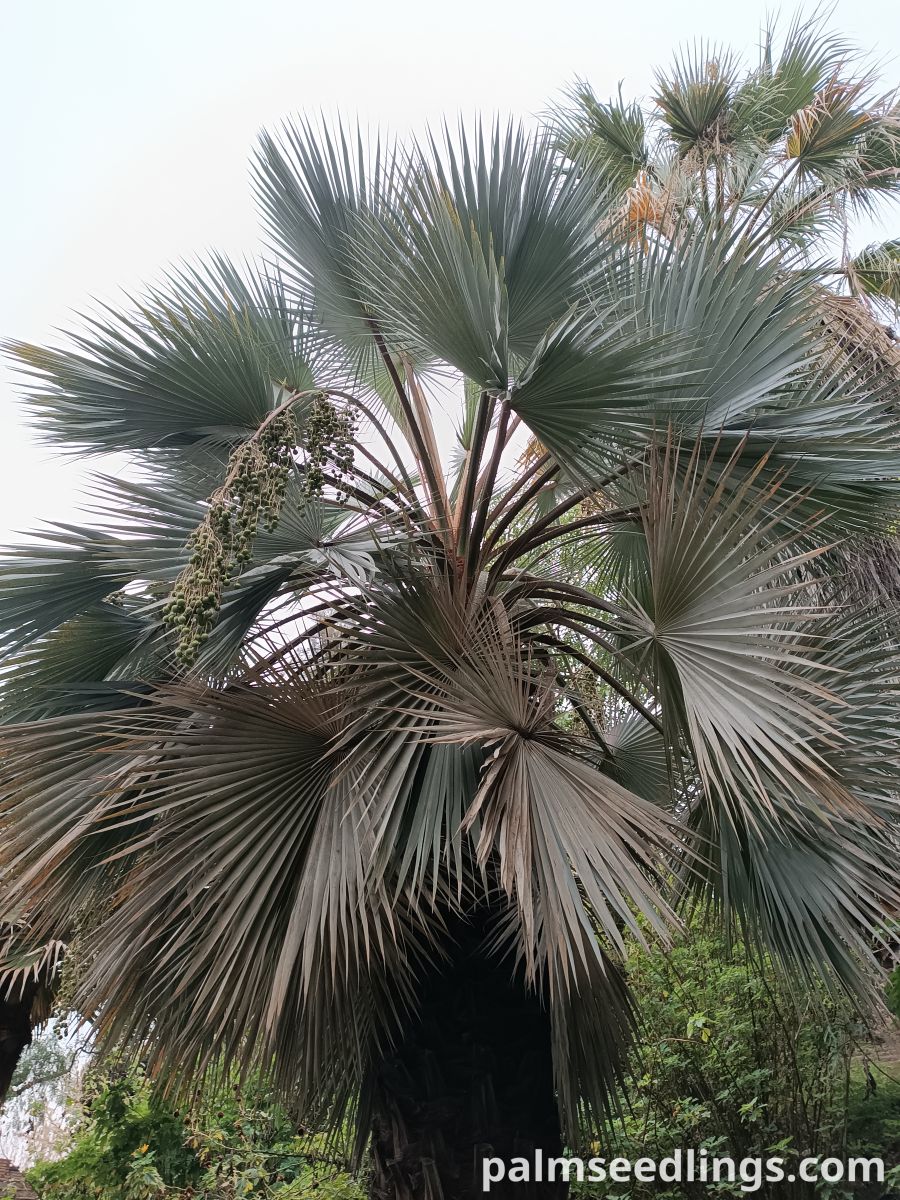
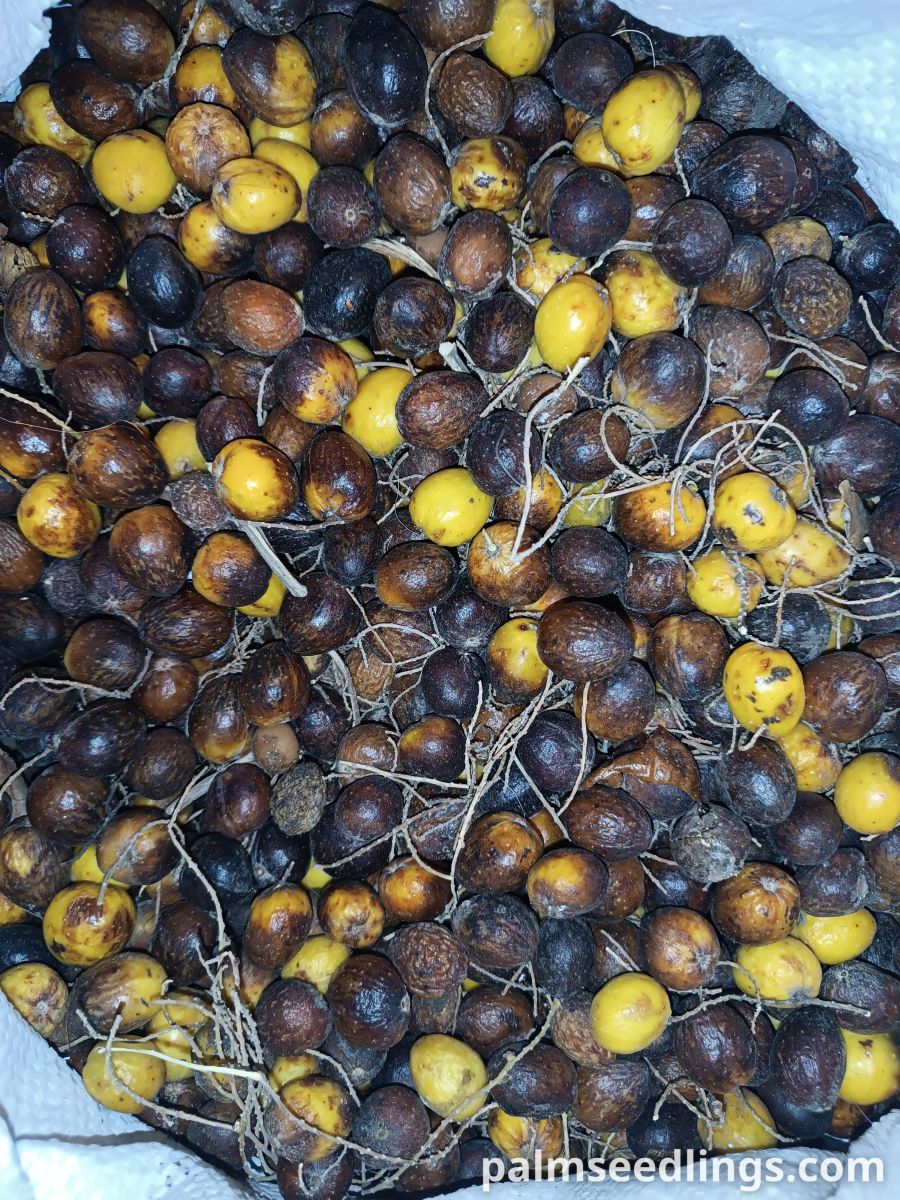
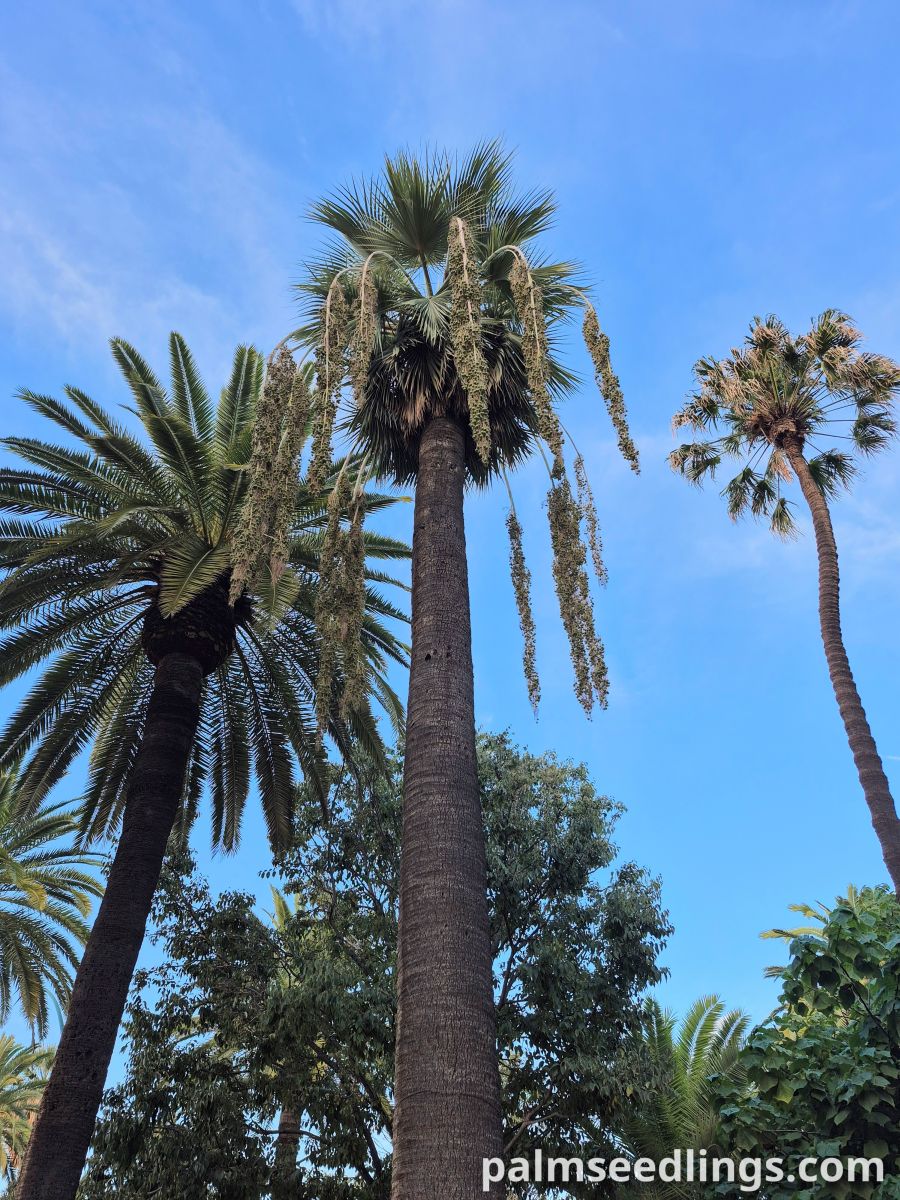
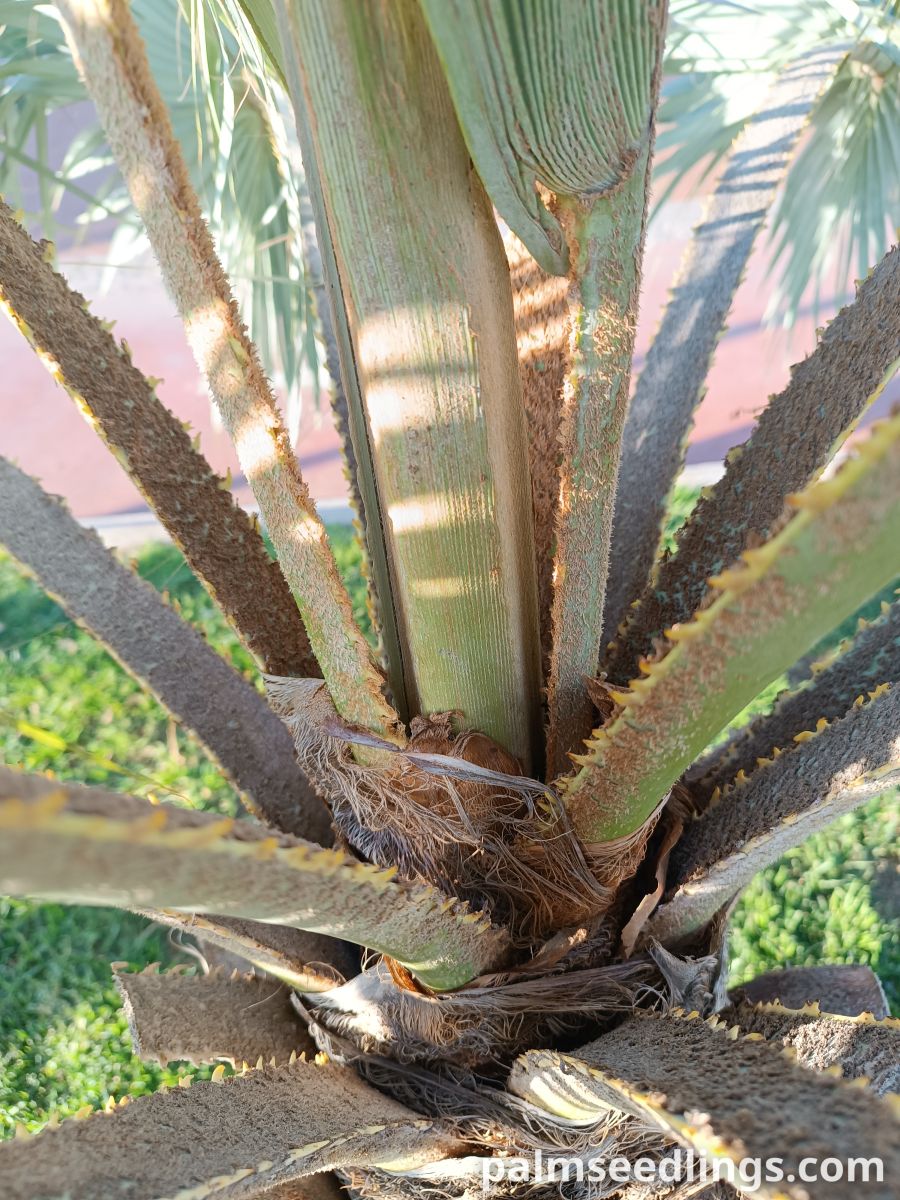
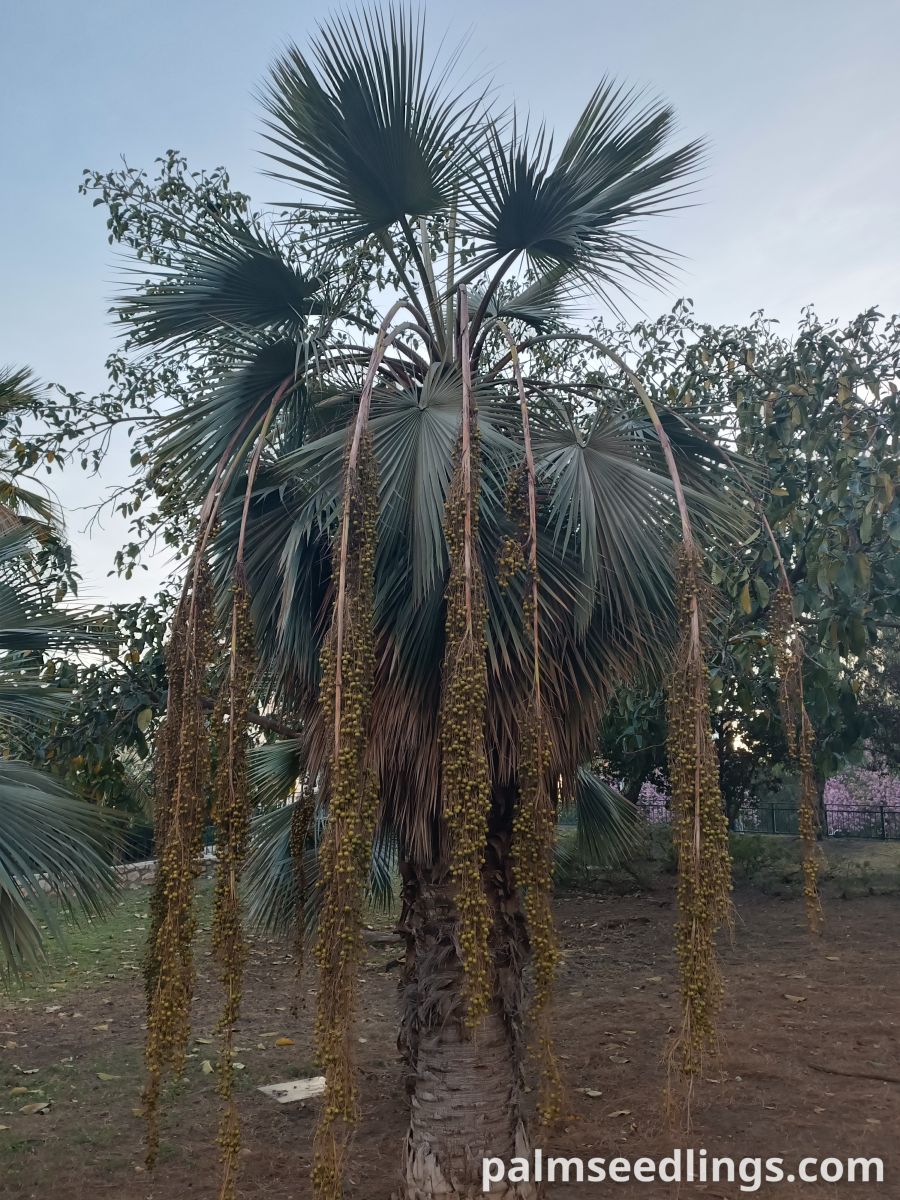
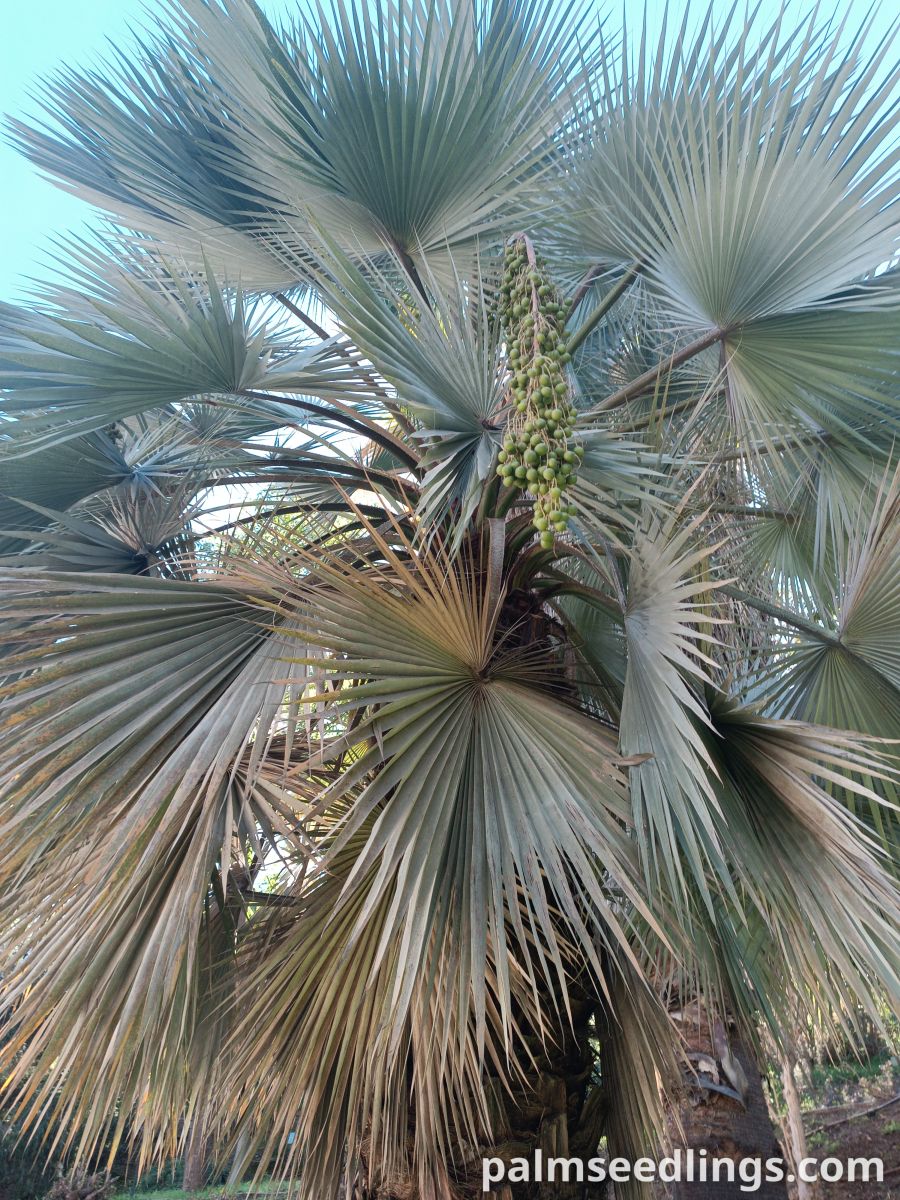
Brahea armata is a solitary fan palm that can reach 12-15 m (40-50 ft) in height with a stout trunk up to 60 cm (24 in) in diameter. The crown is composed of rigid, costapalmate leaves 1.5-2.5 m (5-8 ft) long, with a distinctive bluish-gray to silver coloration. Old leaf bases often persist along the trunk, giving it a rough and armored appearance. The inflorescences are exceptionally long, extending up to 5 m (16 ft) beyond the crown, and produce small, round, brown fruits.
This species is endemic to northwestern Mexico, particularly Baja California and Sonora, where it grows in arid valleys and rocky canyons. It thrives in dry, well-drained soils and is highly drought tolerant. Its natural habitat includes desert scrub and seasonally dry wash areas, where it withstands both intense sunlight and prolonged water scarcity.
Characteristics
| Cold hardiness | -10 °C (14 °F) |
| Growth speed | Slow |
| Rarity | Occasional in cultivation |
| Maximum height | 15 m (50 ft) |
| Drought resistance | Very High |
Annotations and Curiosities
Brahea armata is considered one of the most drought-resistant palms, adapted to survive in arid and semi-arid environments where few other large monocots persist. Its glaucous foliage results from a dense waxy coating on the leaf surface, reducing water loss and reflecting solar radiation. This species is notable for its very long inflorescences, reaching up to 5 m (16 ft), a trait thought to enhance wind pollination efficiency in open desert habitats. In cultivation, it is prized for its architectural form and blue coloration, which make it highly desirable. Despite its ornamental popularity, natural populations in Baja California are fragmented and face habitat pressures, though the species remains locally abundant in protected areas.
Gallery
links
Buy this palm:
➤ Brahea armata palm seeds for sale
➤ Brahea armata palm seedlings for sale
Relevant sites: