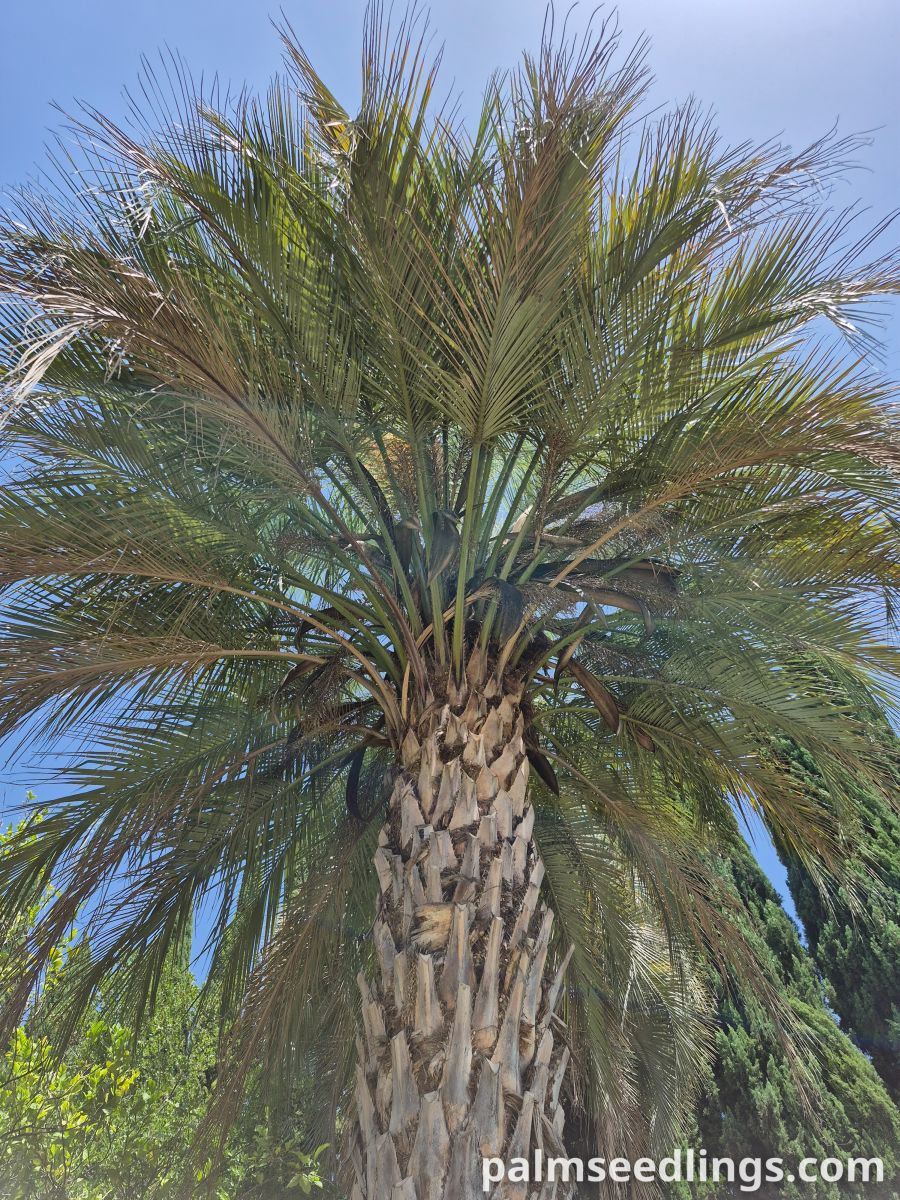
Butia yatay

Common Names: Yatay Palm, Jelly Palm

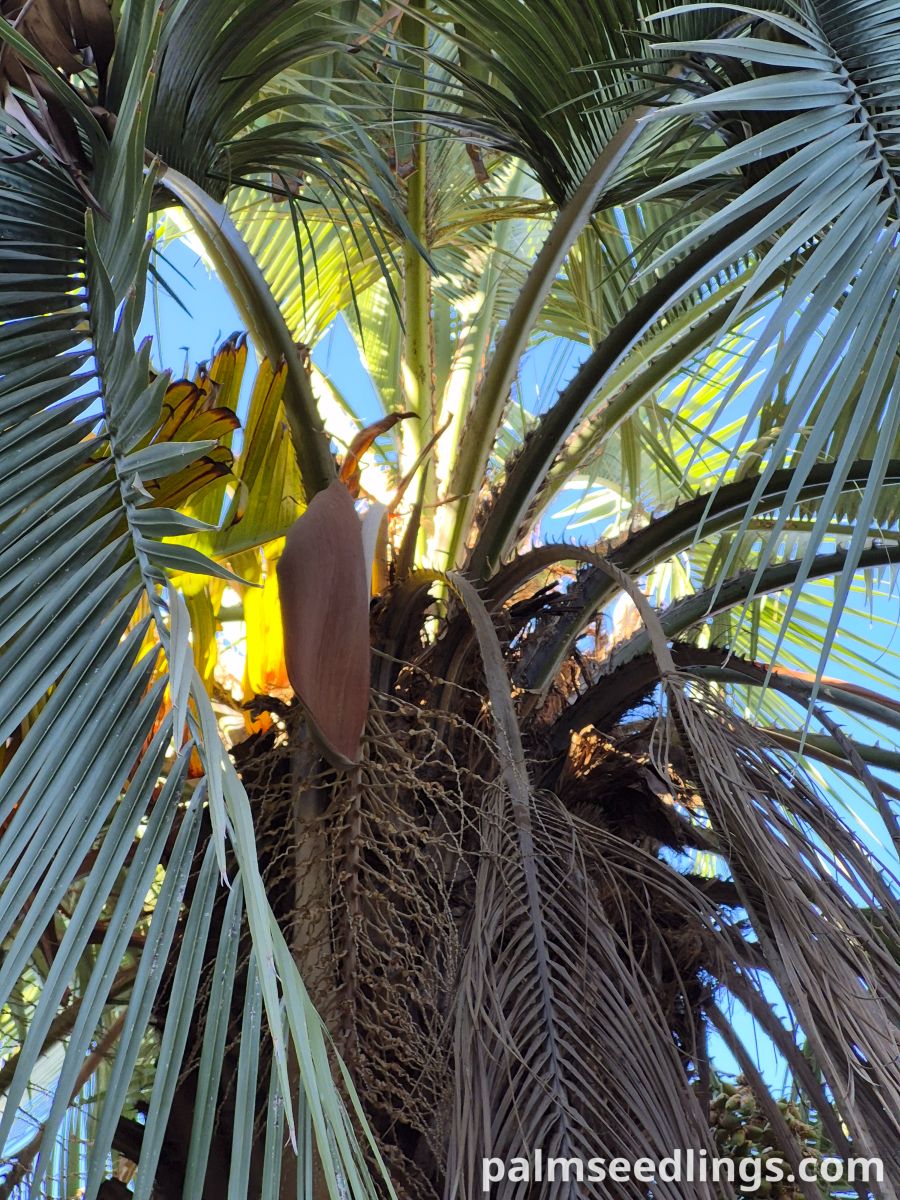
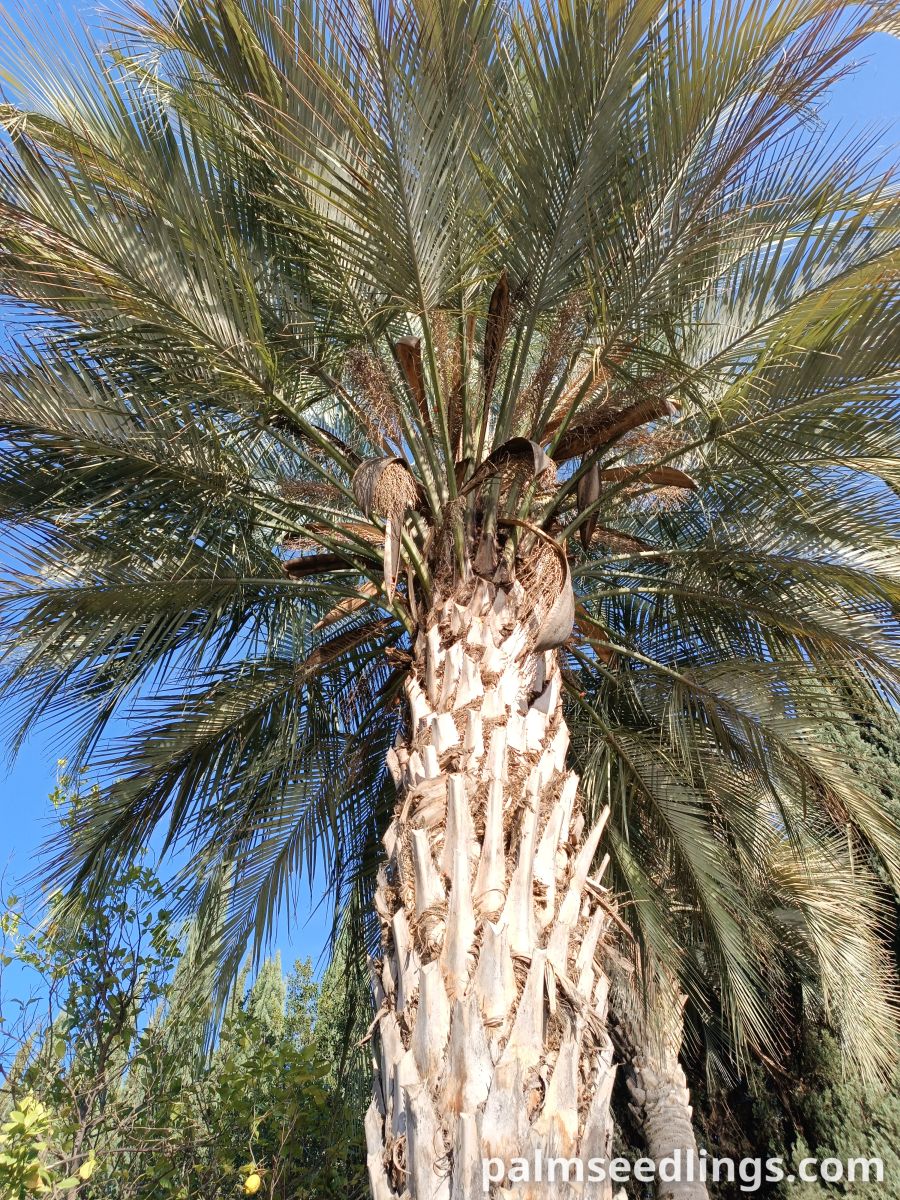
butia yatay whole palm view

Description

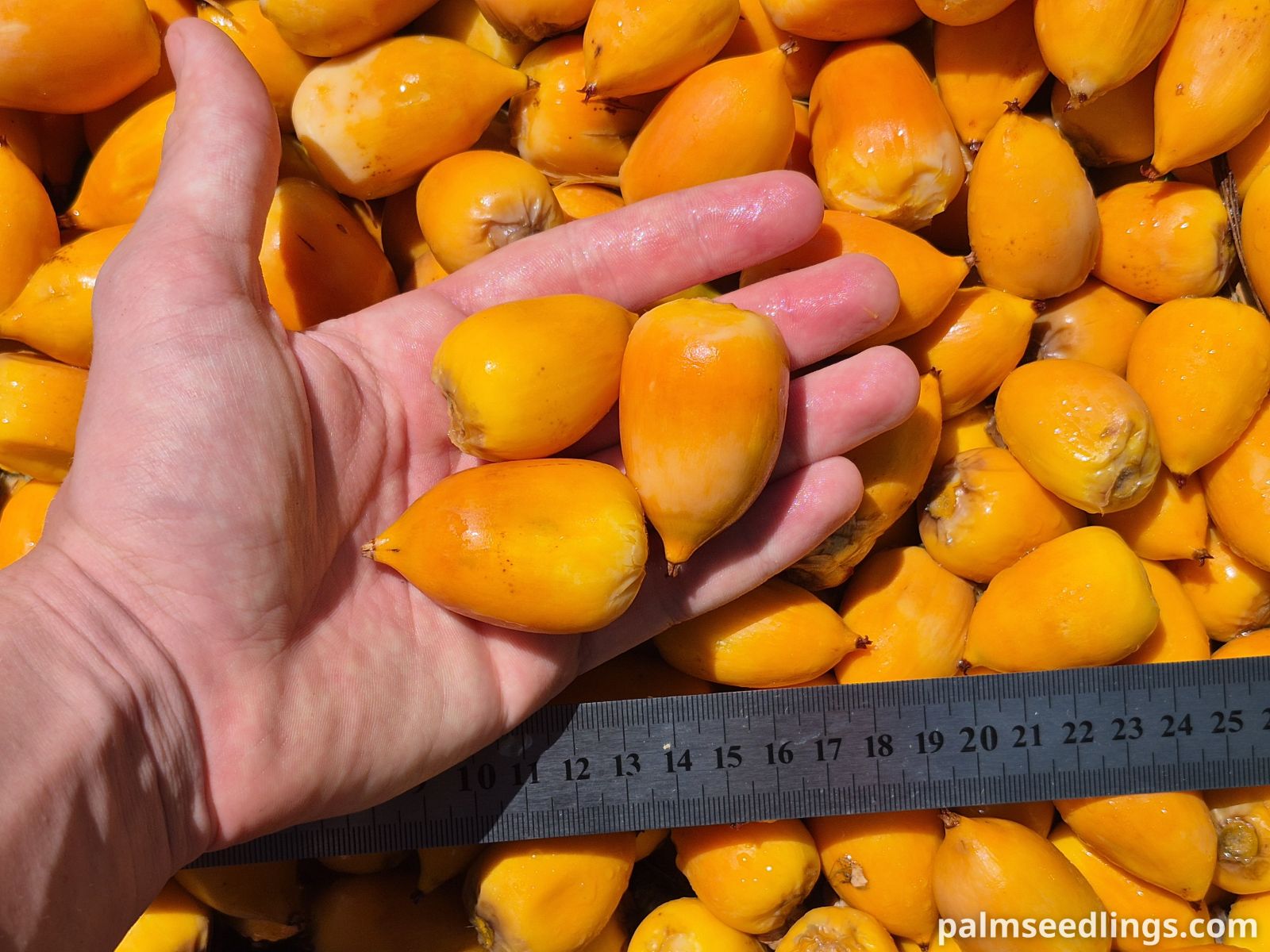
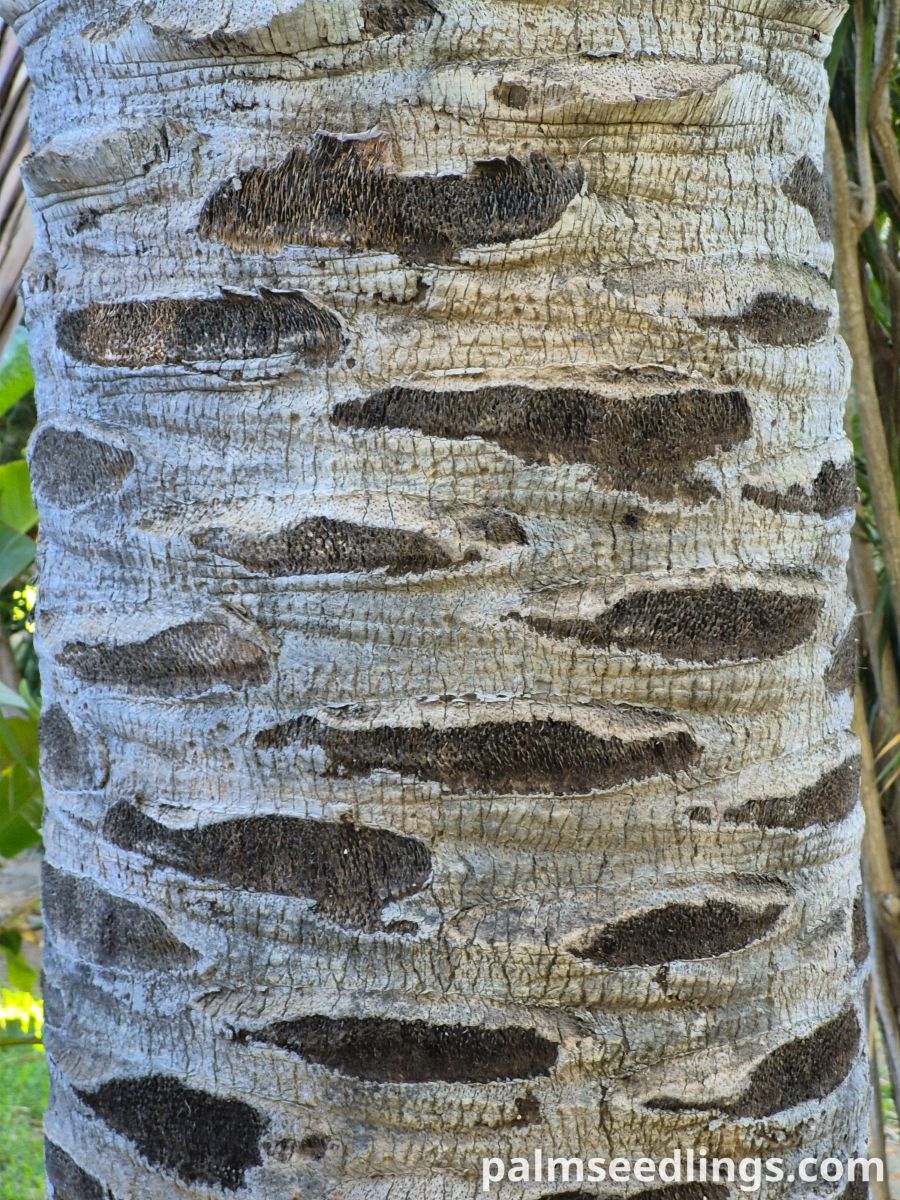
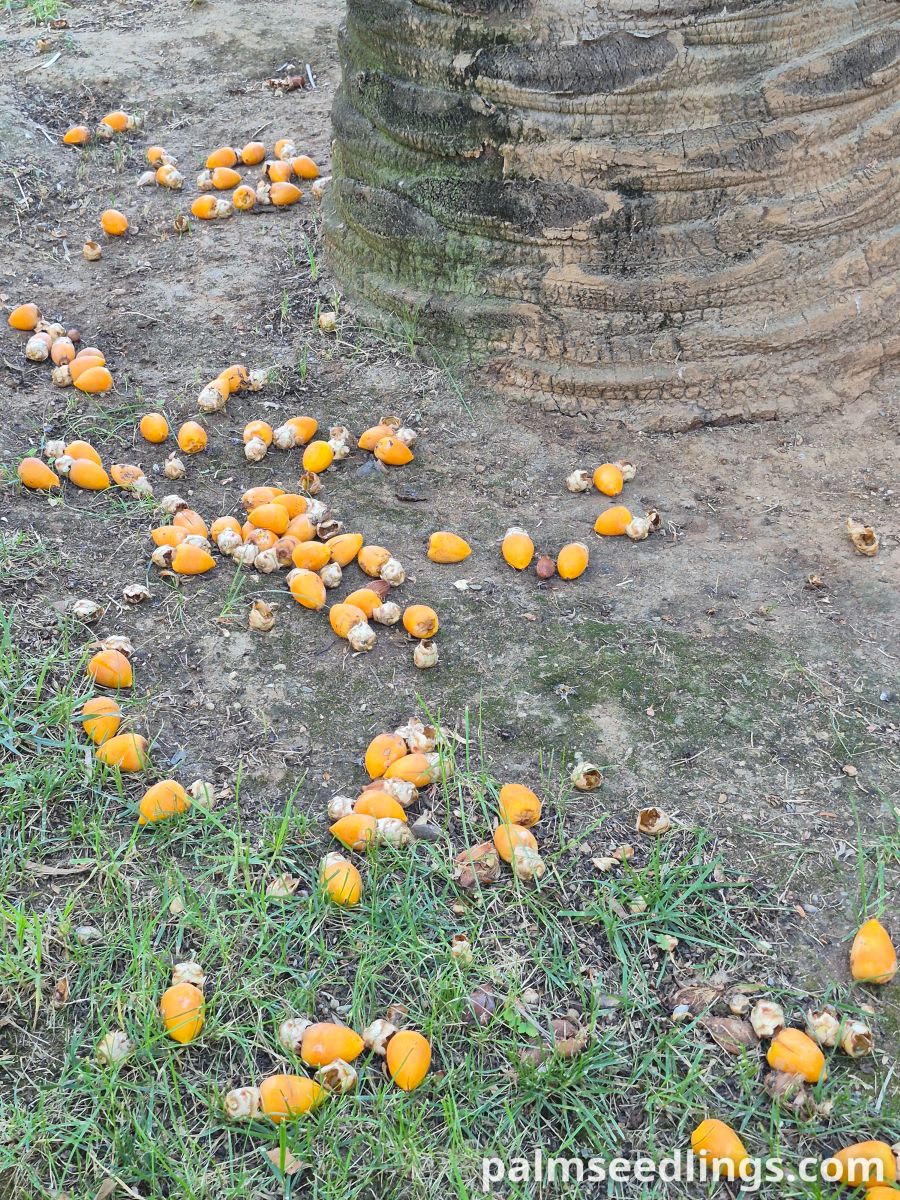
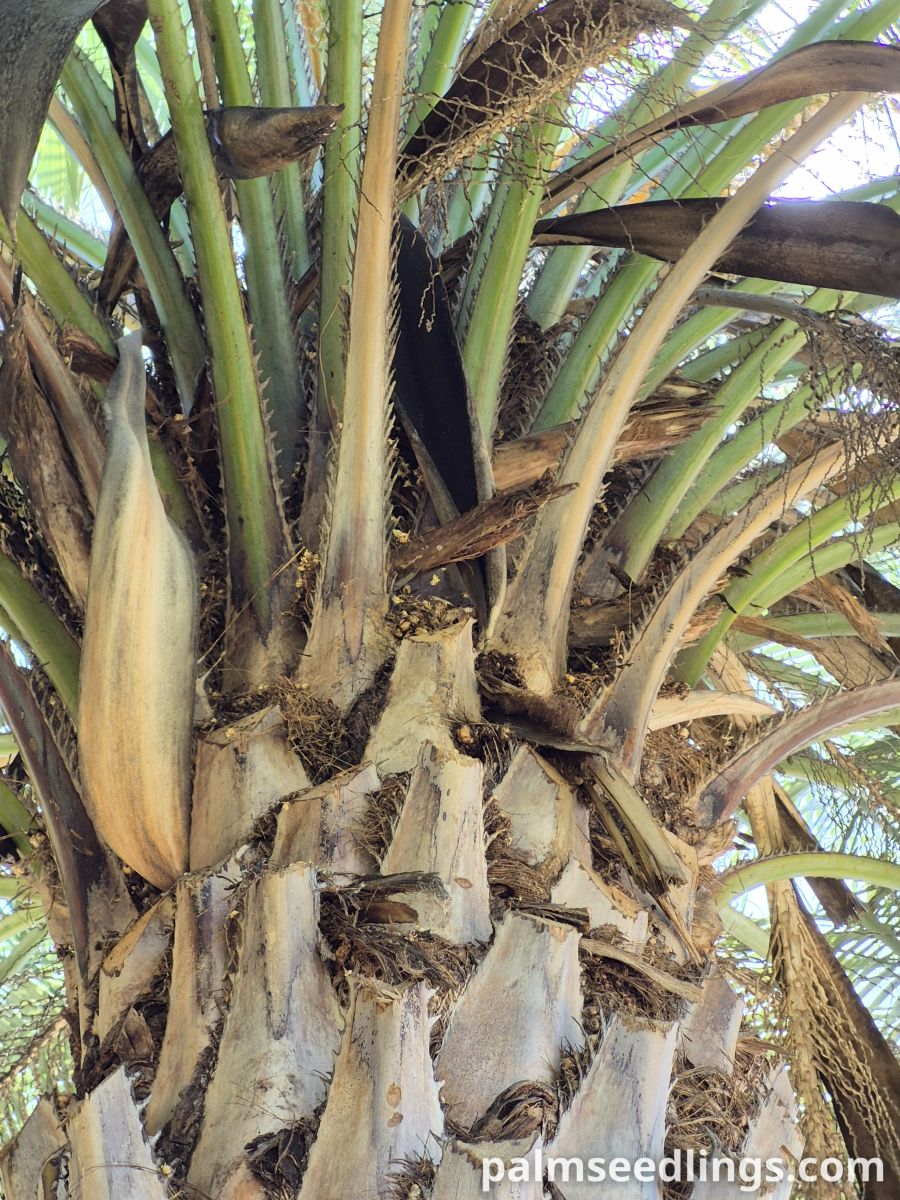
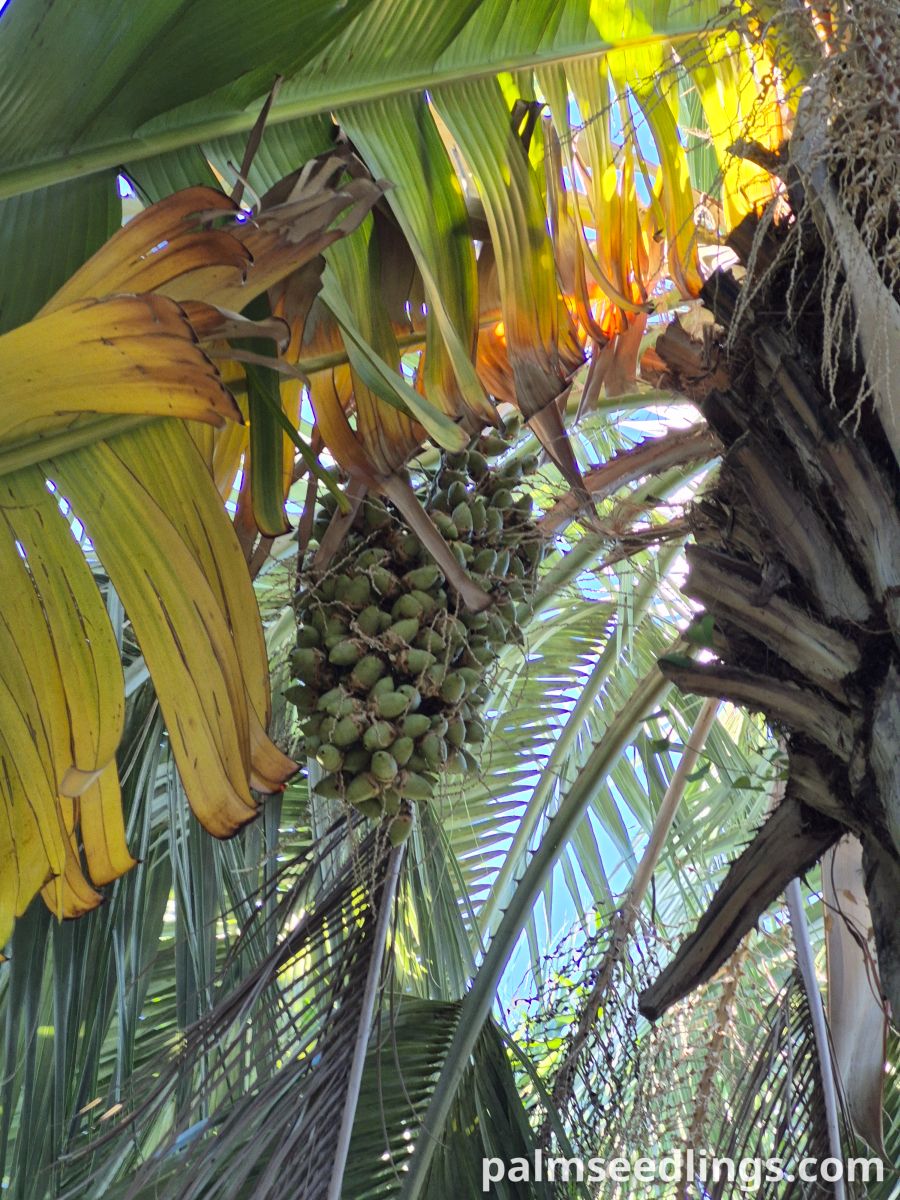
Butia yatay is a large feather palm reaching 12-18 m (40-60 ft) in height with a trunk diameter up to 60 cm (24 in). Its pinnate leaves are 3-5 m (10-16 ft) long, strongly recurved, and glaucous-green to bluish in color, forming a broad, open crown. The leaf bases are persistent at the trunk base, and the canopy is often tilted to one side due to the recurving of leaves. The fruits are yellow to orange, 4-5 cm (1.6-2 in) in diameter, edible, and rich in aromatic compounds, resembling those of Butia odorata but larger.

This species is native to southern Brazil, Uruguay, Paraguay, and northeastern Argentina, where it inhabits grasslands, savannas, and dry woodlands. It is adapted to subtropical climates with periodic drought, thriving in sandy and rocky soils. The palm occurs both in isolated stands and in extensive groves, often forming part of the characteristic “yatayales” of Uruguay and Argentina.
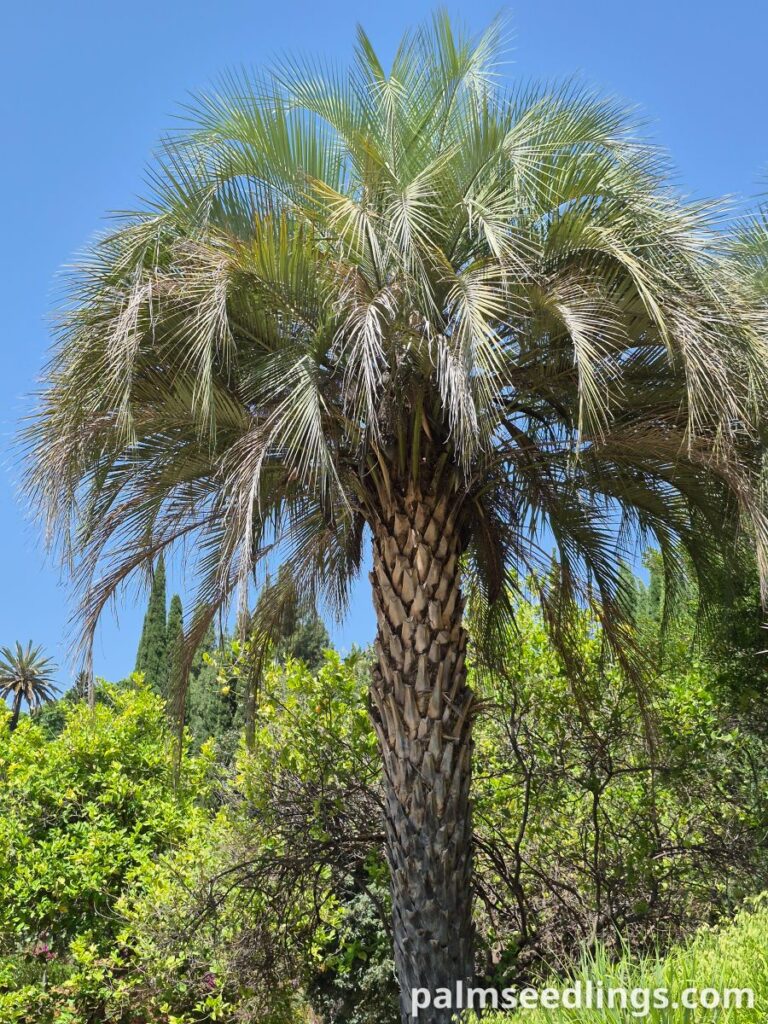

Characteristics

Cold hardiness -8 °C (18 °F)
Growth speed Slow
Rarity Occasional in cultivation
Maximum height 18 m (60 ft)
Drought resistance High
Salt tolerance Moderate

Annotations and Curiosities

Butia yatay is the tallest species in the genus and can form impressive groves, some of which are protected as natural monuments in Argentina and Uruguay. Its fruits, larger than those of Butia odorata, have been locally consumed fresh or processed into preserves and alcoholic beverages. Taxonomically, Butia yatay is sometimes confused with Butia paraguayensis in overlapping ranges, but it is easily distinguished by its much taller stature and larger fruits. The species demonstrates notable tolerance to drought but is less cold-hardy than B. odorata, limiting its success in the cooler parts of subtropical regions. Ecologically, it plays an important role in savanna ecosystems, as its fruits are consumed by birds and mammals that aid in seed dispersal.

Gallery

links