Description
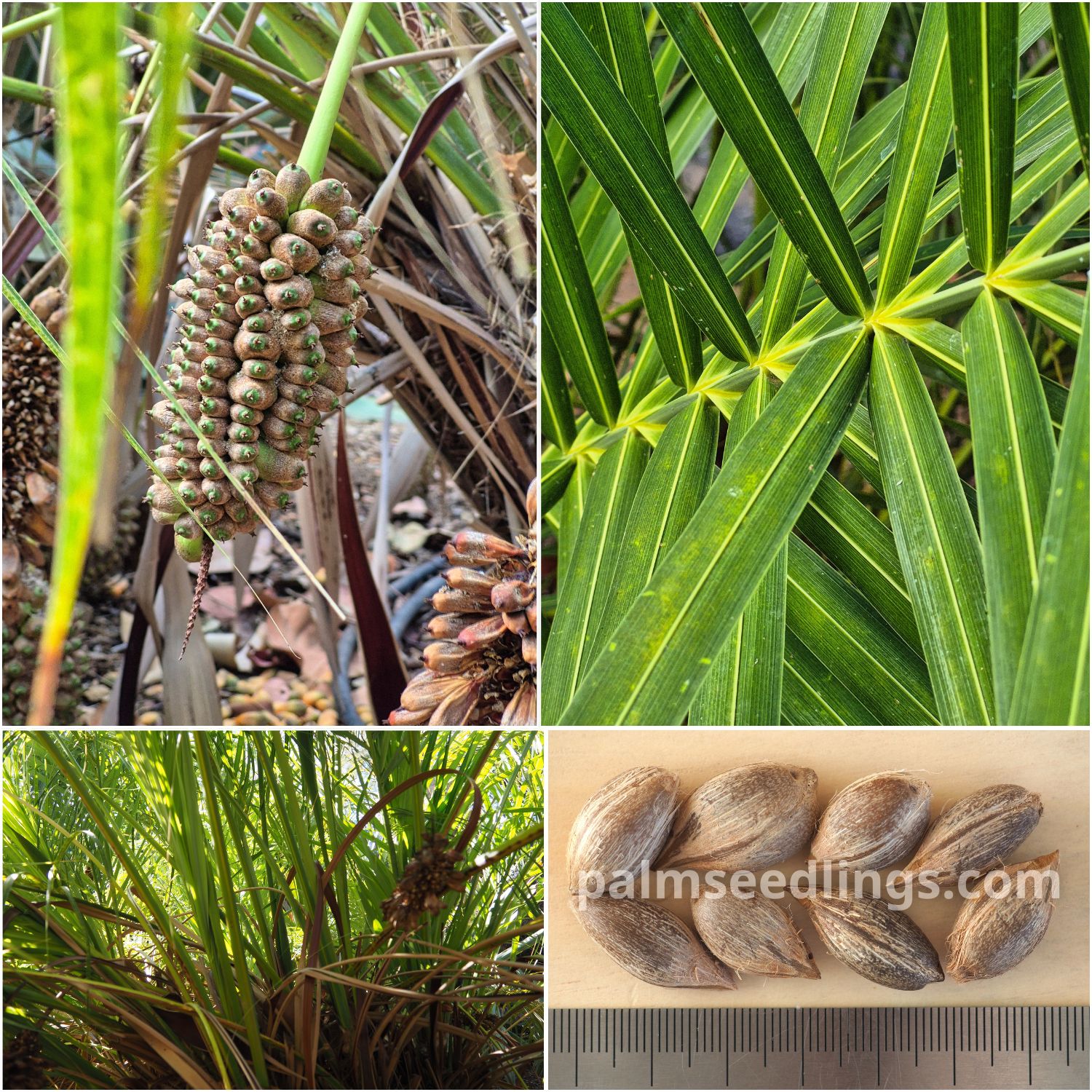
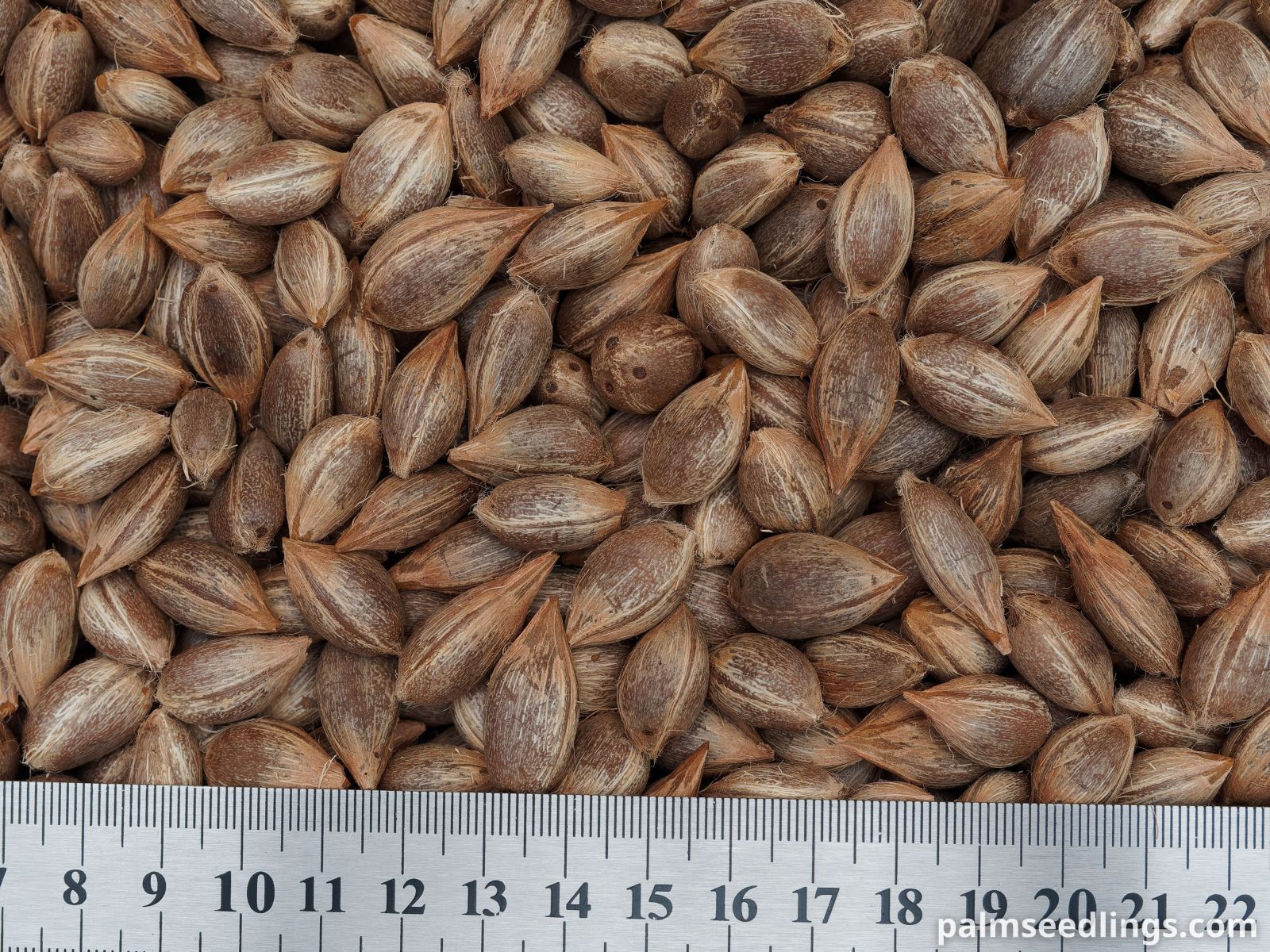
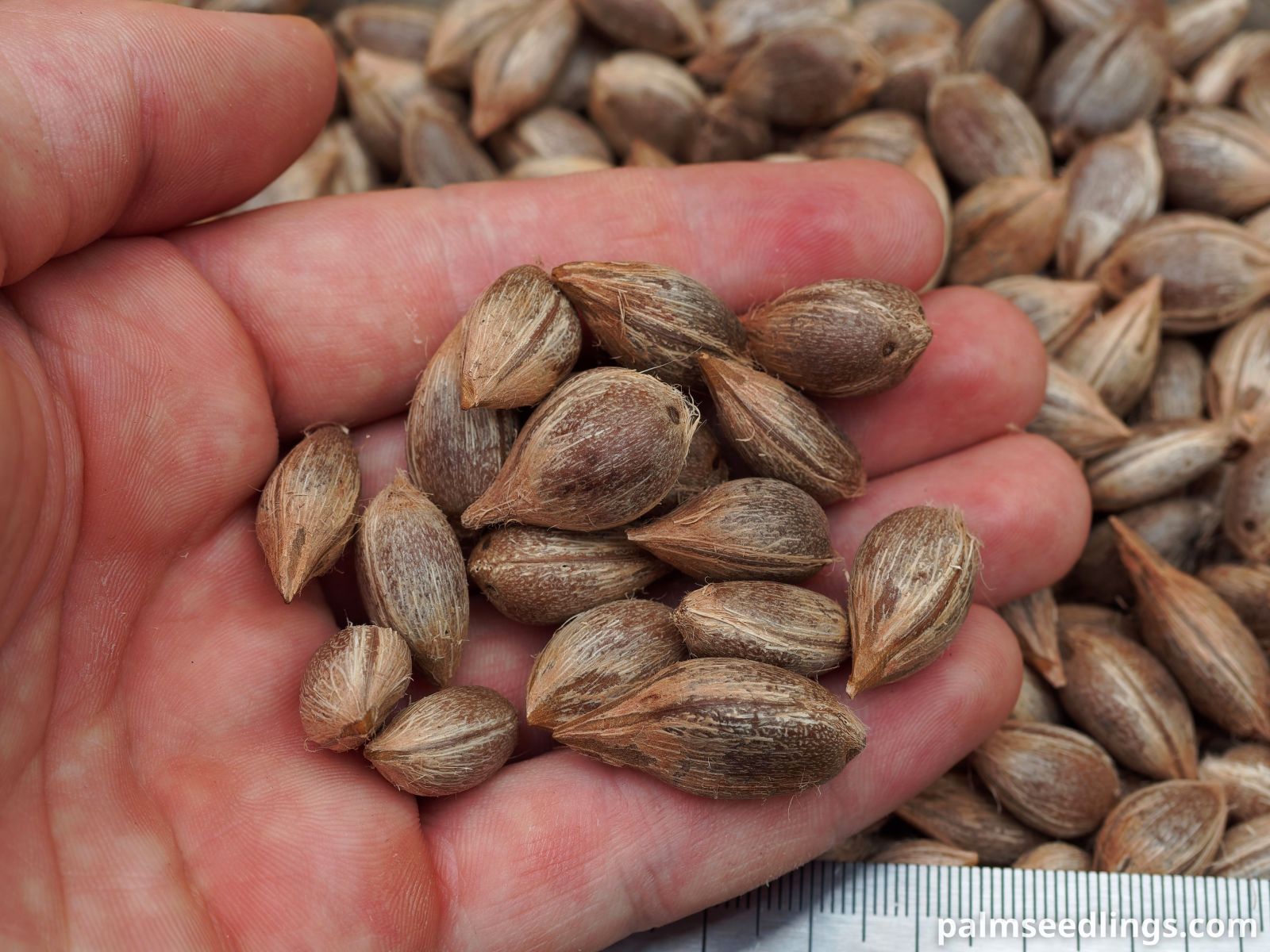
Allagoptera leucocalyx is a diminutive, primarily acaulescent feather palm that typically forms a subterranean or very short trunk, occasionally branching below ground to produce a clustered appearance. The gracefully arching canopy consists of plumose, pinnate leaves measuring 1 to 1.5 m (3 to 5 ft) in length. Each leaf features stiff, narrow leaflets that display a deep green adaxial surface contrasting with a striking silvery glaucous underside. As a monoecious species, it produces unique spicate inflorescences characterized by a distinctly pale or whitish calyx, which directly inspires its specific epithet. These flowers eventually develop into tight clusters of ovoid fruits that ripen to a vibrant yellow-orange and are distinctively covered in a fine brown fuzz.
Native to the expansive Cerrado, open savannas, and rocky grasslands of Brazil, Bolivia, Paraguay, and northern Argentina, this species thrives in sandy, well-draining soils at elevations up to 1000 m (3280 ft). Its evolutionary adaptations to harsh, sun-baked environments make it exceptionally resilient in cultivation. Landscapers value it as a robust, low-growing structural plant that effortlessly endures intense heat, dry winds, and poor soil fertility. While it benefits from light shade during the seedling stage, mature specimens require full, direct sunlight to maintain a tight, compact crown and achieve optimal health in warm temperate or subtropical gardens.