Description
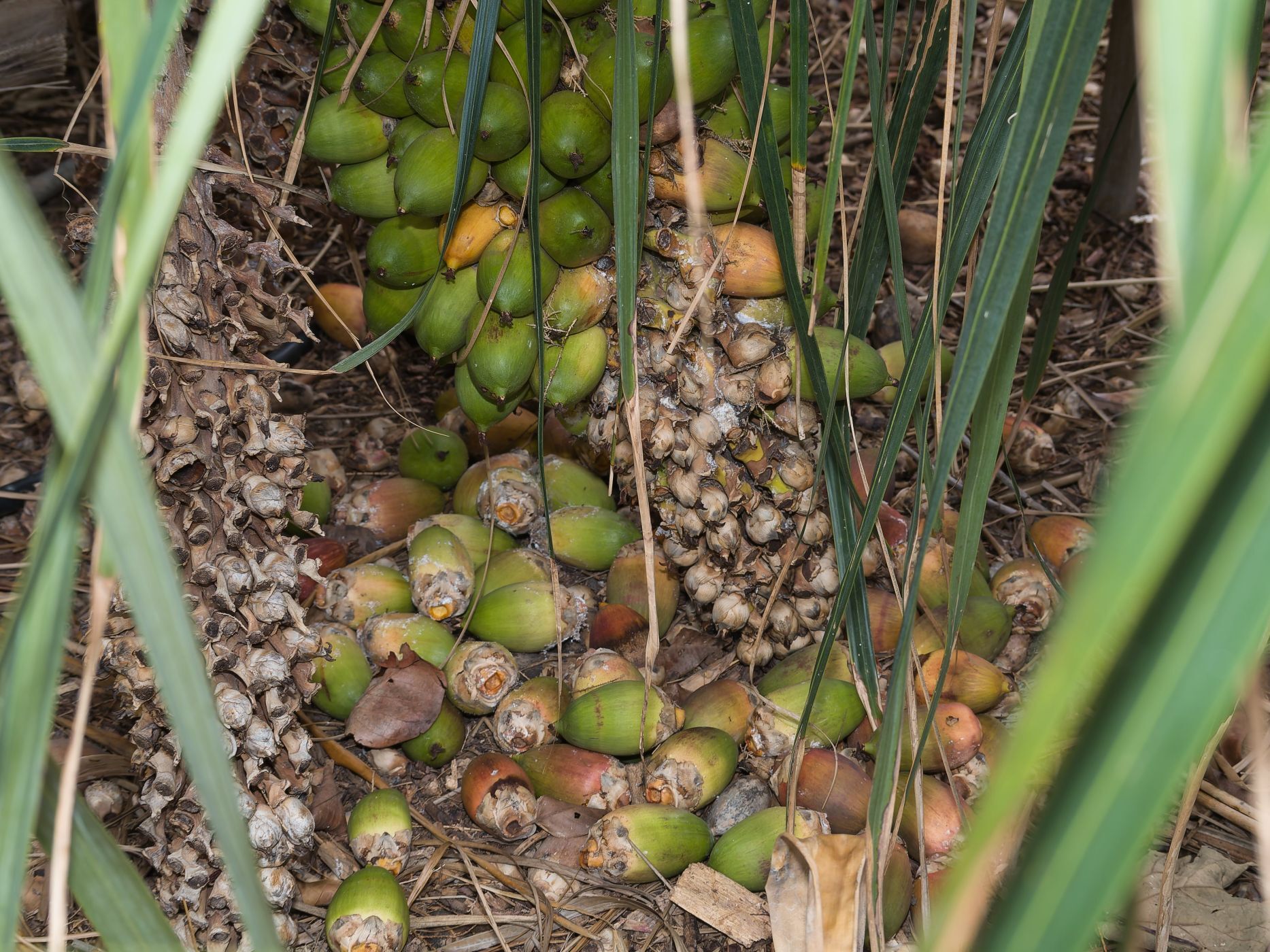
Attalea phalerata is a massive, solitary feather palm characterized by a thick, columnar trunk. In juvenile stages, the stem retains persistent leaf bases for many years before shedding them to reveal a relatively smooth, scarred surface. The massive canopy consists of strongly ascending pinnate leaves that reach 5 to 7 m (16 to 23 ft) in length. The leaflets are clustered and arranged in multiple planes along the rachis, creating a distinct plumose appearance. As a monoecious species, it produces heavy woody spathes that open to reveal branched inflorescences. These yield massive clusters of large, ovoid fruits that ripen to a brownish yellow.
Endemic to the Pantanal, Amazon basin, and Cerrado ecosystems across Brazil, Bolivia, Peru, and Paraguay, this palm is highly adaptable. It naturally inhabits seasonally flooded plains and open gallery forests. In cultivation, it demands a massive spatial footprint and prefers deep, organically rich soils. Full sun exposure is mandatory for optimal growth and structural stability.