Description
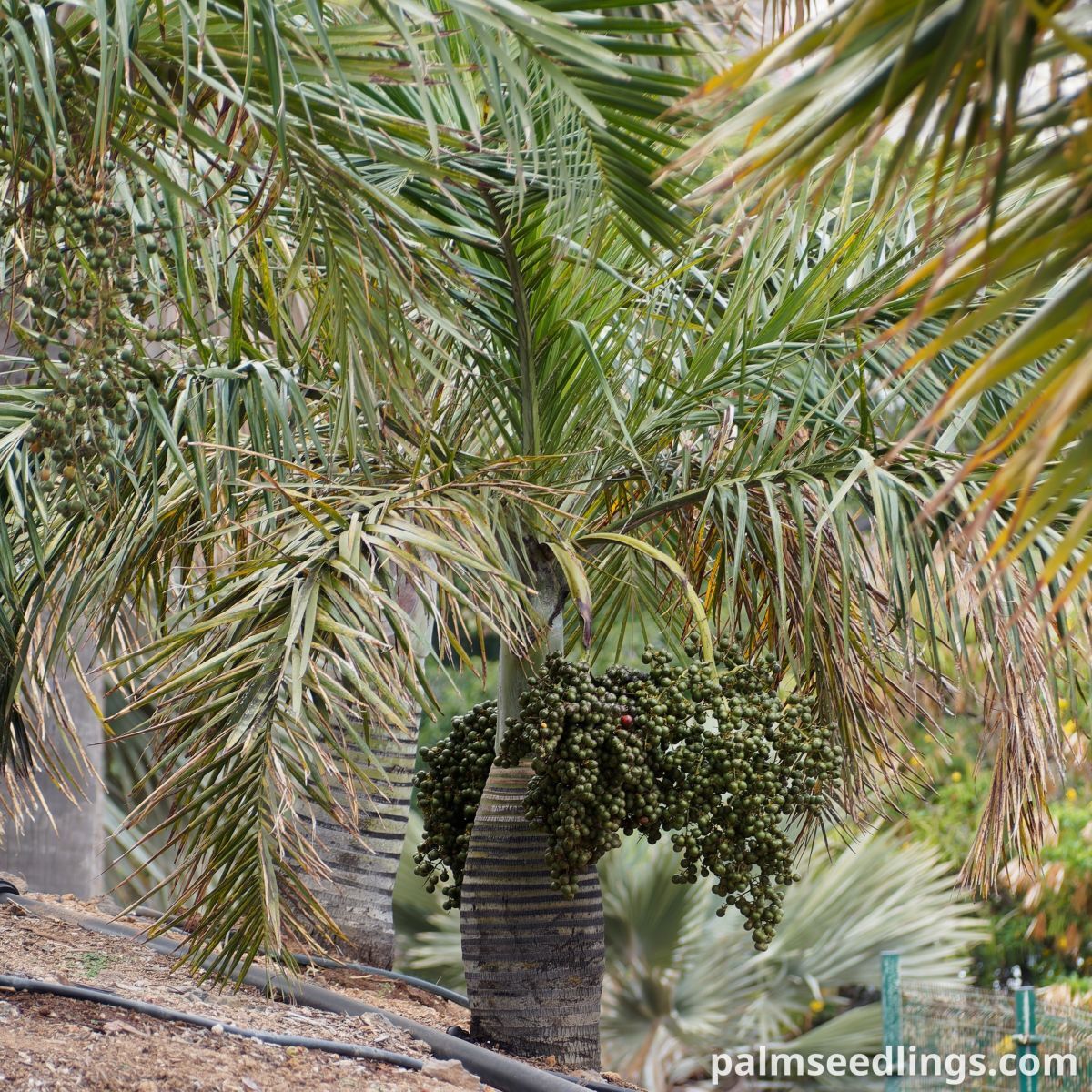
Pseudophoenix sargentii is a solitary feather palm characterized by a smooth, prominently ringed, and often slightly swollen or bottle-shaped trunk. The upper portion of the stem features a glaucous, waxy, blue-green coating that visually resembles a crownshaft, botanically classified as a pseudo-crownshaft. The canopy consists of stiffly arching pinnate leaves, with leaflets that possess a silvery-green to dark green upper surface and a lighter, glaucous underside. It produces branched inflorescences that emerge outward and downward from among the leaves, yielding clusters of small, globose fruits that ripen to red.
Endemic to the exposed coastal environments and porous limestone ecosystems of the Florida Keys, the Bahamas, Cuba, Hispaniola, and eastern Mexico, this species is biologically adapted to coastal conditions. Cultivation requires full, direct sunlight and well-draining, sandy or rocky soils. It possesses a high tolerance for salt spray and coastal winds. Landscapers utilize it as a low-maintenance structural plant for coastal xeriscapes, though its slow development affects commercial availability.