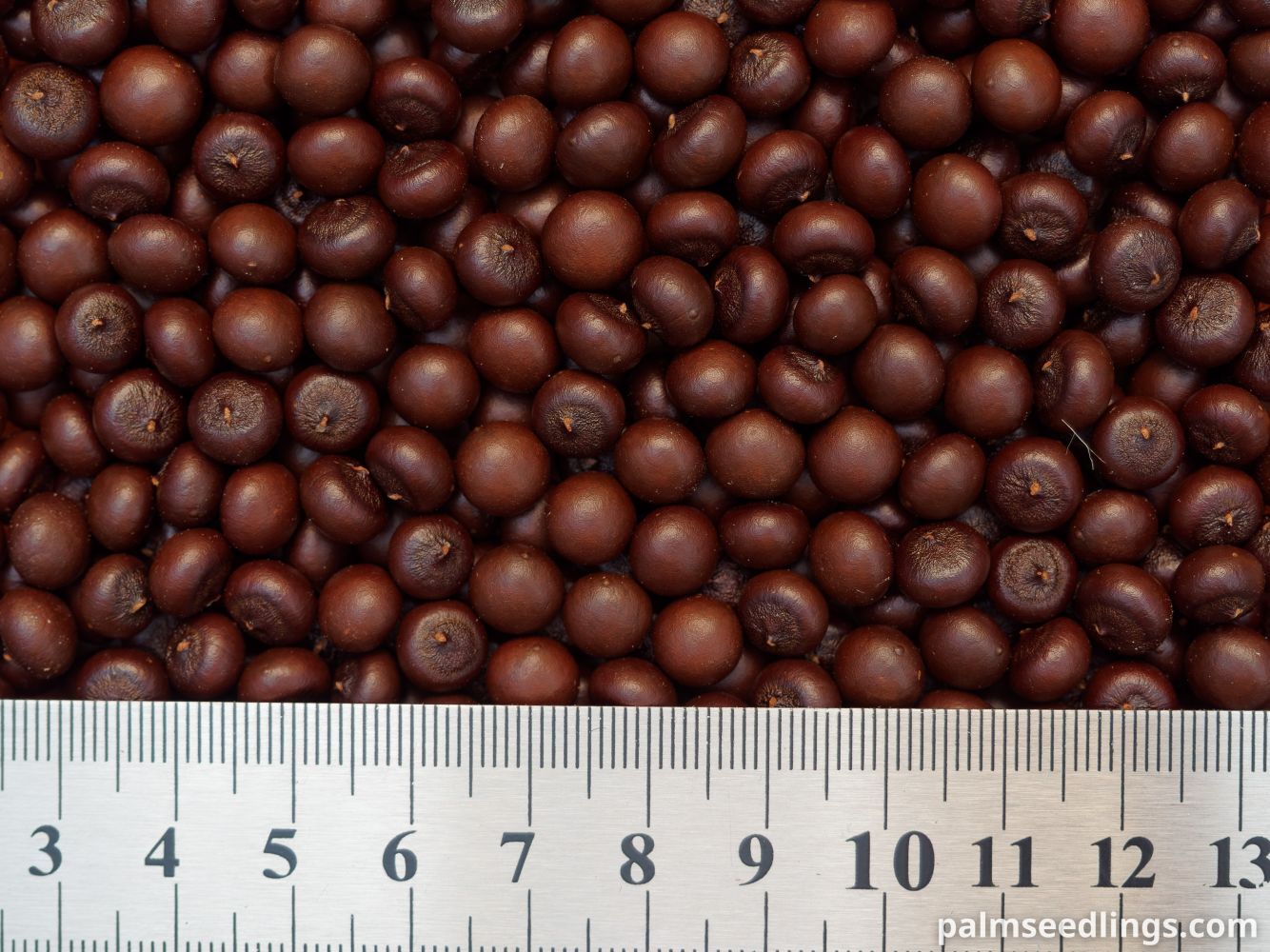
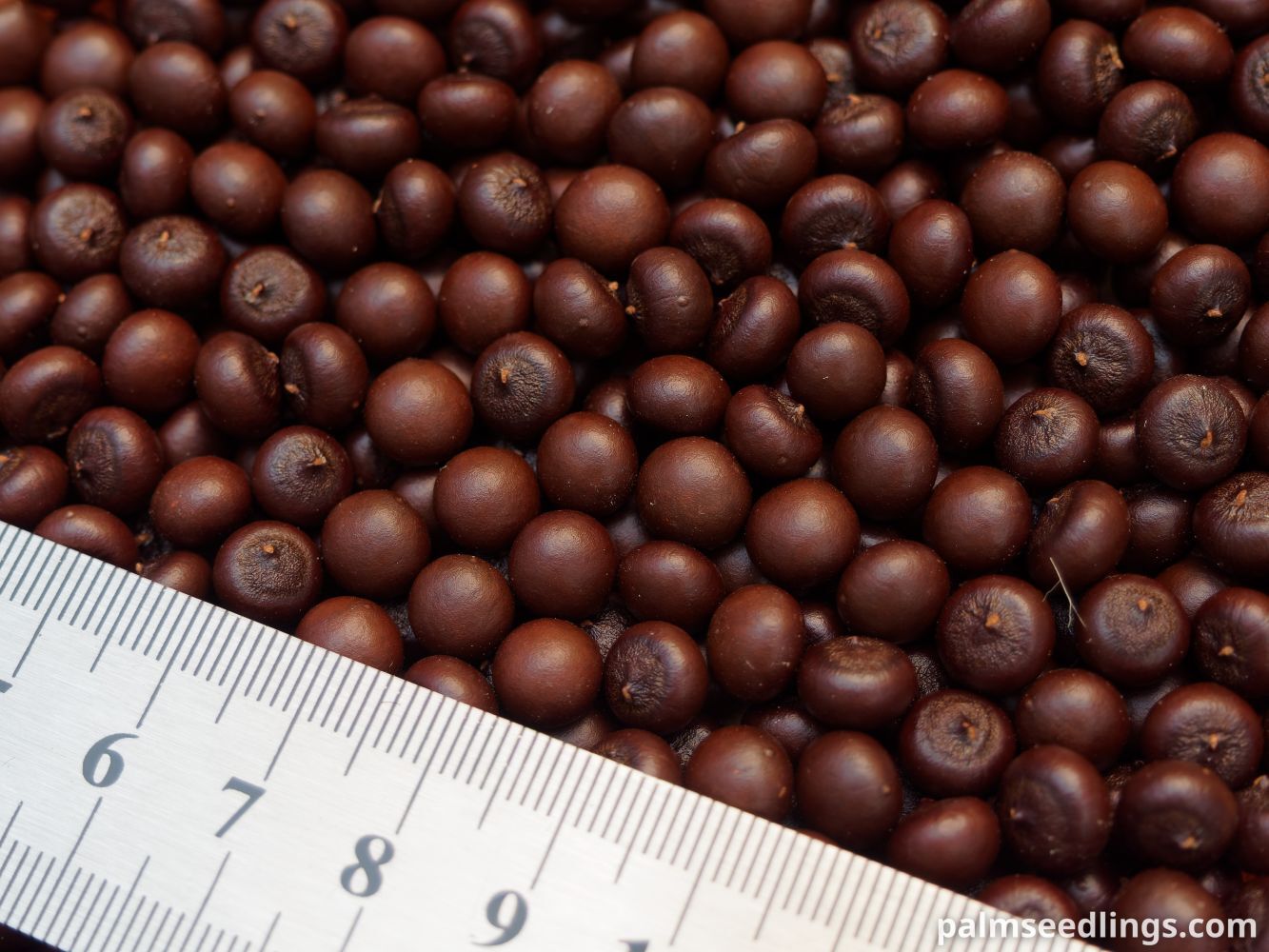
Description
Sabal rosei is a solitary fan palm distinguished by a relatively slender trunk compared to the massive, columnar stems found on many of its relatives within the genus. In its youth, the trunk retains a striking, cross-hatched pattern of persistent, split leaf bases (boots), which eventually weather and fall away to reveal a relatively smooth, greyish stem. The compact, spherical canopy consists of strongly costapalmate leaves that are deeply divided into stiff, narrow segments. These fronds display a vivid light green to slightly glaucous blue-green coloration and characteristic thread-like fibers dangling from the leaflet margins. As a monoecious species, it produces multi-branched inflorescences that extend beyond the leaf crown, yielding heavy clusters of small, spherical fruits that ripen to a dark brown or black.
Endemic to the dry, deciduous woodlands and coastal plains of western Mexico, specifically across the states of Sinaloa, Nayarit, and Jalisco. This species thrives in environments subject to an intense, prolonged dry season. In cultivation, it demands full, unshaded sunlight from the seedling stage onward and requires exceptionally well-draining soil. While it can tolerate a variety of soil types, it is biologically engineered to handle extreme heat and drought. Landscapers value it as a structurally elegant, mid-sized palmetto that provides a classic tropical silhouette without the massive spatial requirements of larger Sabal species.