Butia odorata
Common Names: Jelly Palm, Pindo Palm, Cocos Palm

Description
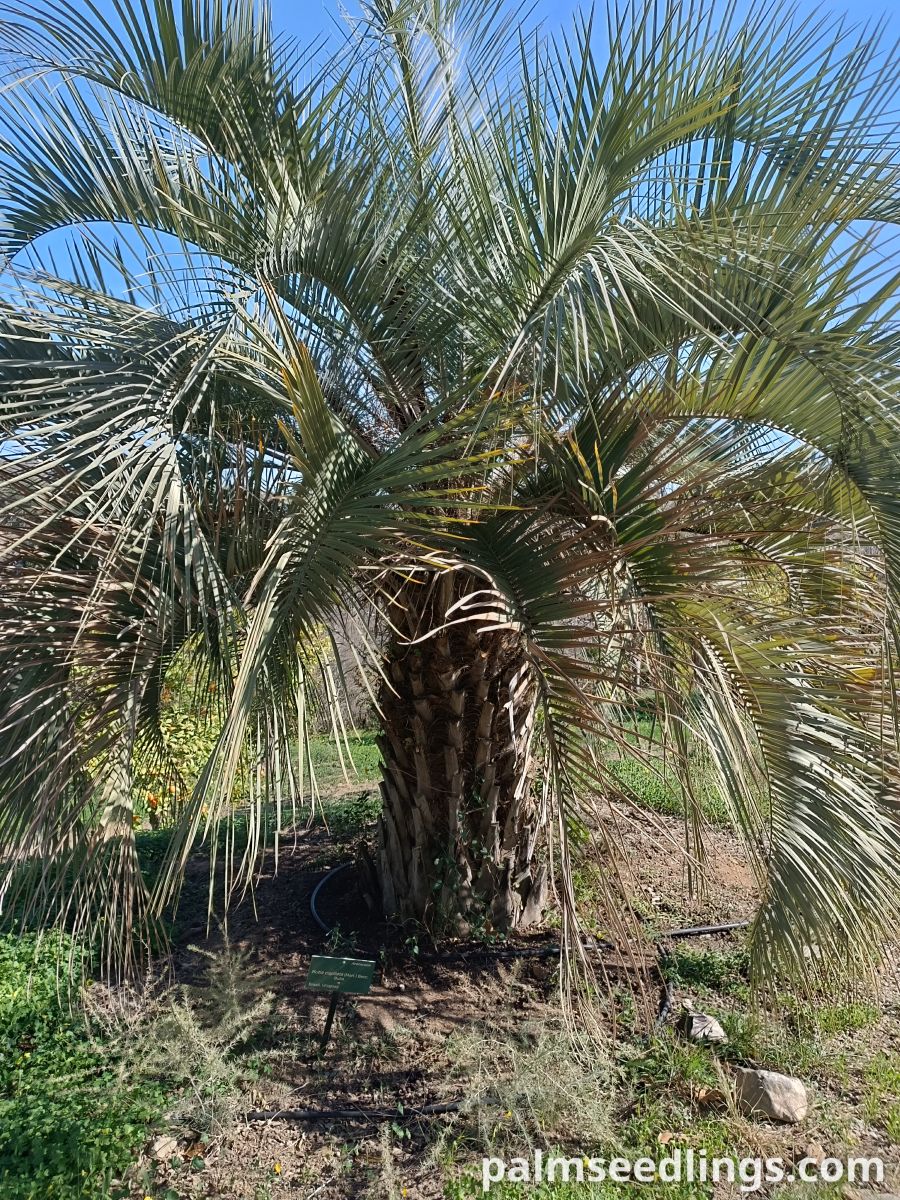
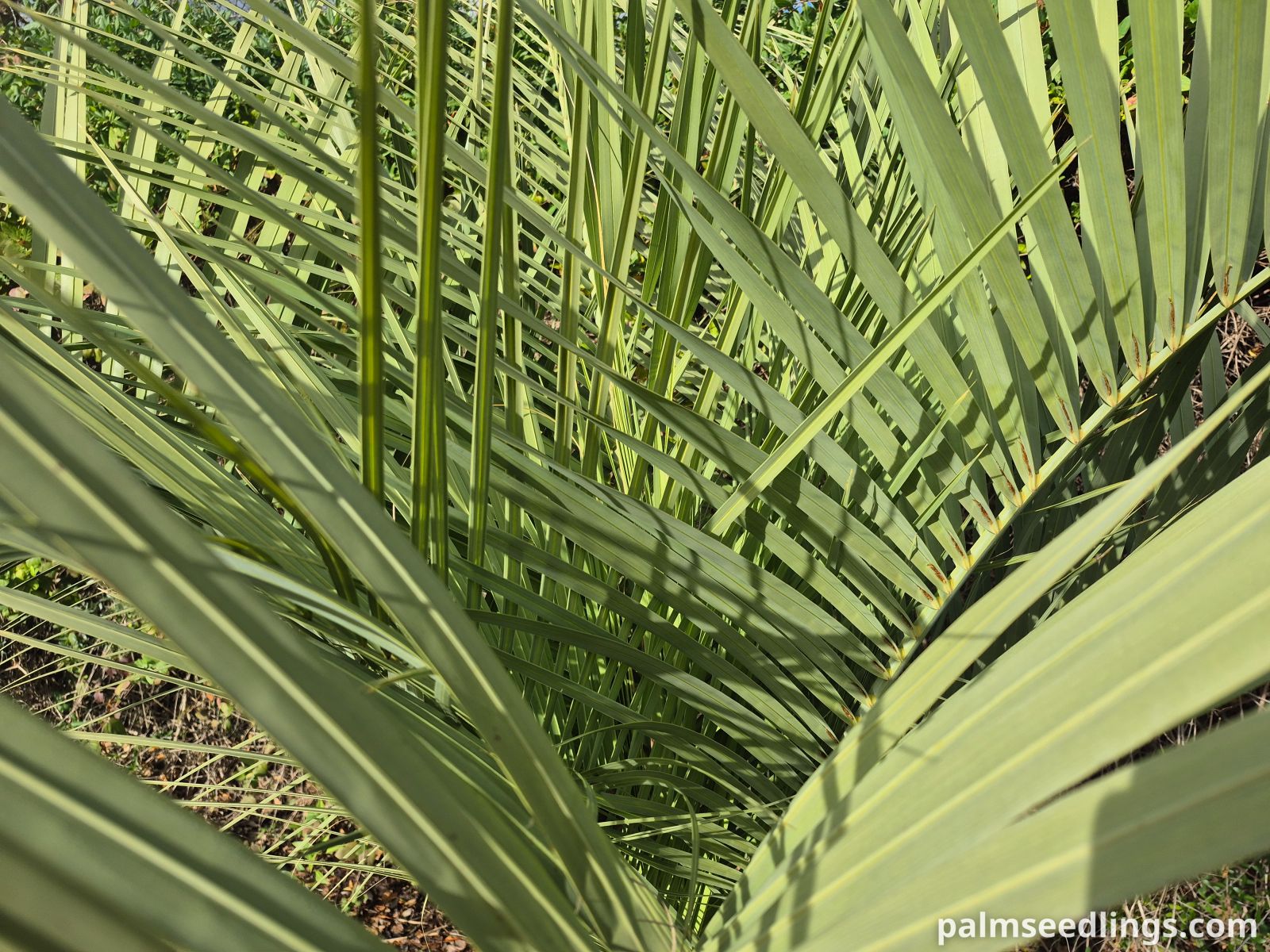
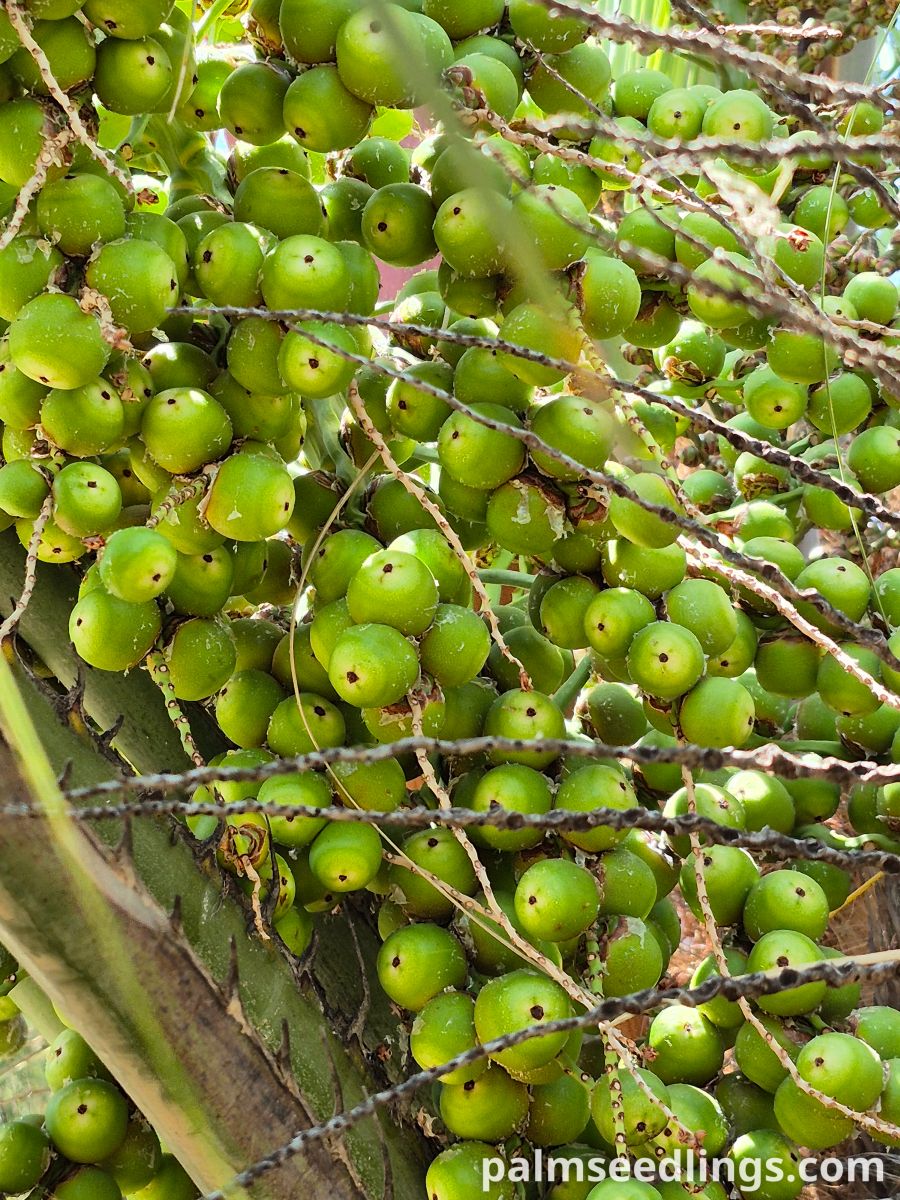
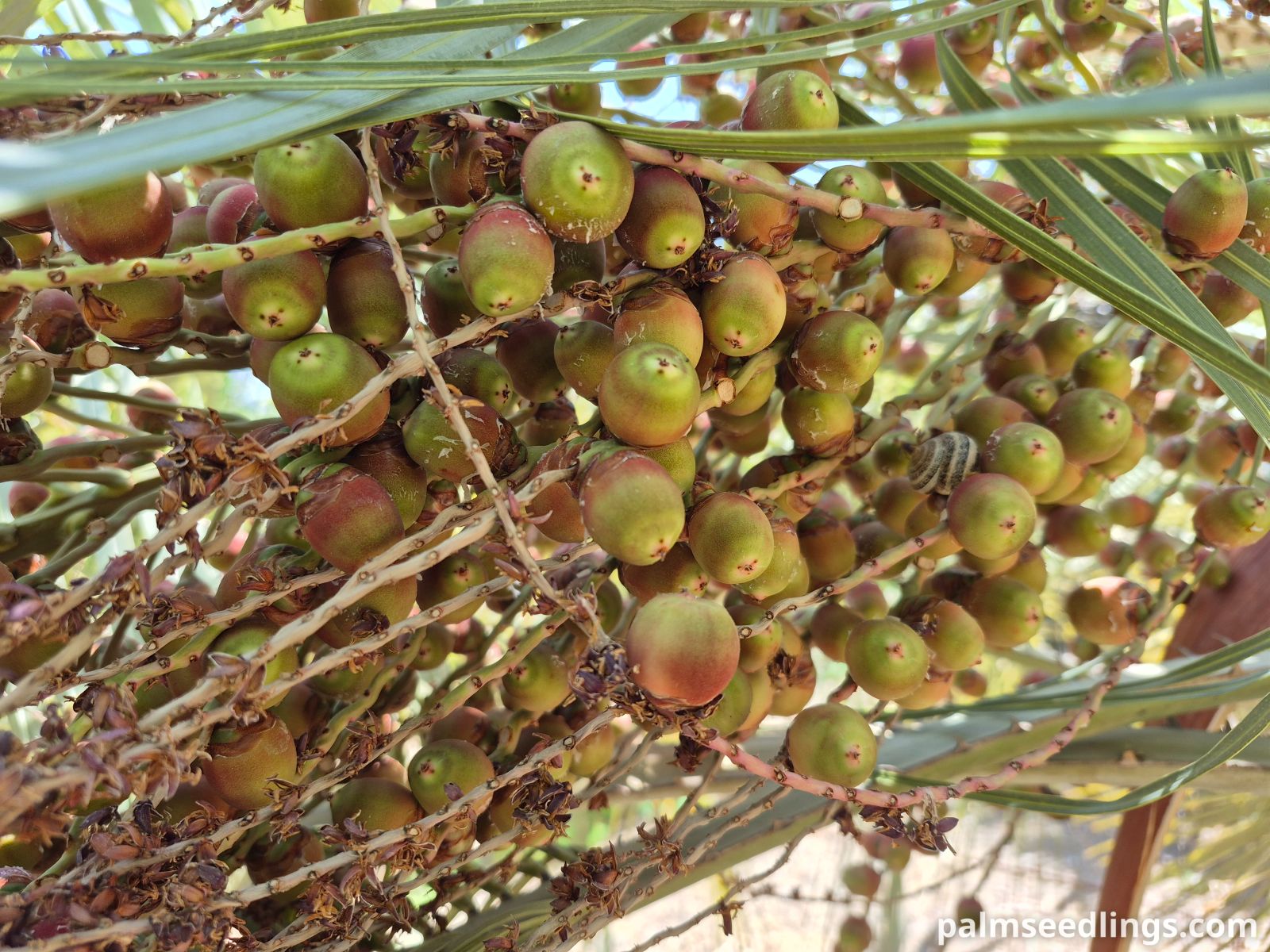
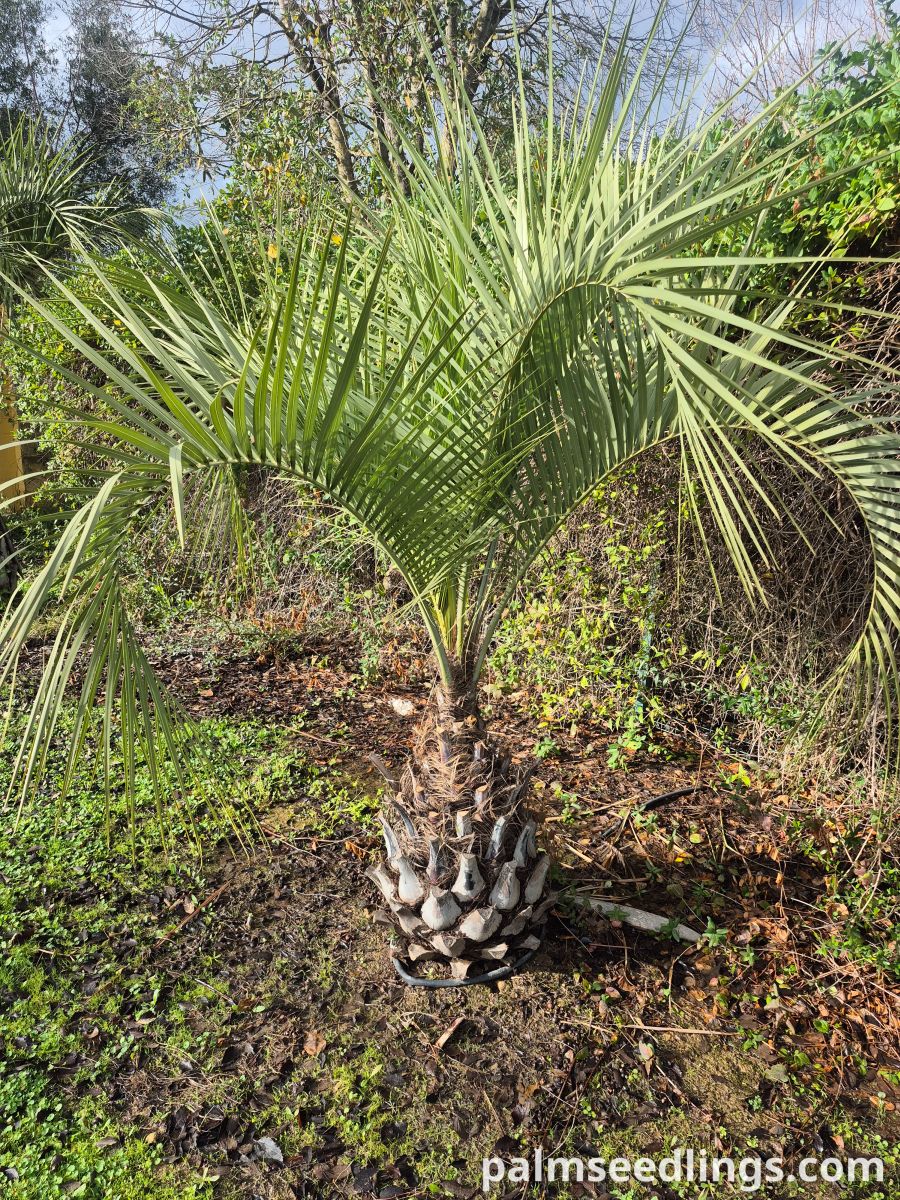
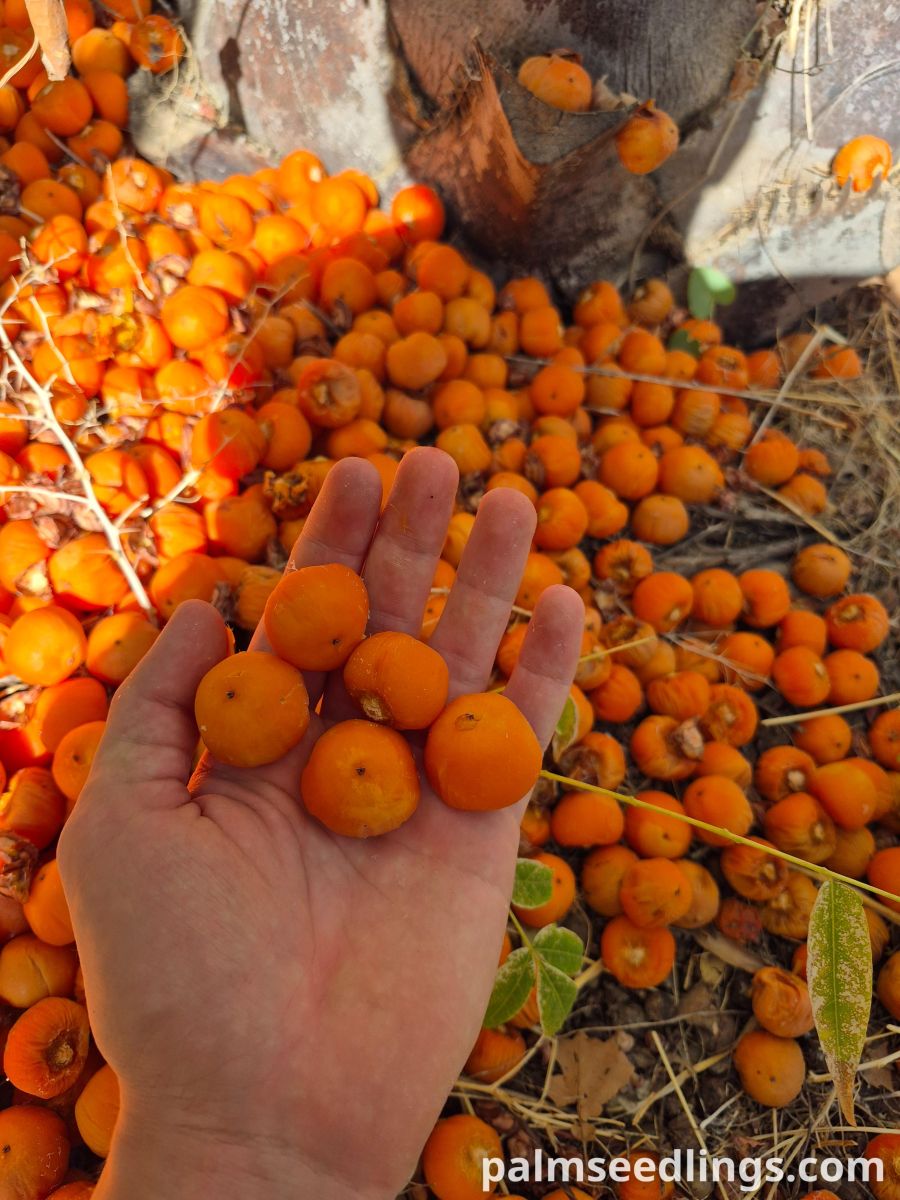
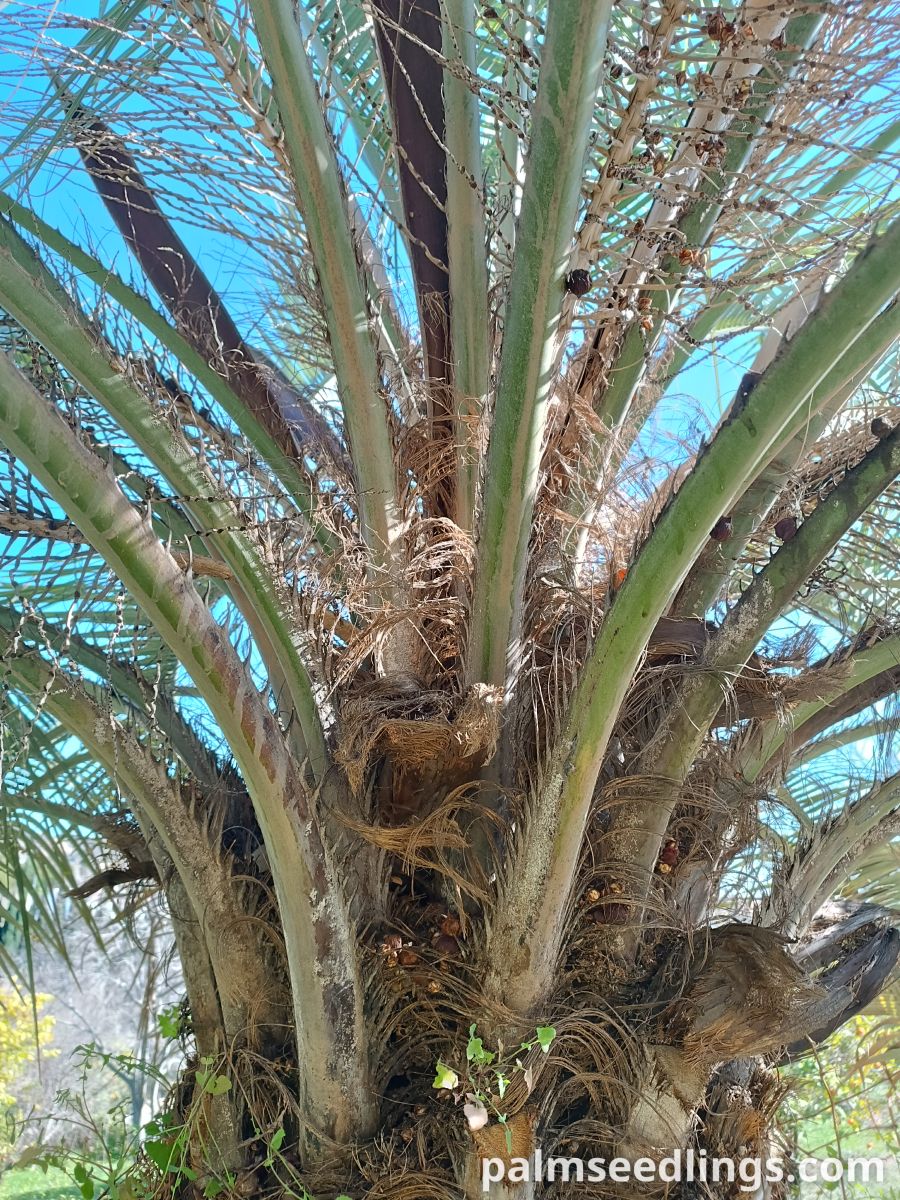
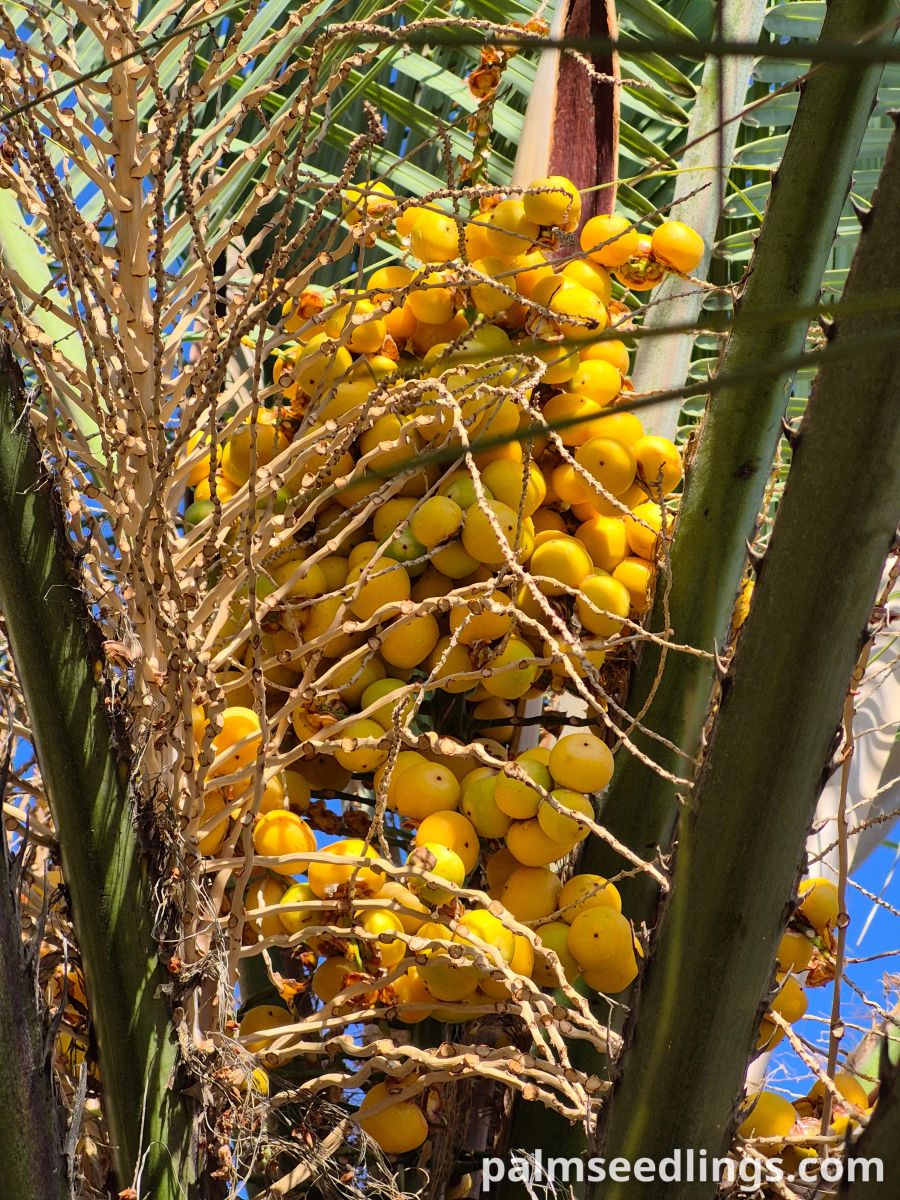
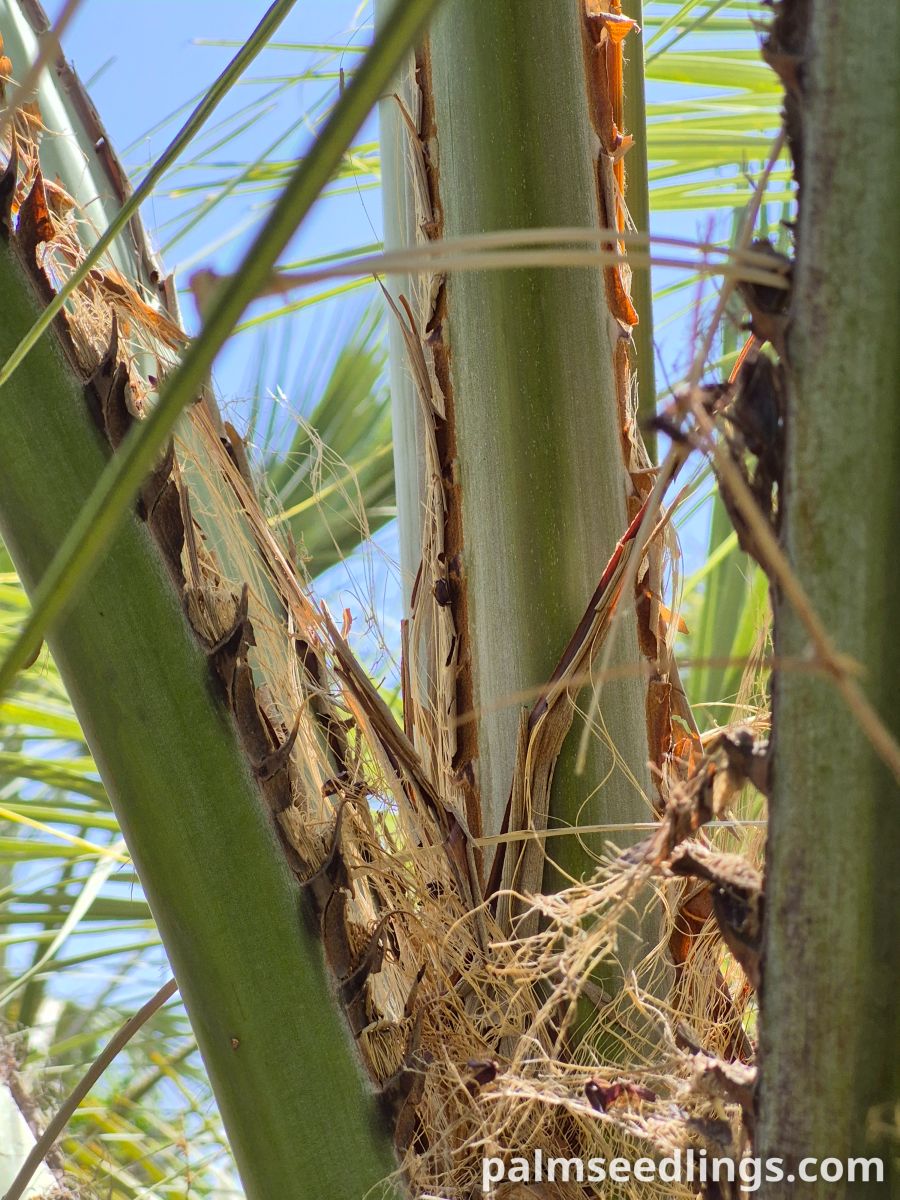
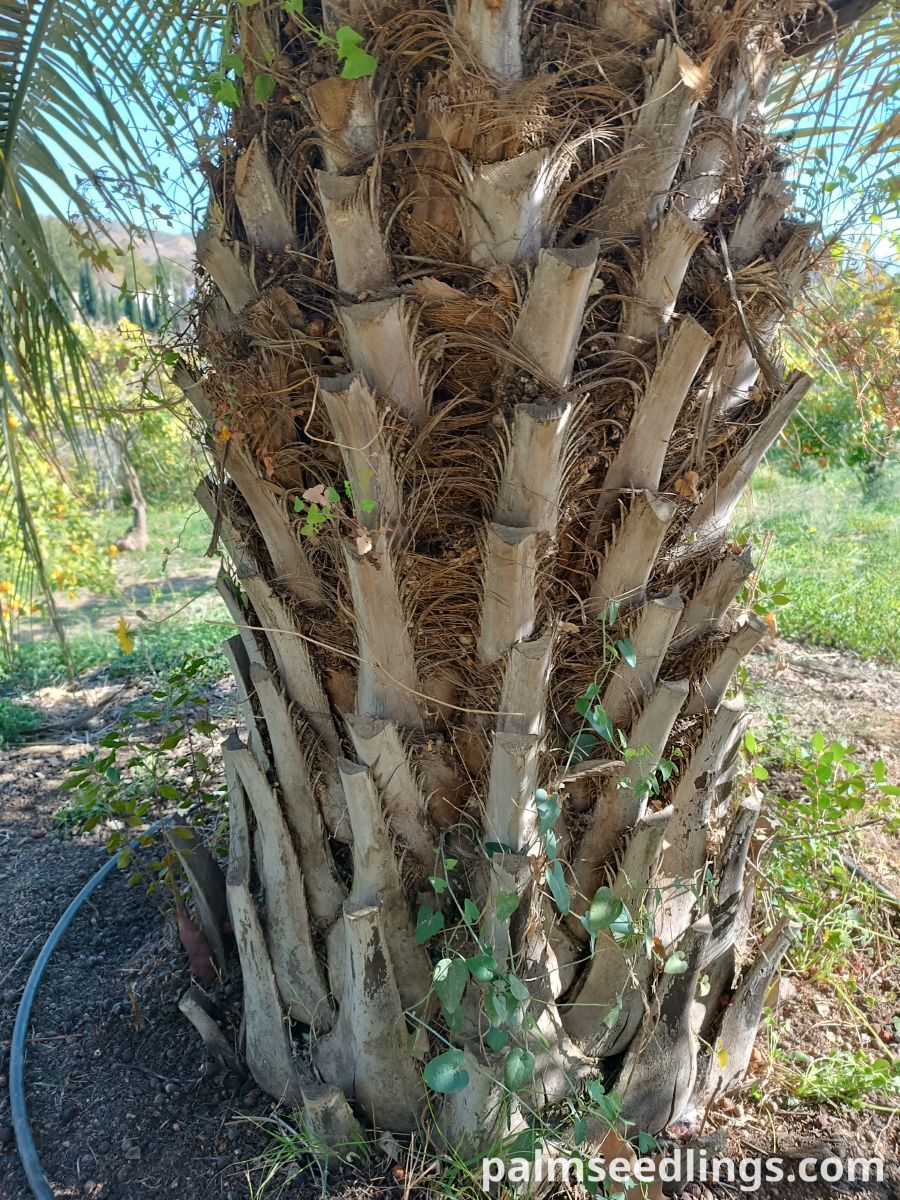
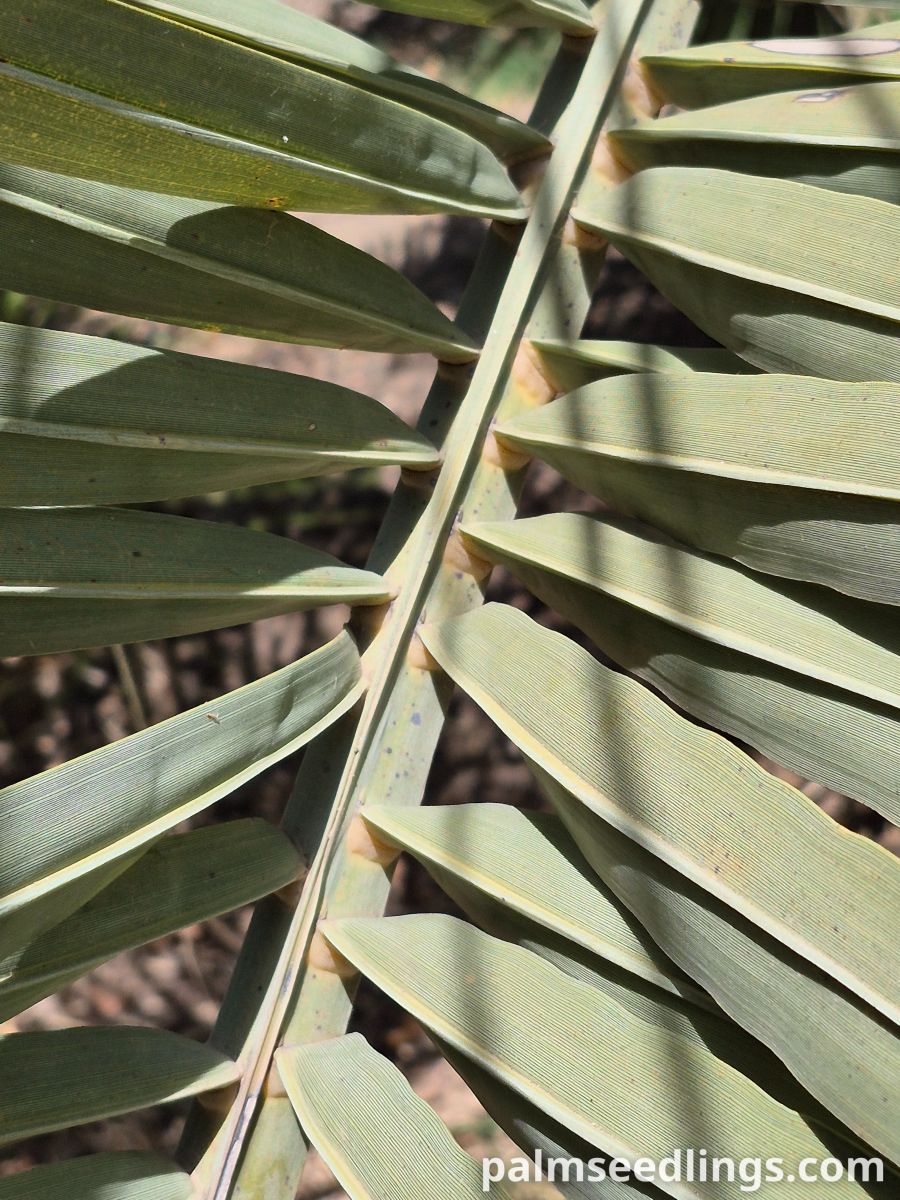
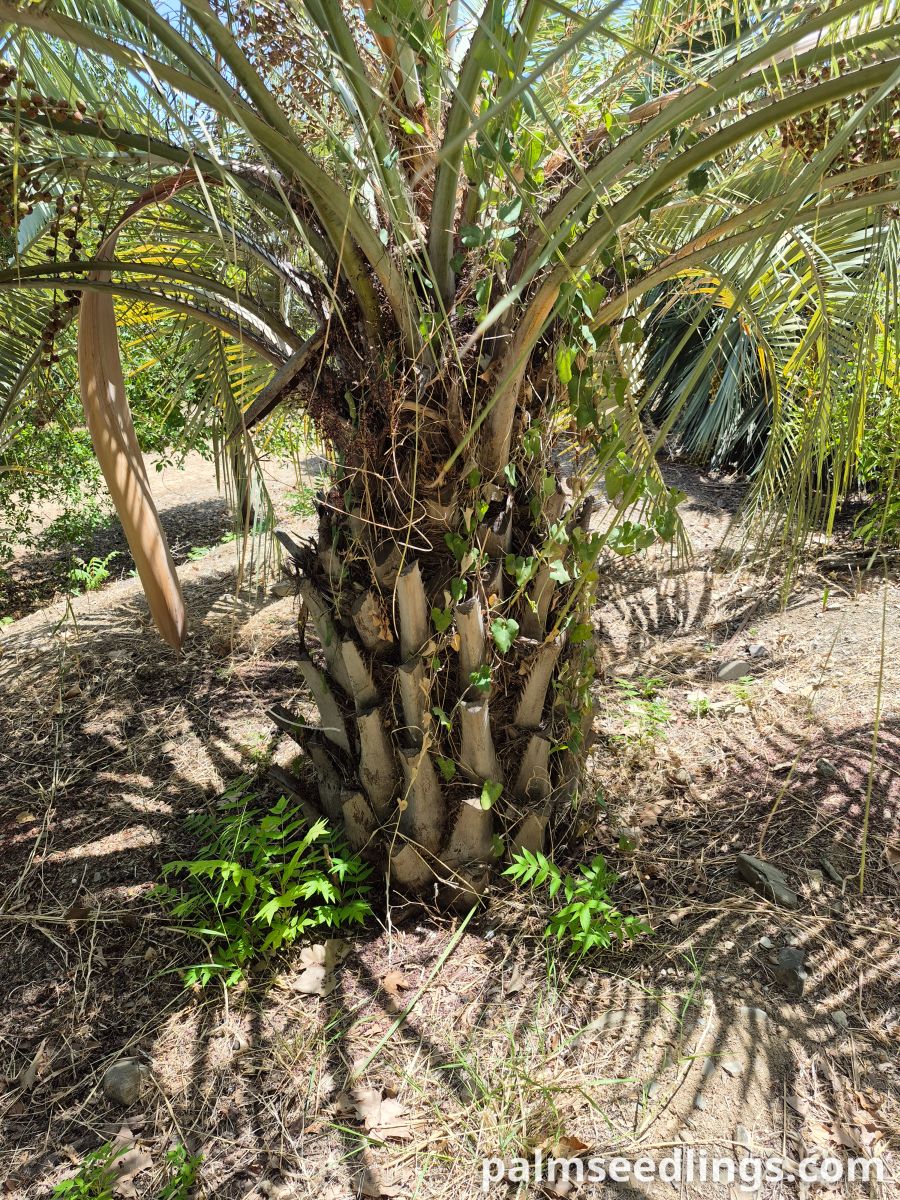
Butia odorata is a medium-sized feather palm that reaches 4-10 m (13-33 ft) in height, with a stout trunk up to 60 cm (24 in) in diameter. The crown is composed of strongly recurved, pinnate leaves 2-4 m (6.5-13 ft) long, often displaying a bluish-green coloration. The leaf bases are persistent along the trunk, and the canopy is dense and gracefully arching. It produces oval to round, orange to yellow fruits rich in sugars and aromatic compounds, which are edible and commonly used to make jellies, liqueurs, and fermented beverages.
This species is native to southern Brazil, Uruguay, northeastern Argentina, and Paraguay, where it grows in grasslands, coastal dunes, and open woodlands. It is adapted to a subtropical climate with seasonal drought, thriving in sandy and well-drained soils.
Characteristics
| Cold hardiness | -10 °C (14 °F) |
| Growth speed | Slow to Moderate |
| Rarity | Common in cultivation |
| Maximum height | 10 m (33 ft) |
| Drought resistance | High |
| Salt tolerance | High |
Annotations and Curiosities
Butia odorata is one of the most cold-tolerant pinnate palms, frequently cultivated in temperate regions where few feather palms can survive. Its fruits are rich in sugars, organic acids, and aromatic compounds, which give them a distinctive flavor and make them popular for use in jellies, liqueurs, and other food products. Historically confused with Butia capitata, the name B. odorata is now widely accepted for the common cultivated form in southern South America. The palm exhibits strong tolerance to wind and saline conditions, making it especially suited to coastal zones. In its native range, it also supports local fauna, with its fruits consumed by birds and mammals.