Caryota mitis
Common Names: Fishtail Palm, Clustering Fishtail Palm
Description
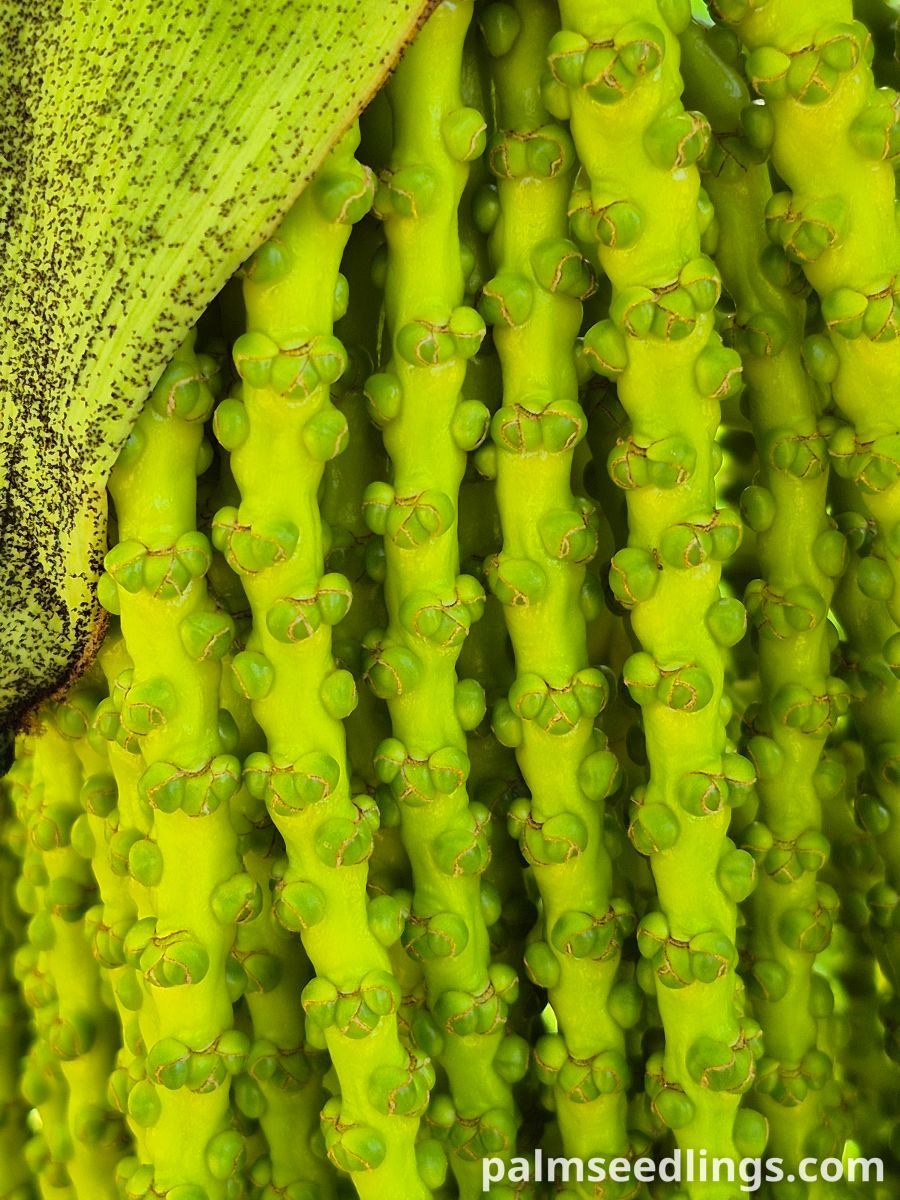
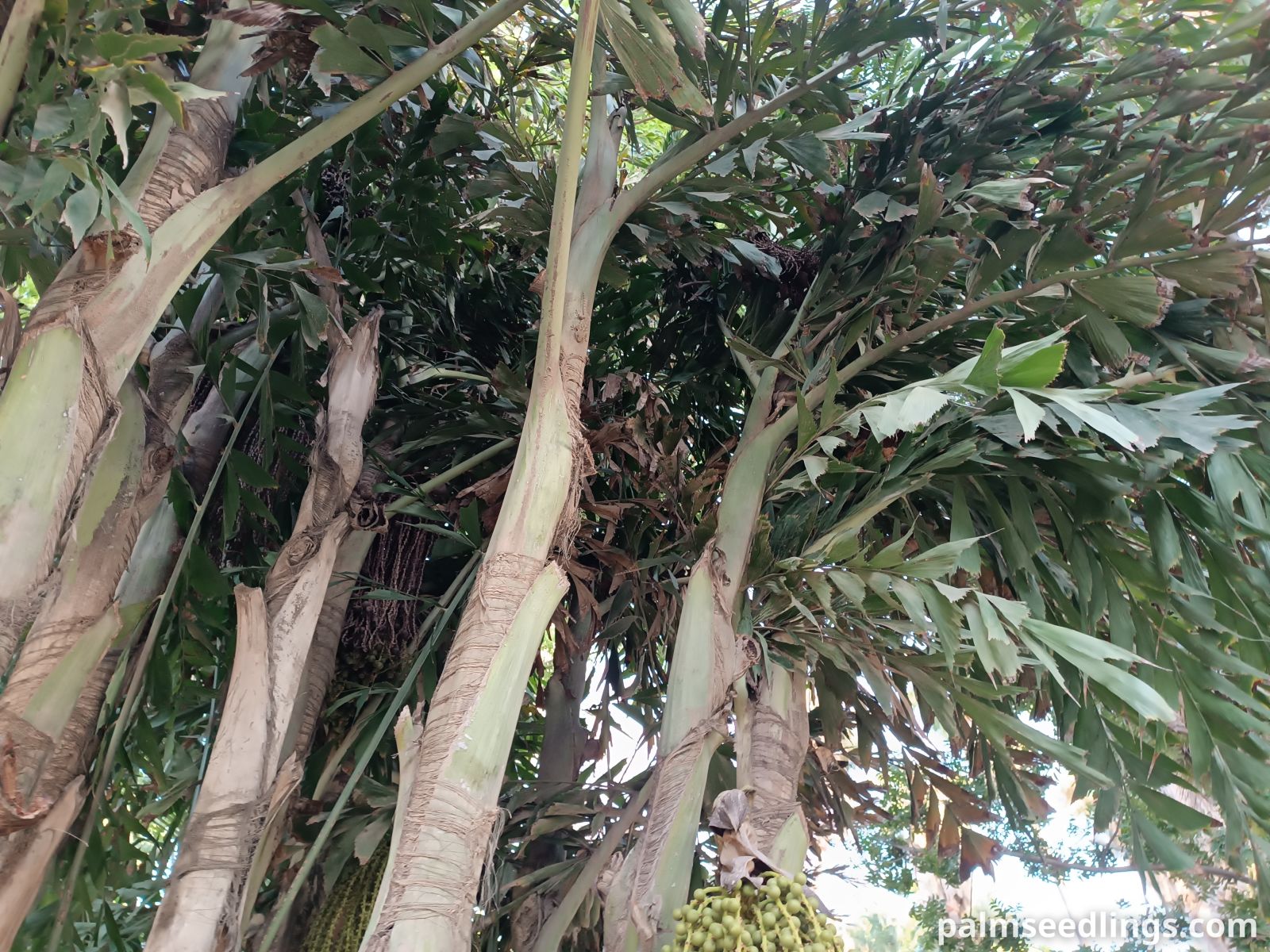
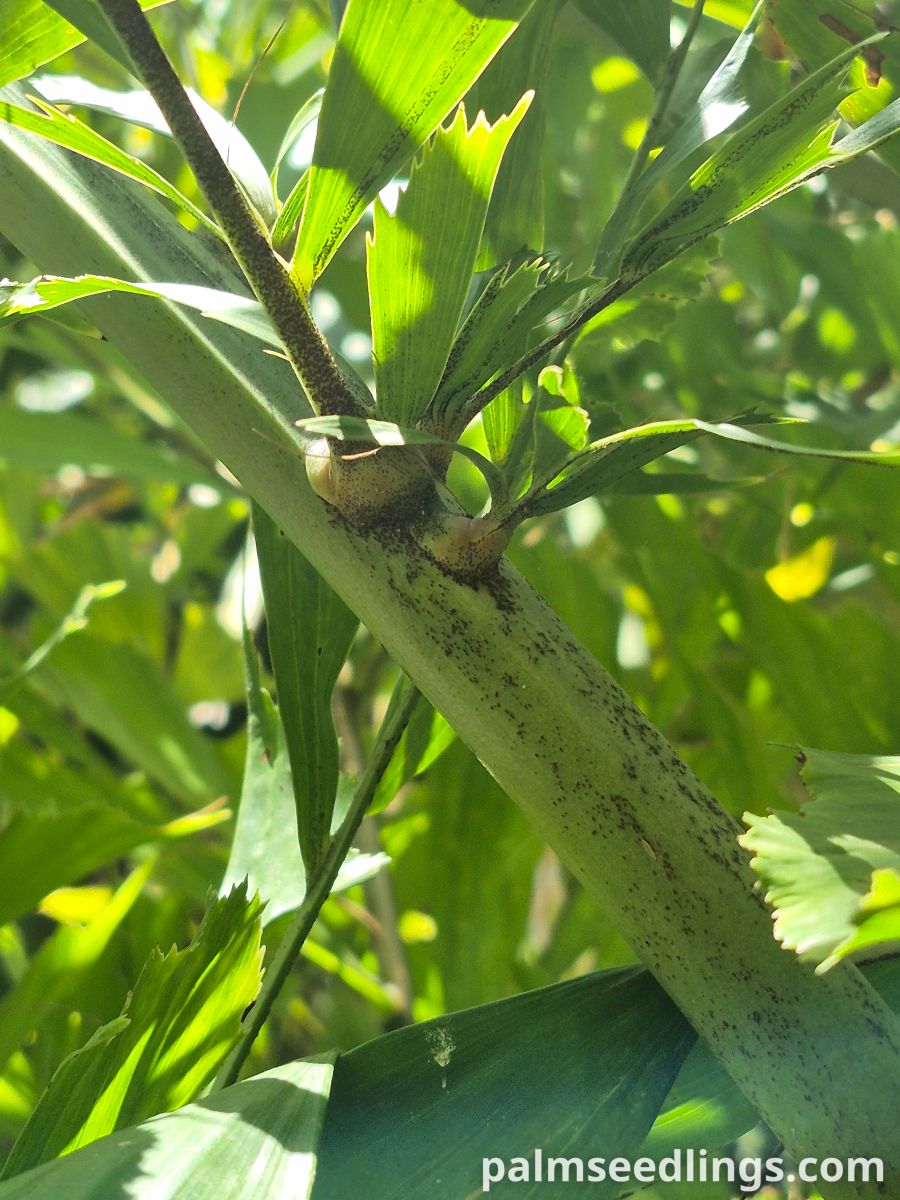
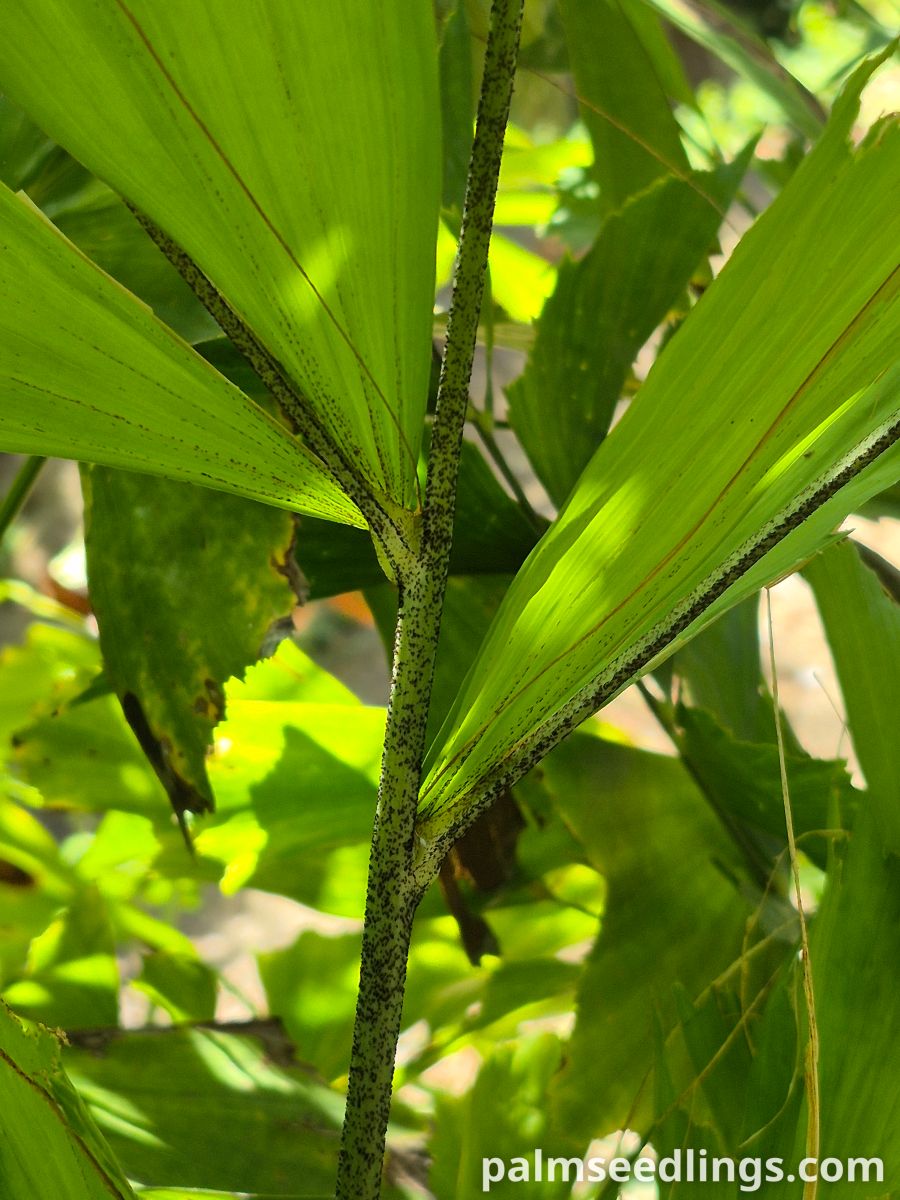
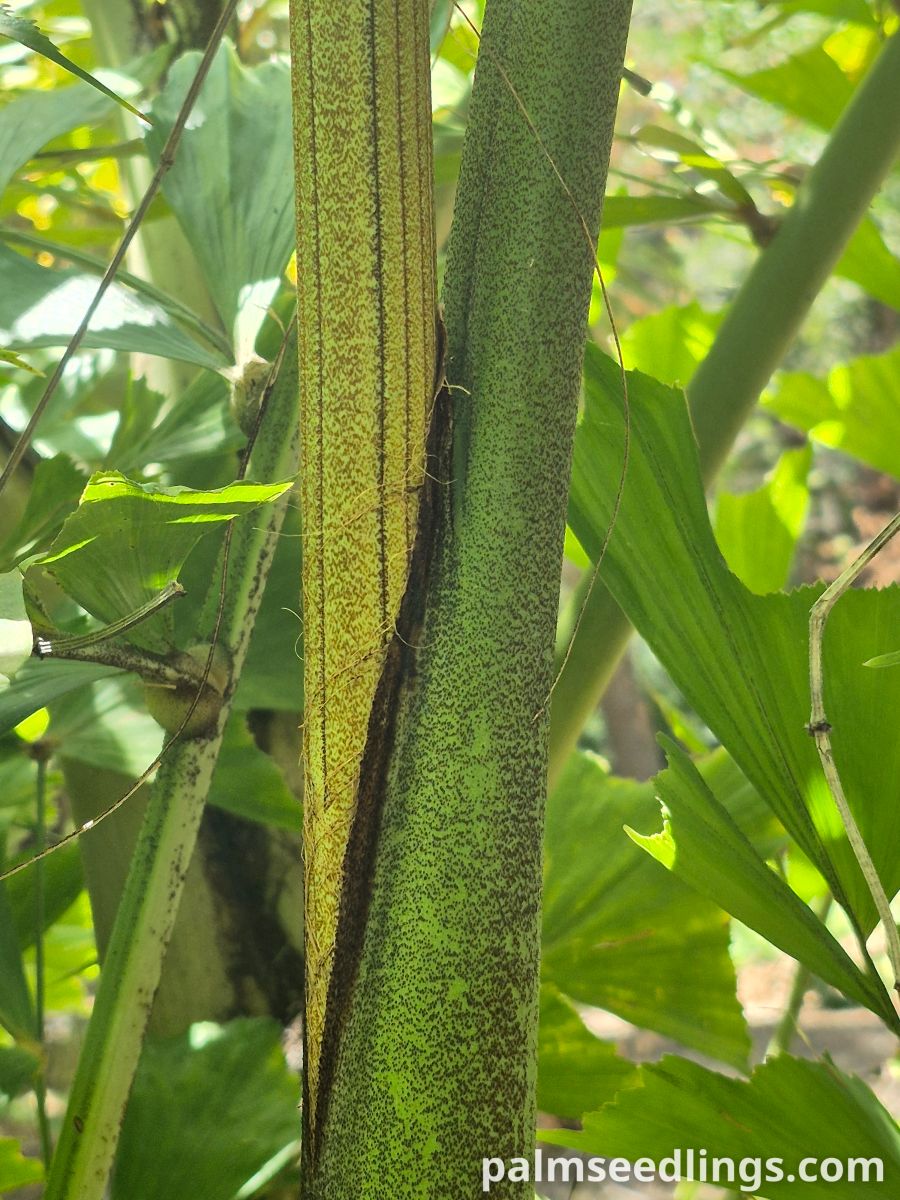
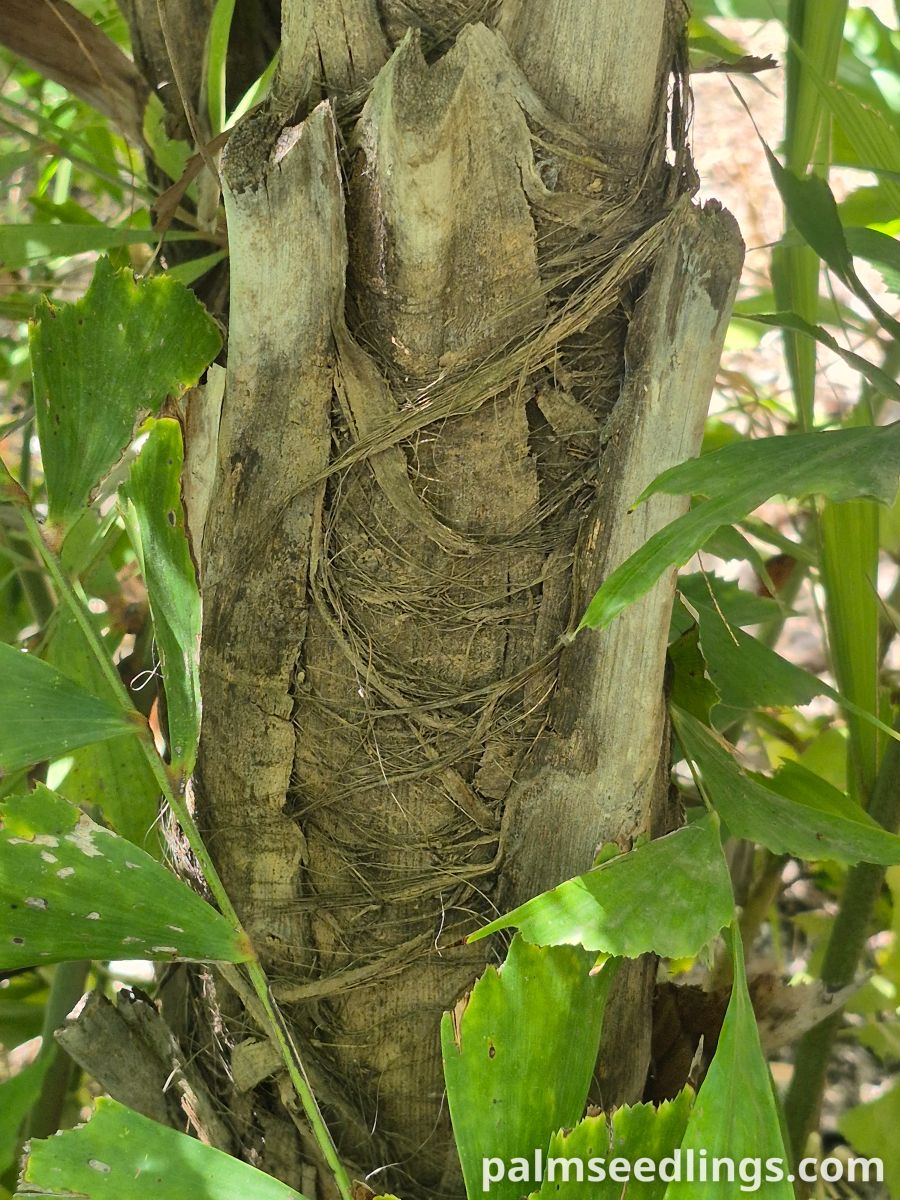
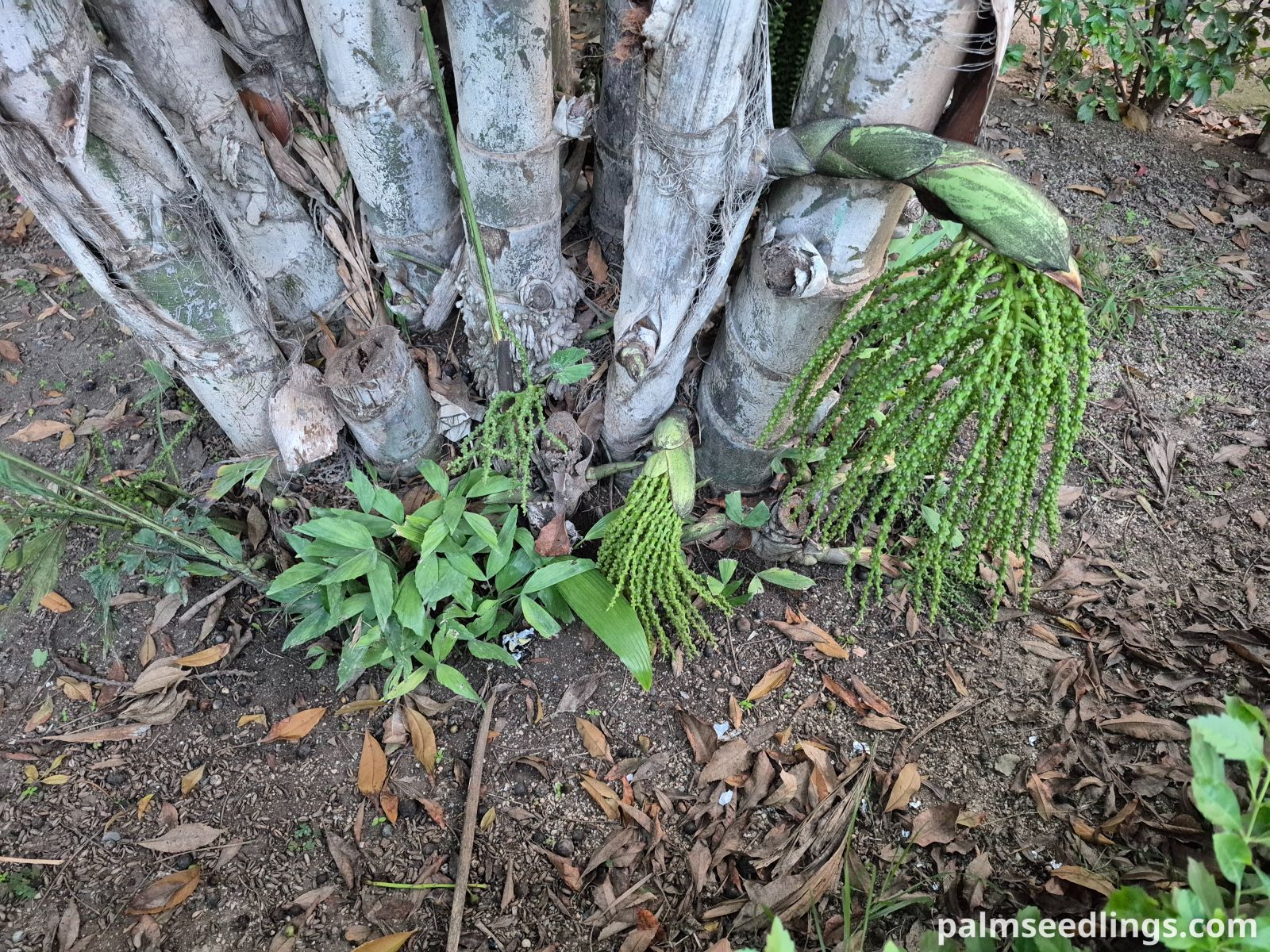
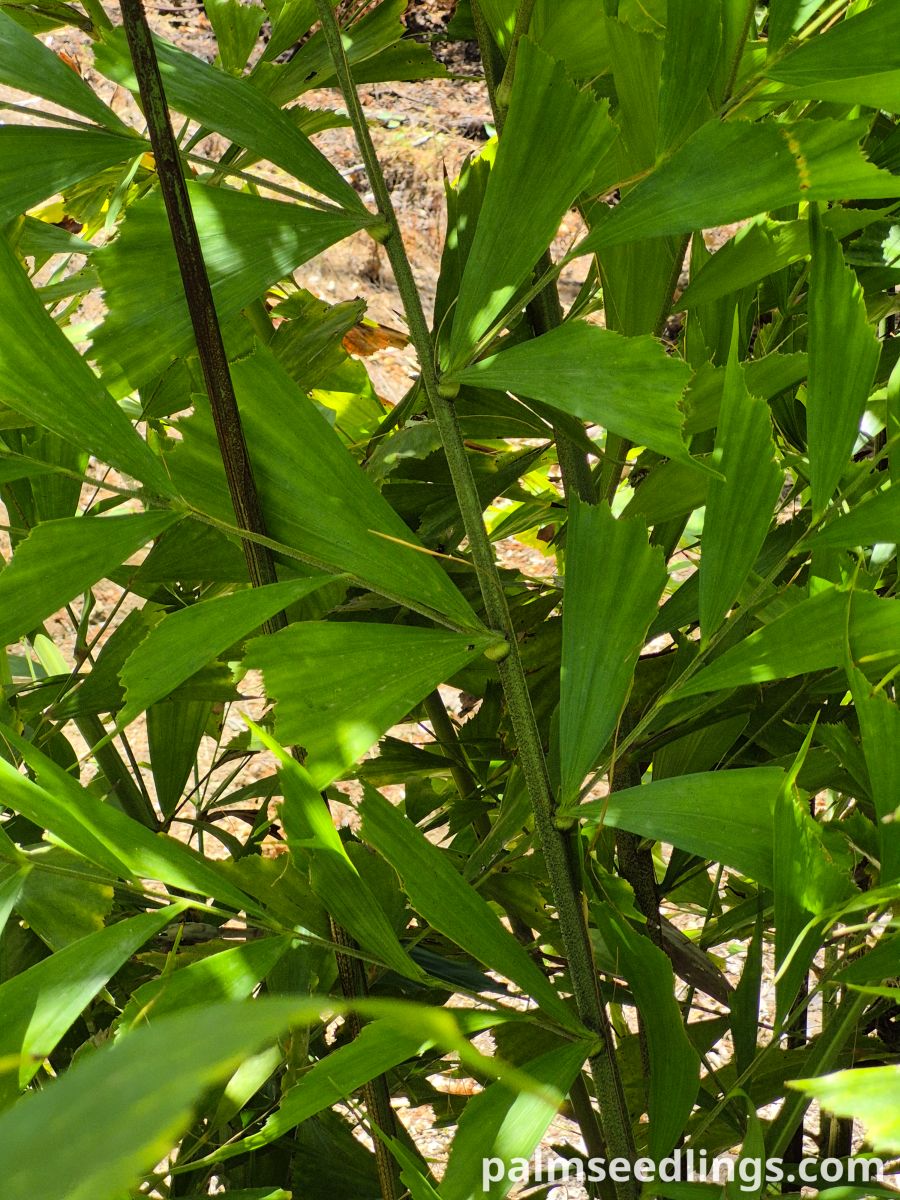
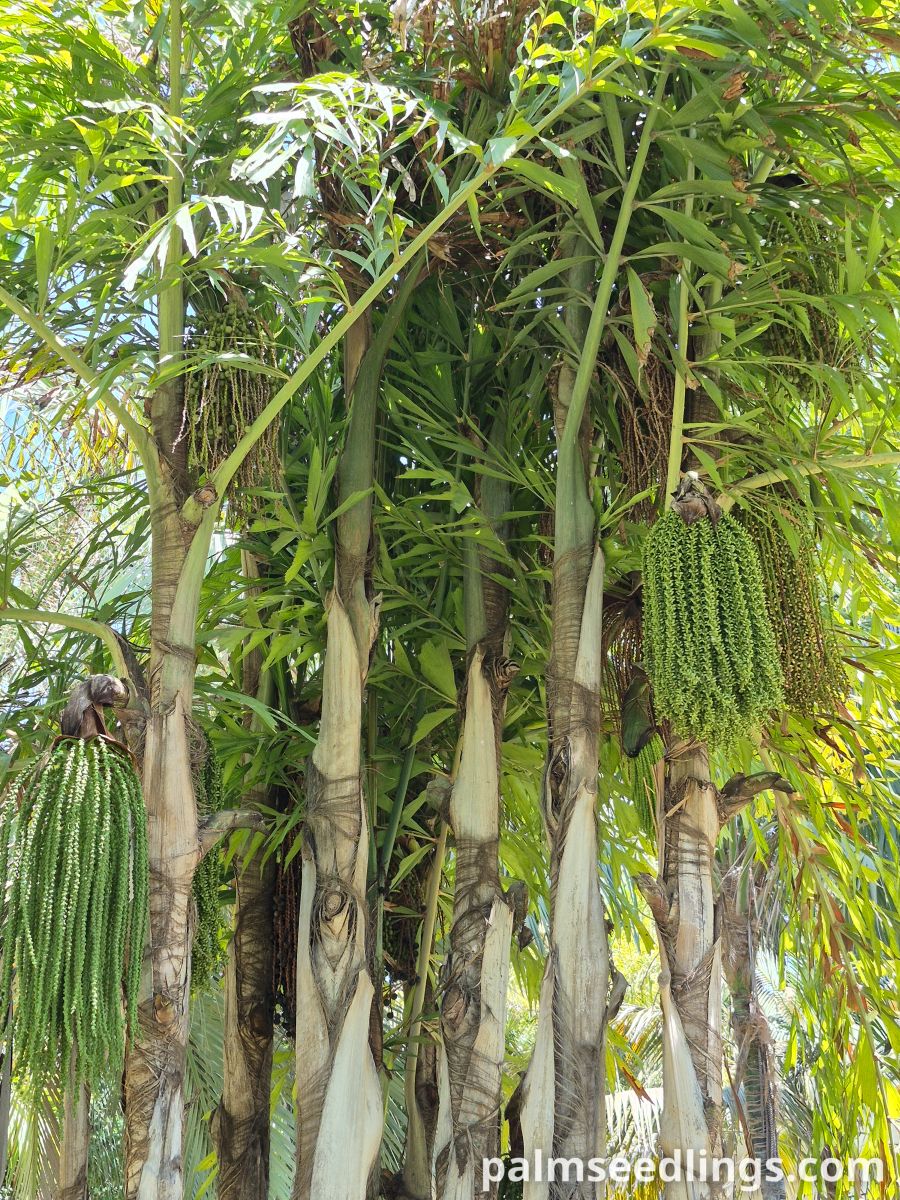
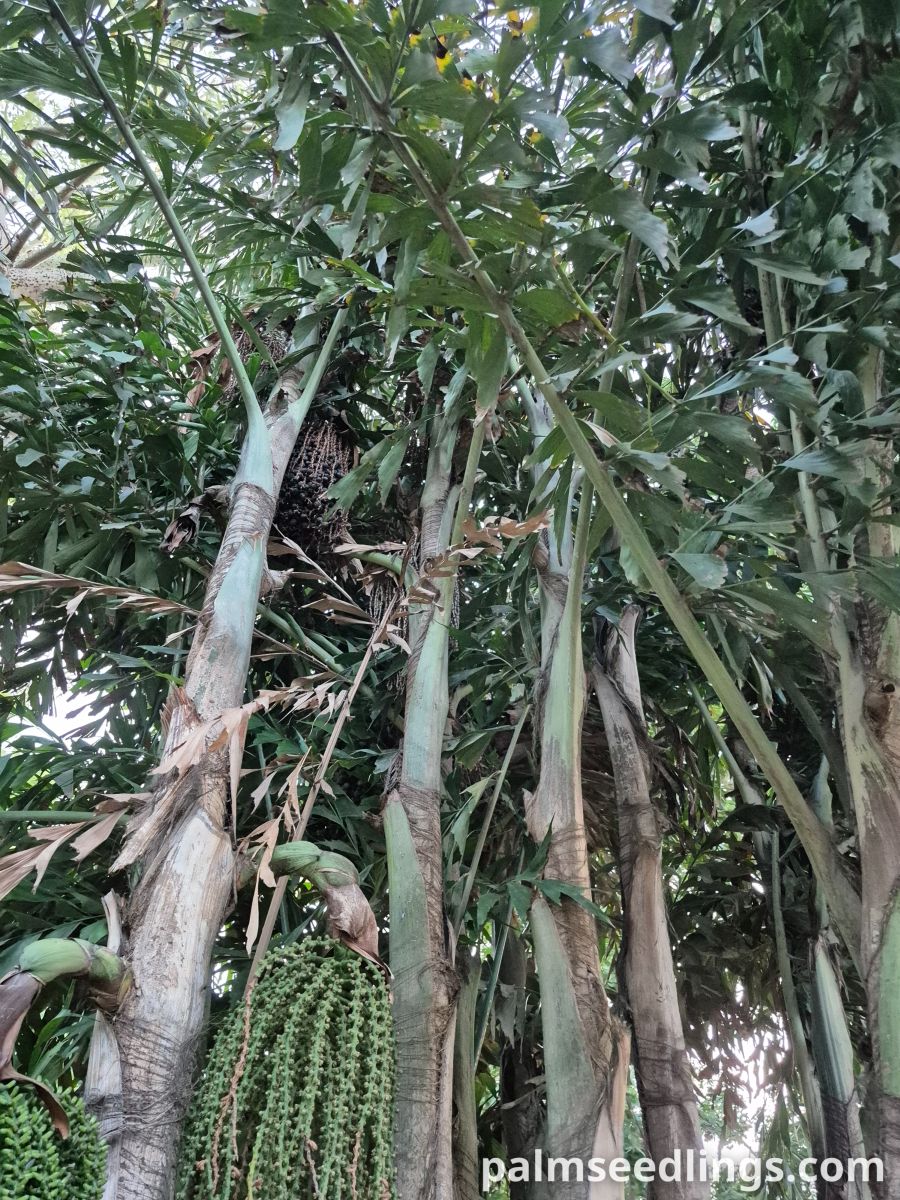
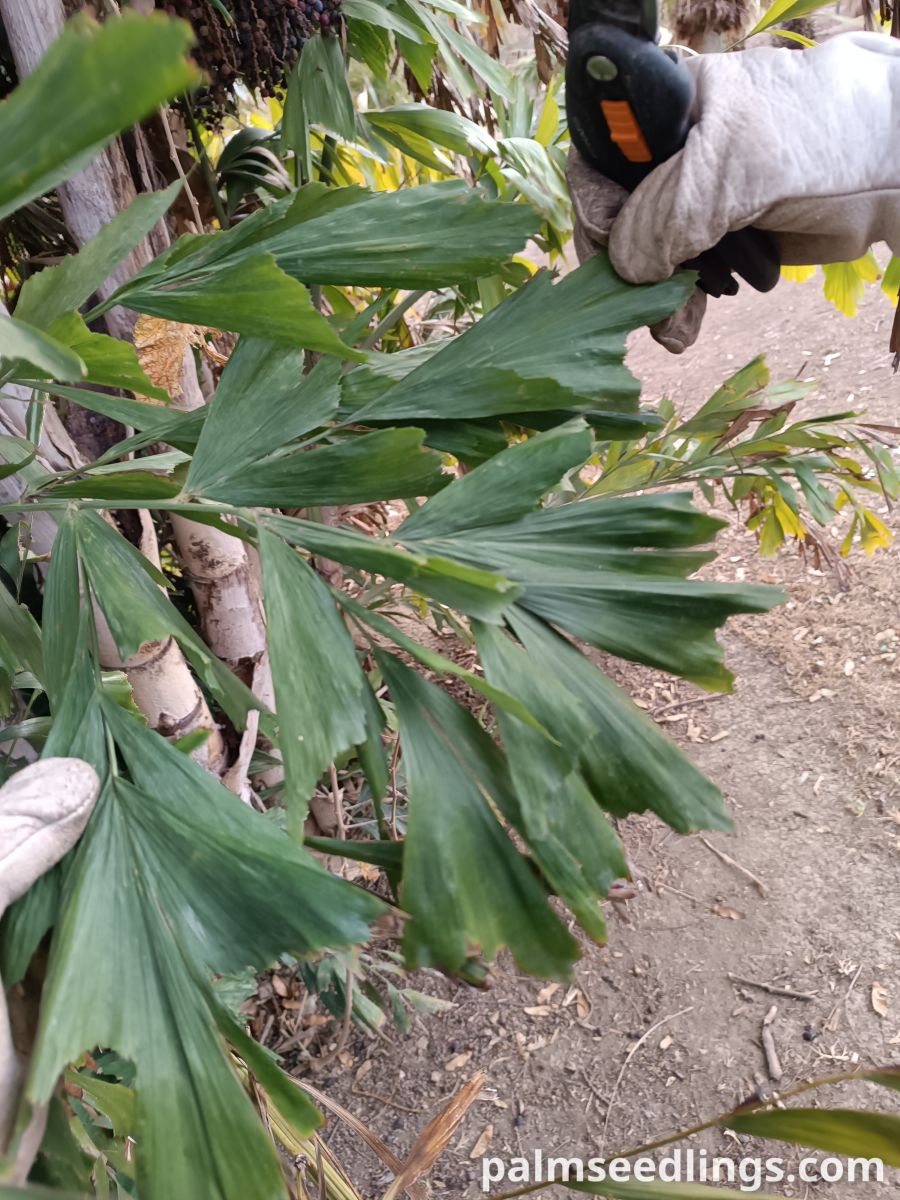
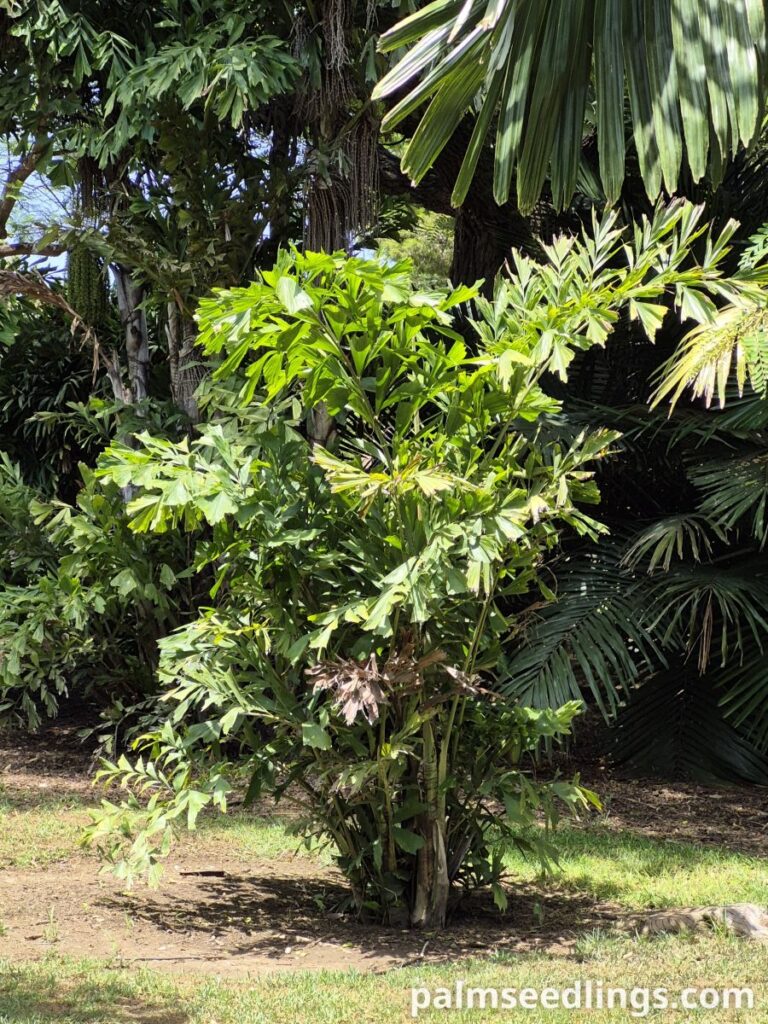
Caryota mitis is a clustering palm that forms dense groups of slender stems, each reaching 6-12 m (20-40 ft) in height and 15-20 cm (6-8 in) in diameter. The pinnate leaves are 2-3 m (6.5-10 ft) long and composed of distinctive wedge-shaped leaflets with ragged edges, giving the crown its characteristic “fishtail” appearance. The trunk is ringed with leaf scars, and each stem dies after flowering due to its hapaxanthic reproductive strategy.
This species is native to Southeast Asia, from India and Sri Lanka through Indochina to southern China, Malaysia, and the Philippines. It grows in tropical and subtropical forests, thriving in both shaded understory habitats and more open conditions. It is widely cultivated as an ornamental palm due to its unusual leaf morphology and ability to form dense clumps suitable for screening.
Characteristics
| Cold hardiness | -3 °C (27 °F), with leaf damage likely below freezing |
| Growth speed | Fast |
| Rarity | Common in cultivation |
| Maximum height | 12 m (40 ft) |
| Drought resistance | Low |
| Shade tolerance | High |
Annotations and Curiosities
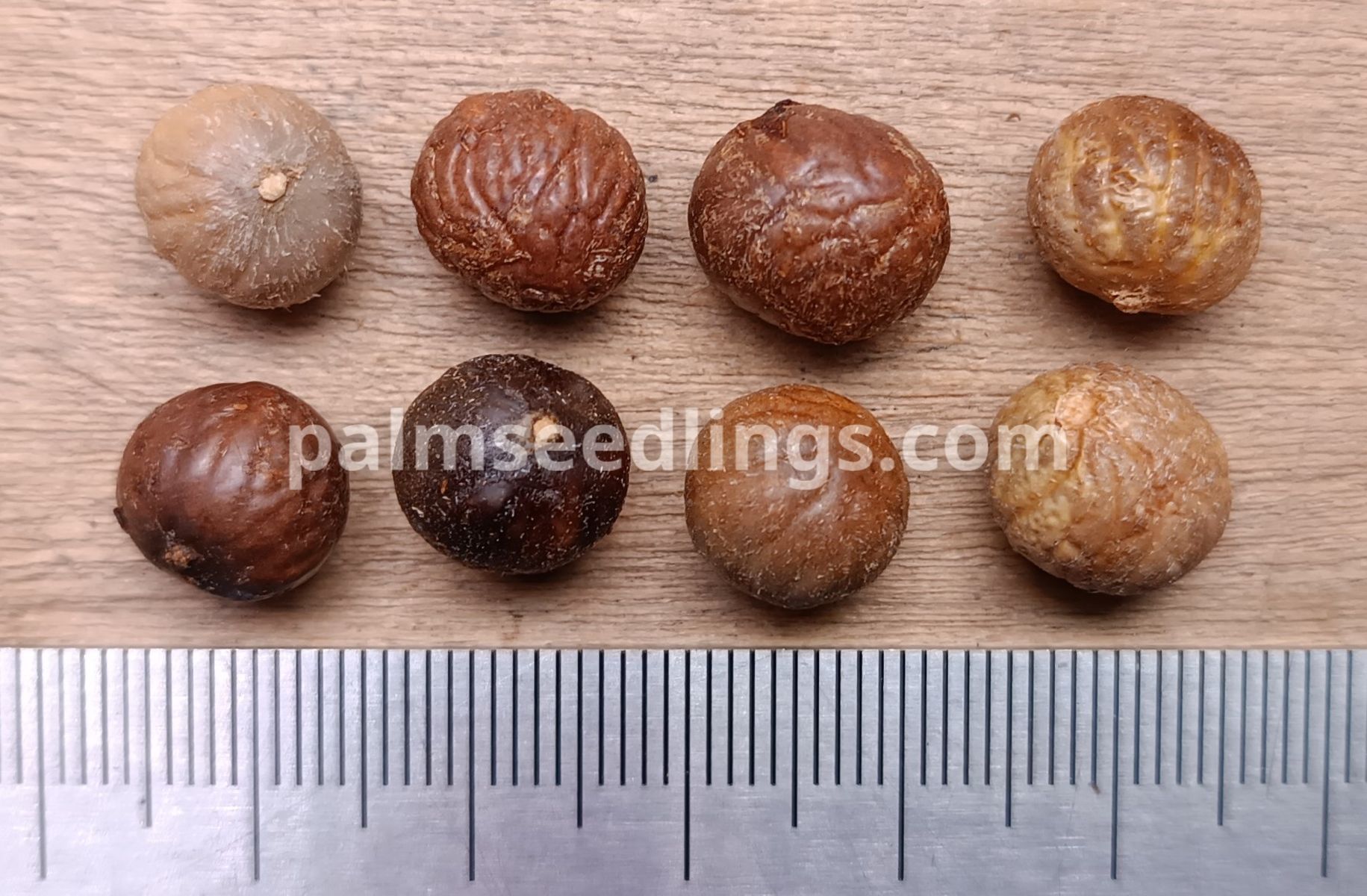
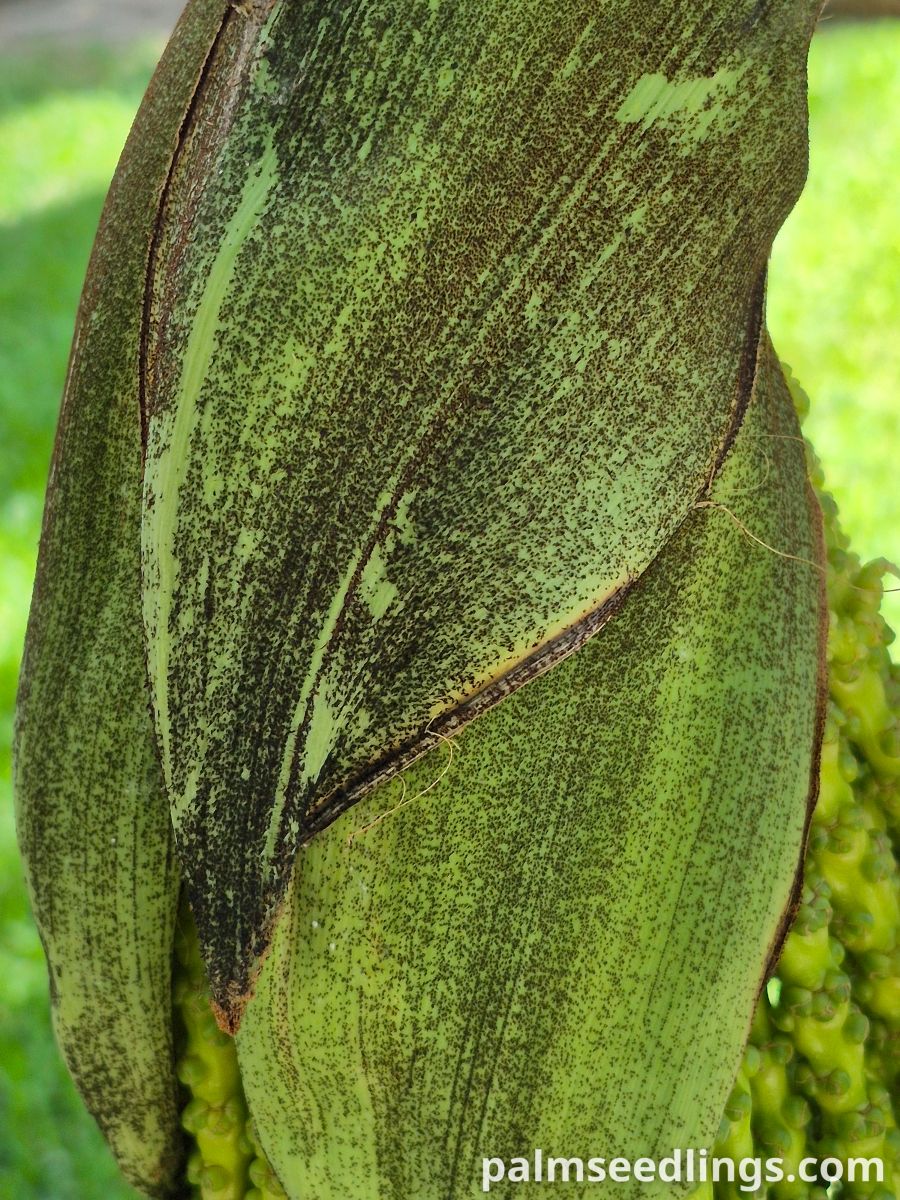
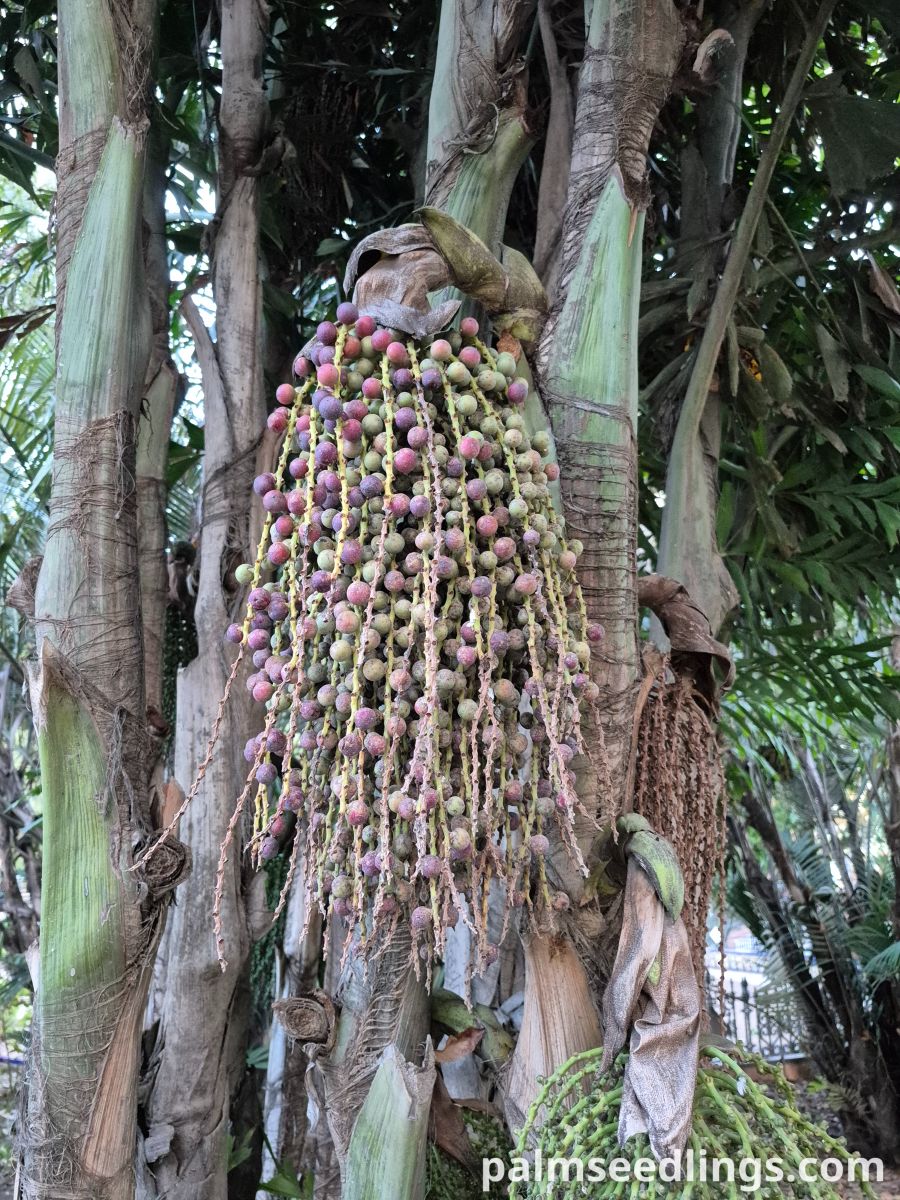
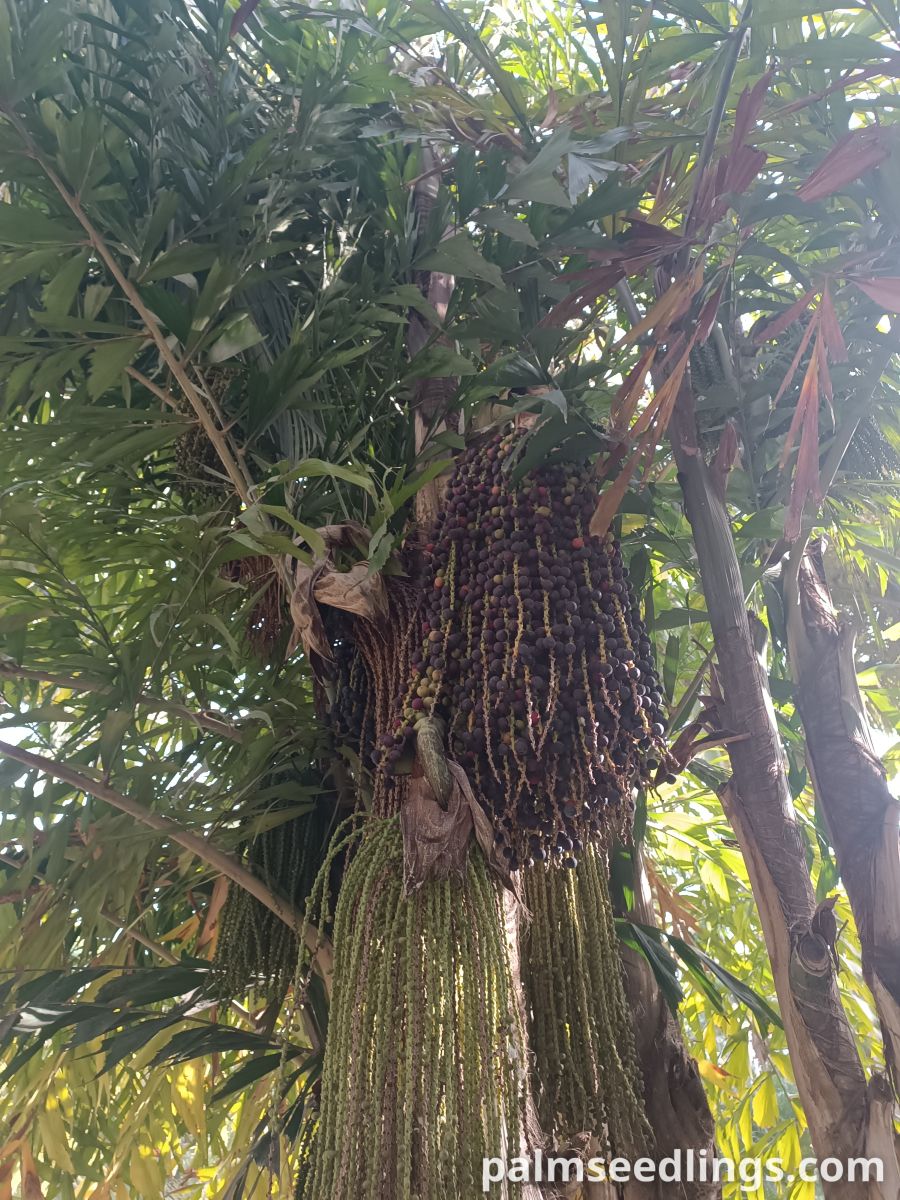
Caryota mitis is distinguished within its genus by its clustering growth habit, which allows it to regenerate continuously as individual stems flower and die. Its hapaxanthic reproductive strategy, where each stem flowers once before senescence, is typical of the genus Caryota. The fruits contain calcium oxalate crystals that can cause severe irritation. Taxonomically, it is sometimes confused with larger solitary species such as Caryota urens and Caryota maxima, but it is reliably separated by its smaller stature and clustering habit. It is one of the most widely cultivated Caryota species worldwide.